

Introduction
The worldwide frog legs trade is responsible for the depletion of wild amphibians from their native habitats, as well as the spread of invasive species and infectious diseases. Maria Pinto Teixeira from Ambitious Impact recently interviewed SAVE THE FROGS! Founder Dr. Kerry Kriger to get his thoughts, noting that “SAVE THE FROGS! is widely recognised as a leading authority in amphibian conservation.” Following their discussion, she shared her meeting notes, which form the basis of these actionable approaches for conservationists, researchers, educators, policymakers, and NGOs working to reduce the scope and negative impacts of the international frog legs trade.
Research Priorities
Establish baseline data
We need fundamental information about what is happening, where it’s occurring, who is involved, and what laws currently apply. Key questions include:
- Where are the primary collection areas?
- Which species are most affected?
- How are wild-capture systems structured (village-based collection, middlemen, organized corporate harvesting)?
- What are the legal frameworks in major exporting countries like Indonesia?
Understand consumer markets
Research is needed on importing countries (primarily the U.S. and Europe, with France and Belgium particularly problematic) to identify who consumes frog legs, the role of fine dining versus casual venues, and cultural drivers of consumption.
Education and Outreach
Community-level education in source regions
Direct education efforts toward potential frog farmers and collectors about the ecological value of frogs and the environmental harms of frog farming. This village-level approach is identified as the starting point for any meaningful intervention.
Consumer education in importing countries
Raise awareness about the conservation and disease risks associated with the frog legs trade among consumers in the U.S. and Europe.
Alternative Livelihoods
Provide income-generating alternatives
In communities where wild frog collection provides income, offer training in sustainable alternatives. The example from Ghana, where beekeeping replaced destructive honey harvesting that caused forest fires, demonstrates this approach’s potential effectiveness.
Environmental Mitigation for Existing Farms
Since shutting down existing frog farms is unrealistic, focus on improving practices:
Disease reduction protocols
Implement techniques to reduce disease prevalence before export, limiting international disease spread through trade.
Containment measures
While escapes into surrounding environments are viewed as inevitable, establish at least minimal containment standards to reduce invasive species risks.
Environmental compensation mechanisms
Develop governmental regulations requiring frog farms to contribute financially to environmental restoration, similar to U.S. requirements for mitigation funds when land is destroyed.
Regulatory oversight
Establish governmental inspection systems and regulations for environmental practices at existing facilities.
Legislative Action
Ban live frog imports
Prioritize legislation requiring that frogs be imported only dead or frozen. This approach, successfully implemented in California after approximately 13 years of effort beginning around 2010, significantly reduces invasive species and disease risks. Resources available at SaveTheFrogs.com/bag (Bullfrog Action Group).
Protect native species
Support legislation like New York’s current bill to protect native frog species, demonstrating growing political interest in wildlife protection.
Regulate species and quantities
In importing countries, establish regulations controlling which species can be imported and in what quantities, with the ultimate goal of reducing or stopping imports.
Focus enforcement on high-risk regions
Target areas like Florida, identified as a major invasive species entry point, and work with states already leading in animal-related legislation (California, Washington, Oregon) and regions like British Columbia.
Verify enforcement
Once bans are in place, maintain oversight to ensure actual compliance. Request and review import data from relevant agencies to verify that regulations are being followed.
Strategic Framing
Lead with conservation impacts
Frame advocacy around population-level and environmental impacts rather than individual animal welfare concerns. While animal welfare approaches can be effective for some audiences, the conservation framing tends to reach broader constituencies and avoid alienating potential allies.
Acknowledge welfare concerns
Within existing farms, address the serious animal welfare issues including extremely high stocking densities (hundreds of thousands of bullfrogs), physical stress, crowding, and likely high disease prevalence, but frame these concerns within broader environmental and public health contexts.
Key Considerations
The academic research community has produced substantial work on frog legs trade, but this has not yet translated into widespread legislation and advocacy. Government processes are slow and difficult, making education a more immediately accessible intervention point. The most effective approach combines multiple strategies: baseline research to understand the systems, education at both source and consumer ends, practical improvements to existing operations, legislative pressure for live import bans, and provision of economic alternatives for communities currently dependent on frog collection.
Following the interview, Maria Pinto Teixeira noted, “Thank you so much for sharing these and for all the insights you shared with me in our meeting, they were very helpful!”
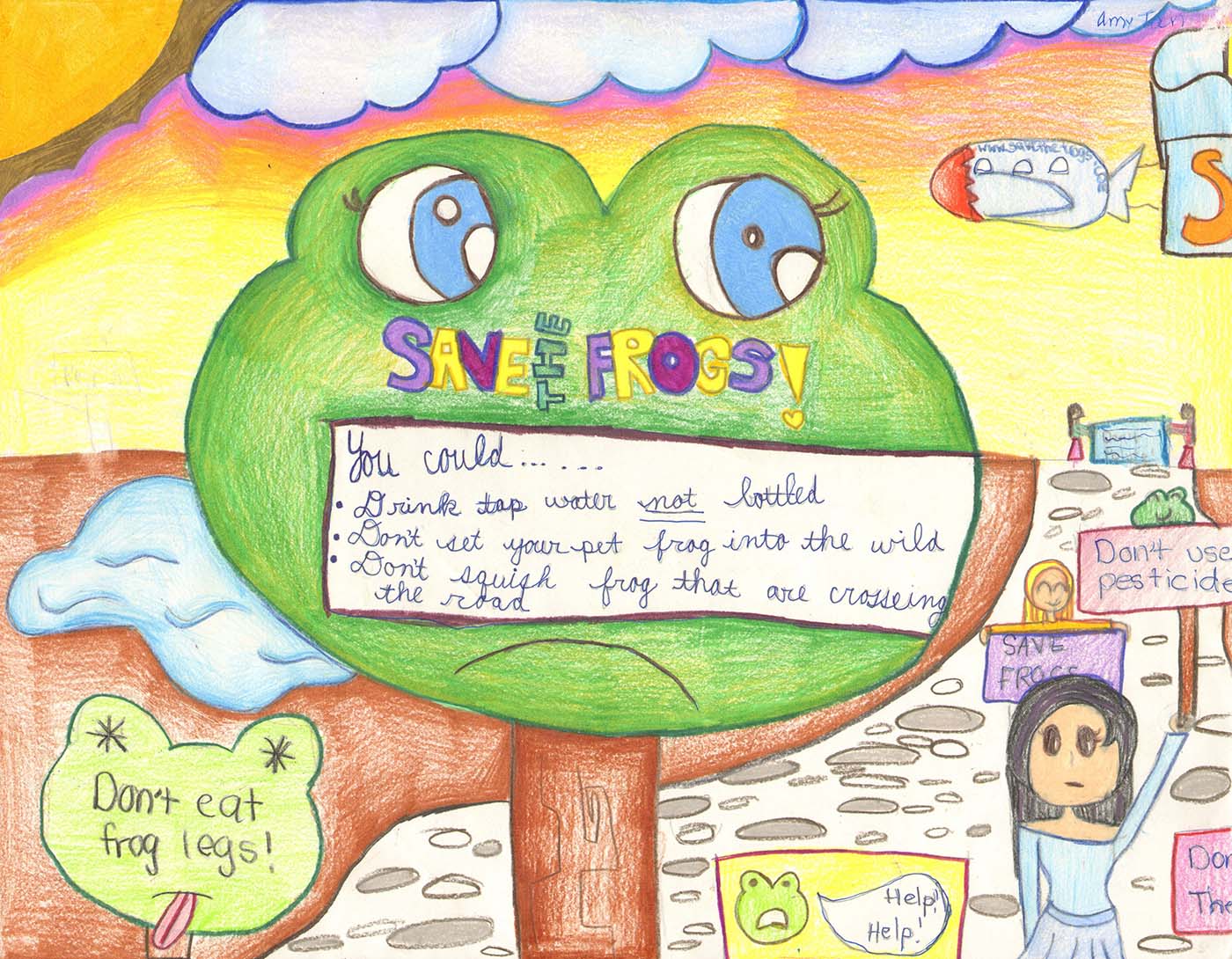
Art above is from the 2011 SAVE THE FROGS! Art Contest by Amy Tan, Age 9. Art atop this page is by Banani Adhikari, Age 12, from the 2012 SAVE THE FROGS! Art Contest.