

此页面尚未提供中文版本,目前以English显示。
Introduction
The 1st Annual Save The Frogs Day was celebrated on April 28th, 2009 – 41 events across 16 countries marked the birth of the world’s largest amphibian conservation celebration, with programs on six continents. Thanks to the scientists, teachers and students who took part in the USA, Australia, Colombia, Canada, Italy, India, Croatia, South Africa, Bangladesh, Madagascar, New Zealand, Papua New Guinea, Nepal, Portugal, Switzerland and Taiwan!
The Story of Save The Frogs Day
Read Jeremy Hance’s interview with SAVE THE FROGS! Founder Dr. Kerry Kriger, who conceived Save The Frogs Day one cold December night in 2008. The article appeared in Mongabay on the 1st Annual Save The Frogs Day, April 28th, 2009. You can download the PDF here.
The Official Poster of Save The Frogs Day 2009
In commemoration of the 1st Annual Save The Frogs Day, we present this limited edition 18×24″ print featuring amazingly cool frog art by Miss Leah Klehn, who conceived the SAVE THE FROGS! Art Contest when she was a senior in high school.

Official Declaration of Save The Frogs Day
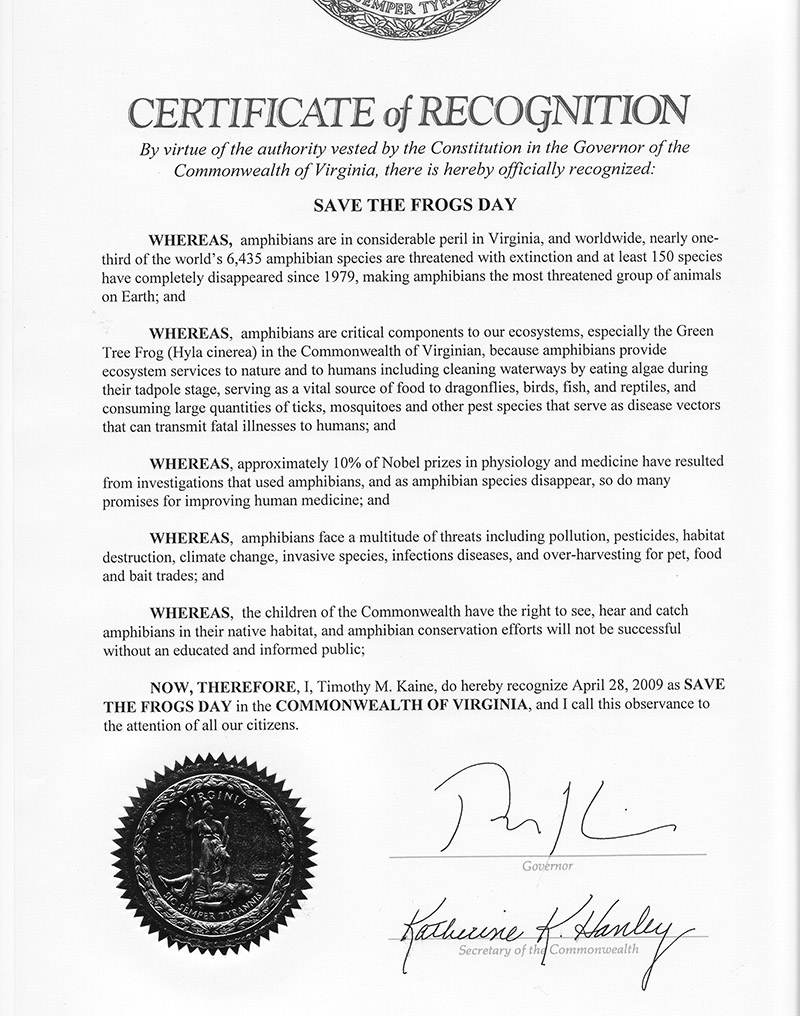
We would like to thank Governor Tim Kaine of Virginia for officially recognizing the 1st Annual Save The Frogs Day (April 28th, 2009). We also thank Mayor Gregor Robertson of Vancouver, British Columbia who has declared April 28th, 2009 Save The Frogs Day in Vancouver; and Chairman Corey Stewart who declared April 28th, 2009 as Save The Frogs Day in Prince William County, VA; and Mayor Harry Parrish who declared April 28th, 2009 as Save The Frogs Day in Manassas, VA.
See all the Save The Frogs Day proclamations here.
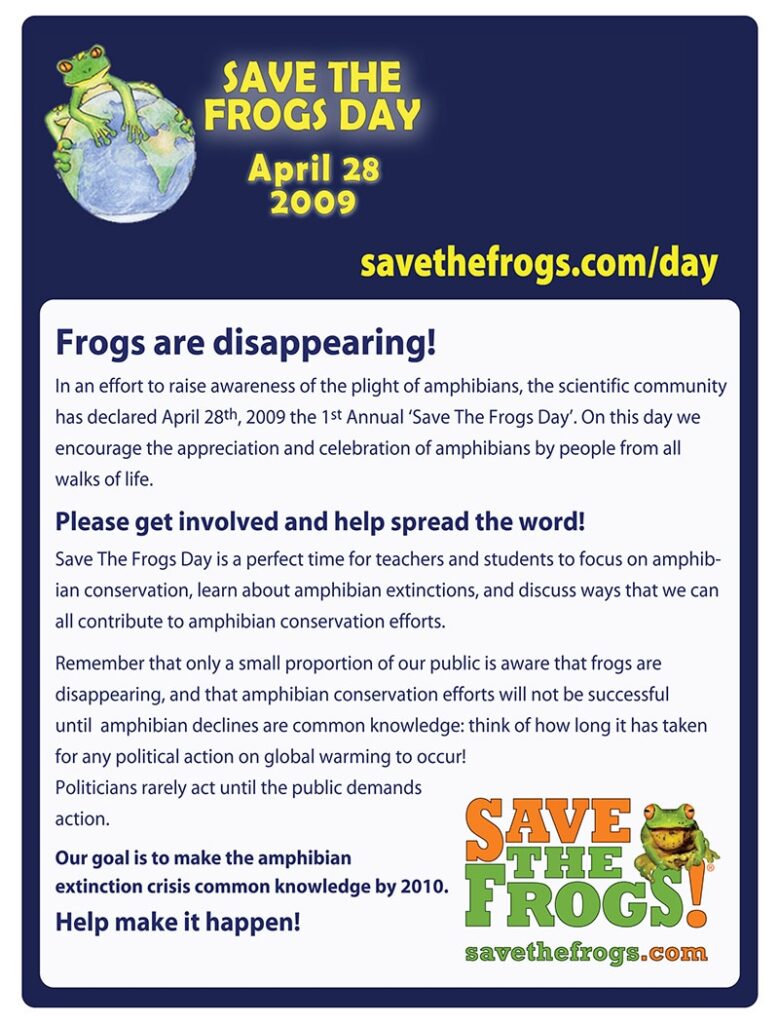
The First Ever Save The Frogs Day Flyer
This was offered as a printable 8.5×11″ PDF:
Save The Frogs Day 2009 Events
Here’s a partial recap of some of the events that took place on the 1st Annual Save The Frogs Day, April 28th, 2009.
Charlottesville, Virginia
On April 28th, 2009, SAVE THE FROGS! Founder & Executive Director Dr. Kerry Kriger discussed the threats to amphibians and the necessary actions that must occur in order to prevent further amphibian declines and extinctions. The presentation featured many of his photos of amphibians from around the world, and there was a question and answer session following the talk. The event took place at the Ivy Creek Natural Area Education Building and was hosted by The Nature Conservancy and Ivy Creek Foundation.
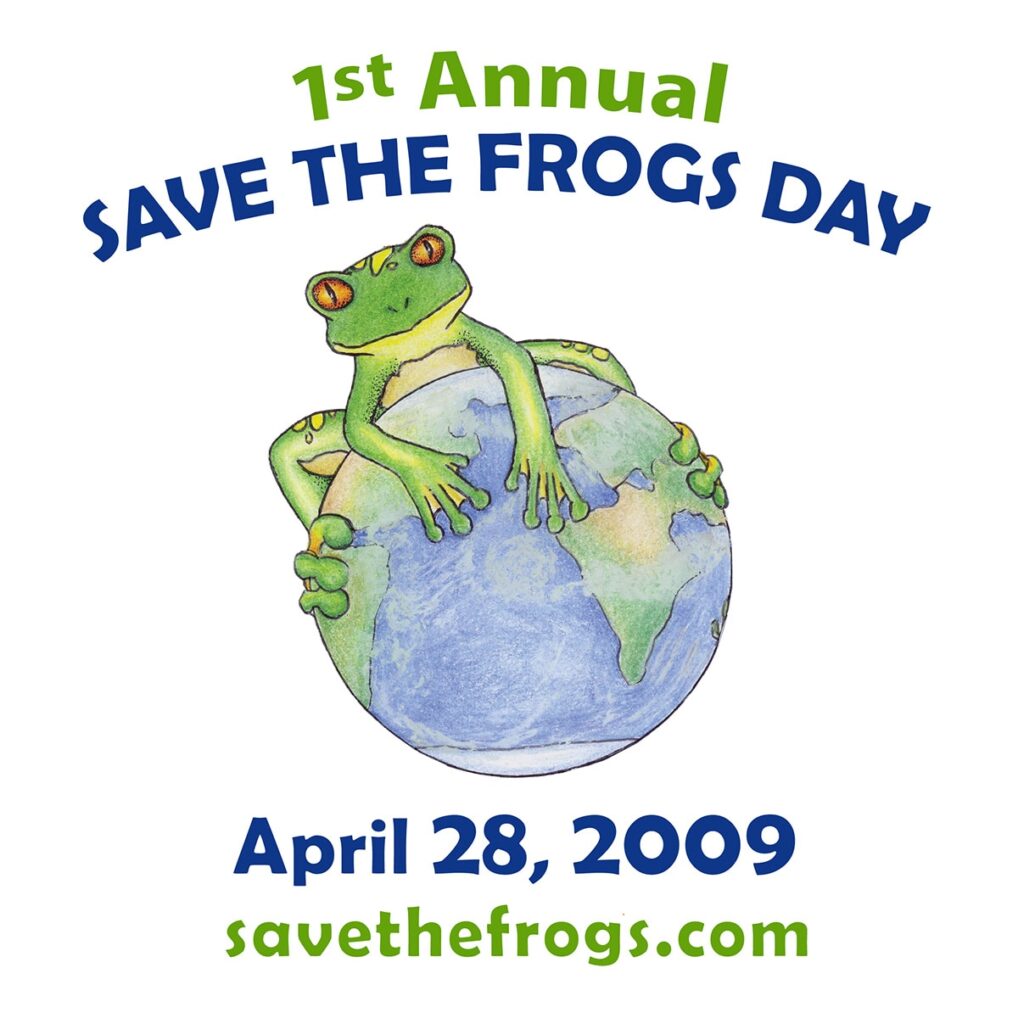
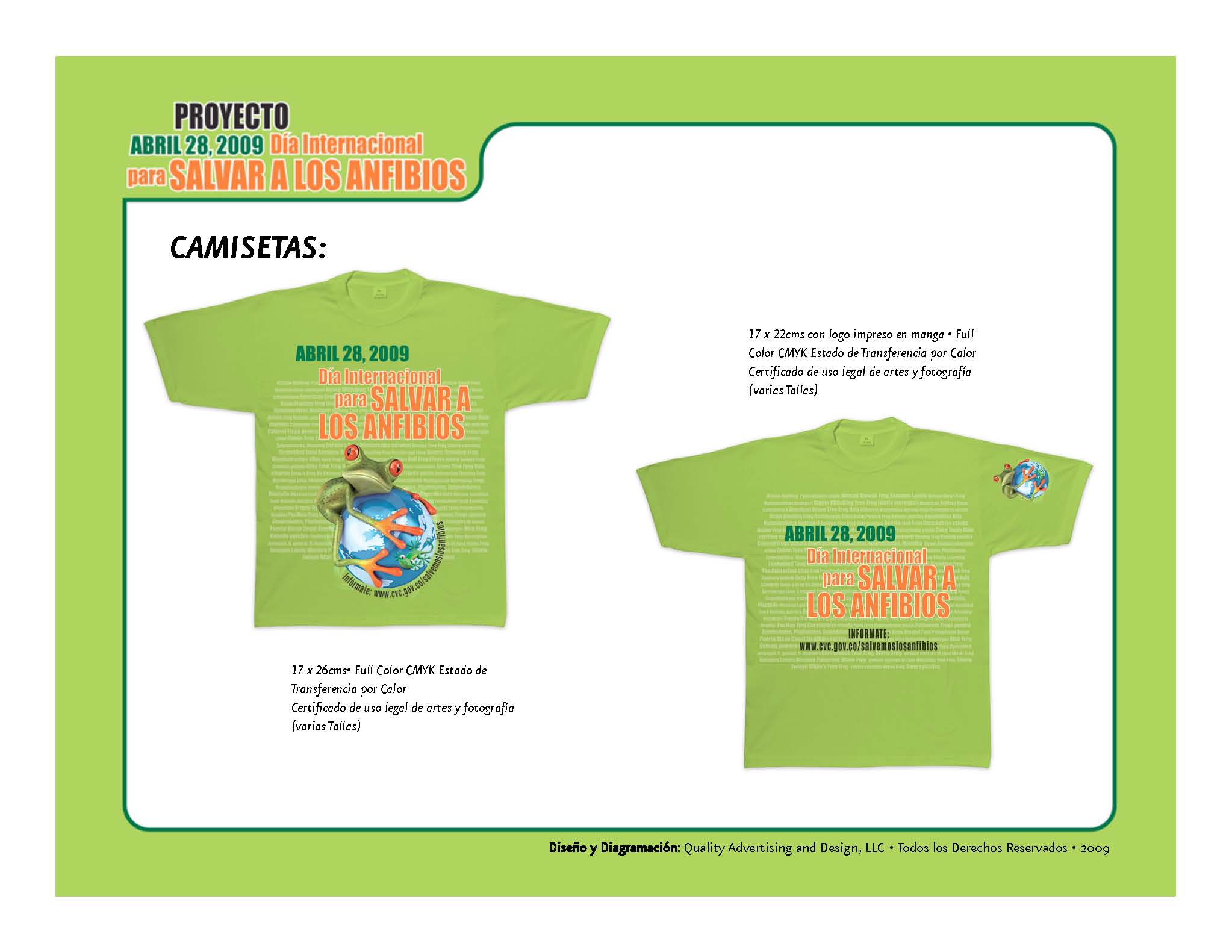
Artwork for the official 2009 Save The Frogs Day T-shirt
Boulder, Colorado and Surroundings
Eco symposium: April 4th, University of Colorado, Boulder: “Complexity in Conservation: Unraveling the Causes of Amphibian Decline in Colorado” by Dr. Pieter Johnson — open to the public
Biology Club: April 13th, University of Colorado, Boulder: “Amphibian Conservation Research across North and South America” by Robert Jadin and Sarah Orlofske (graduate students) — open to CU students
Colorado Water Institute: April 16th, Colorado State University: “Amphibian Declines: Understanding Complexity in Conservation” by Dr. Pieter Johnson;
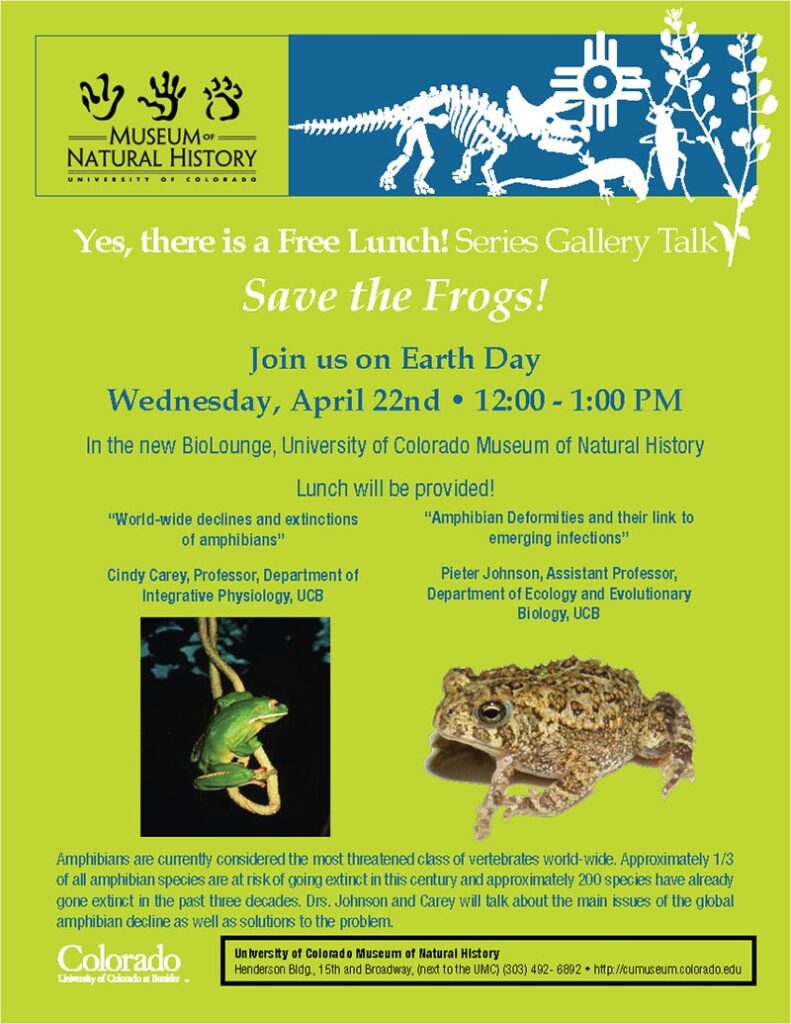
CU Museum BioLounge: April 22nd, University of Colorado, Boulder: “Sick and Twisted: The Meaning Behind Malformed Frogs” by Dr. Pieter Johnson — open to the public
CU Museum BioLounge: April 22nd, University of Colorado, Boulder: “Worldwide Declines and Extinctions of Amphibians” by Dr. Cynthia Carey — open to the public
Ryan Elementary: April 29th, fourth grade classrooms, Louisville, Colorado: activity and discussion of frog declines and ways to help conserve them by Sara Hellmuth and Katie Dosch
Creekside Elementary: April 30th, fourth grade classrooms, Boulder, Colorado: discussion of frog declines and ways to help conserve them by Sara Hellmuth
Moore Elementary School — Kindergarten: April 28th, 10am–11am. SAVE THE FROGS! Advisory Committee member Dr. Erin Muths gave three free 20-minute lectures on the amphibian extinction crisis. This was a PowerPoint presentation with many photos of amphibians from around the world. Topics included the causes and extent of the problem, as well as ways to stop the population declines — all couched towards the young and young at heart.
Horizon High School: Dr. Lauren Livo spoke about amphibian extinctions to 11th and 12th graders in the ALPS program at Thornton, Colorado.
Rooney Ranch Elementary School: On April 22nd, Jay Thompson, Fisheries & Riparian Program Lead at the BLM Colorado State Office, gave a one-hour presentation on amphibians and reptiles to approximately 100 fourth grade students at Rooney Ranch Elementary School in Lakewood, Colorado. The PowerPoint presentation covered the differences between frogs, toads and reptiles, the amphibian extinction crisis, and ways to help stop population declines, followed by a question and answer session and free handouts for all students.
Yellowstone National Park, Wyoming
Mammoth Hotel’s Map Room. Director of Environmental Affairs for Xanterra Parks and Resorts at Yellowstone, Beth Pratt gave a free 45-minute lecture on the amphibian extinction crisis. This was a PowerPoint presentation with many photos of amphibians from around the world, including a review of recent studies in Yellowstone. Topics included the causes and extent of the problem, as well as ways to stop the population declines. Talk was hosted by Xanterra Parks & Resorts at Yellowstone. Free and open to the public.
Durham, New Hampshire
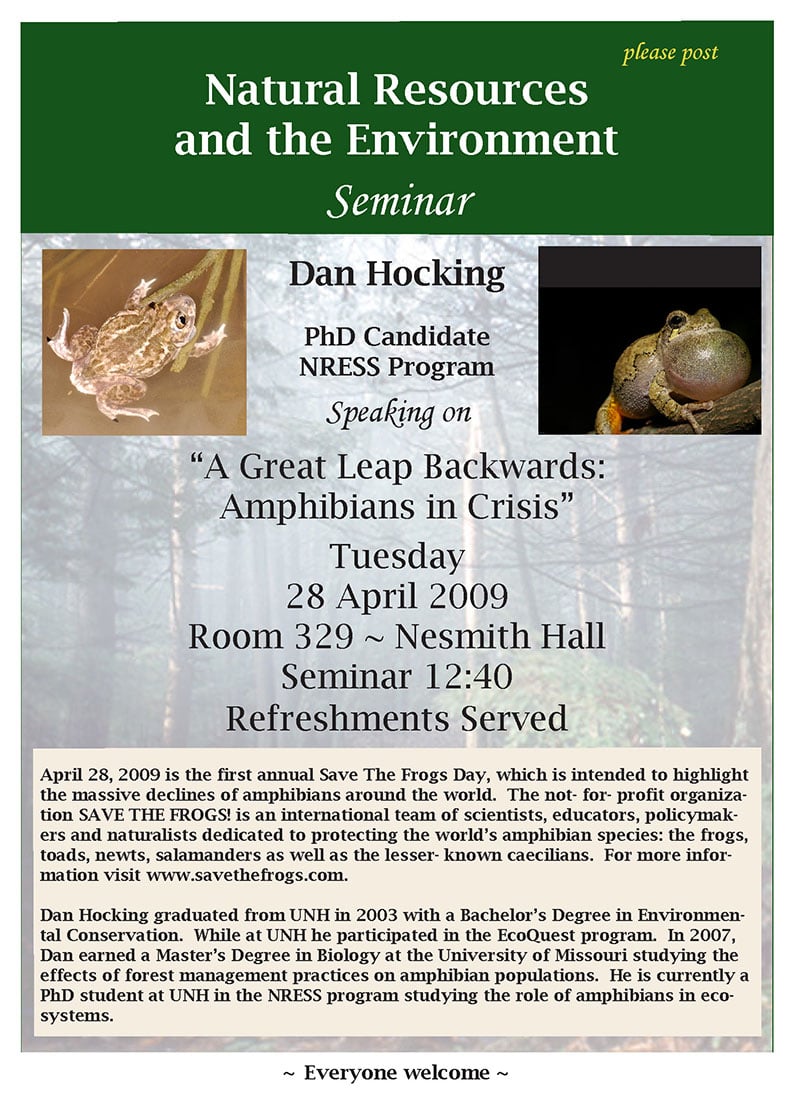
Location: University of New Hampshire, 329 Nesmith Hall, Durham, NH 03824. Daniel Hocking, a Ph.D. student studying amphibian ecology and conservation at the University of New Hampshire, gave a free 45-minute lecture on the amphibian extinction crisis. There were refreshments and there was a question and answer session after the talk. Talk was hosted by the UNH Department of Natural Resources and the Environment. Free and open to the public.
Honolulu, Hawaii
SAVE THE FROGS! Advisory Committee Member Dr. Kevin Weng gave two presentations to a total of 48 4th, 5th and 6th graders. Dr. Weng is a shark biologist by training, but it sounds like he’d be equally good saving the frogs every day: “Our students very much enjoyed our guest speaker and gained much knowledge from this presentation.” “It was a terrific presentation!”
Indianapolis, Indiana
Holliday Park, 7pm. Wendell Zetterberg, Jr., a Volunteer with FrogWatch USA, the Indiana Amphibian Monitoring Program, Hoosier Herpetological Society and SAVE THE FROGS! spoke at 7pm, Tuesday April 28th at Holliday Park about declining amphibians, globally and locally, including Indiana’s unique native frog and toad species, and why we should protect them.
Puerto Rico
Location: University of Puerto Rico, Río Piedras — Natural Sciences Faculty Anf. #142, and Campus grounds. There was a 40-minute illustrated talk given by Dr. Rafael L. Joglar on the amphibians of Puerto Rico, with emphasis on the lowland coquis that one can observe in the San Juan Area. He discussed ways to identify all the species in Puerto Rico, the conservation problems that they face, and what you can do to help these animals. Afterwards, attendees divided into smaller groups led by other experts like Dr. Patricia Burrowes, Ana Longo, Andrés Rodríguez and other students from their lab, and went on guided nocturnal tours around campus to look for different amphibians, notice their calls, and observe them in their natural habitat. More info is available at proyectocoqui.com.
Talk was hosted by The University of Puerto Rico, Proyecto Coqui, UPR Environmental Education Student Organization, Sierra Club, and GEA-PR (a local Amphibian Specialist Group). Free and open to the public.
Gold Coast, Australia — Griffith University
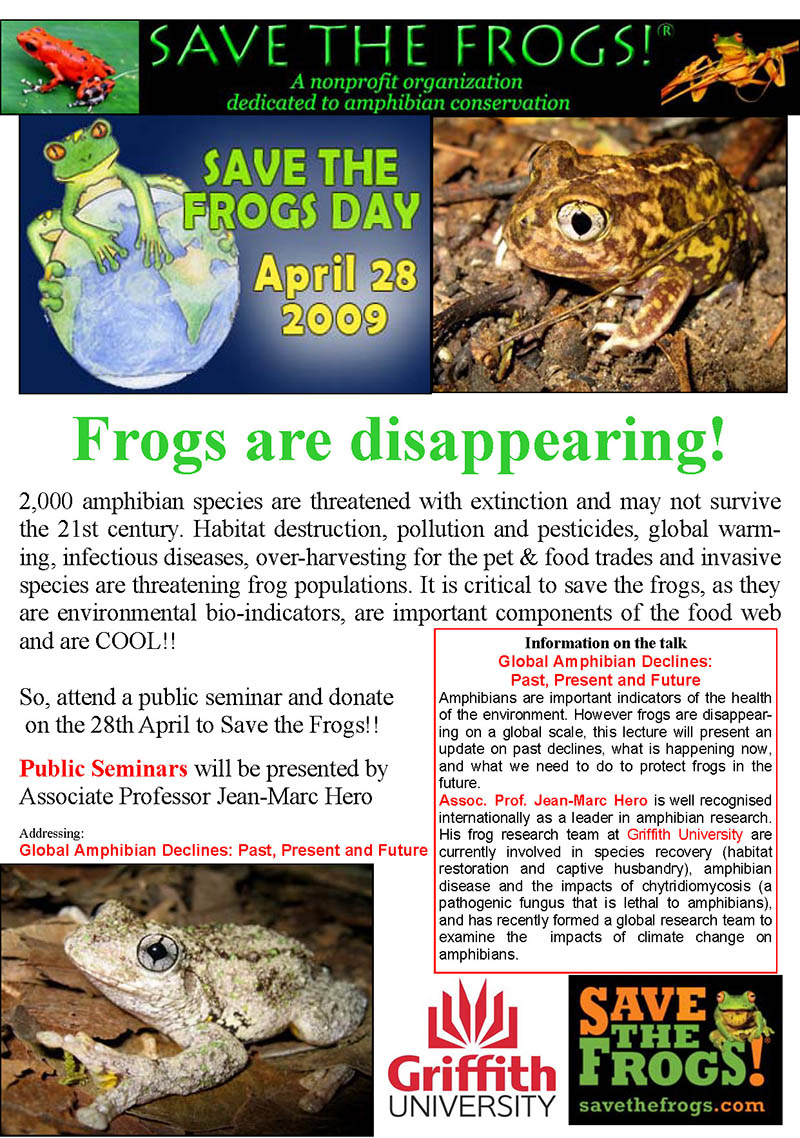
Griffith University Lecture Theatre — “Global Amphibian Declines: Past, Present and Future.” SAVE THE FROGS! Board of Directors Member and Associate Lecturer Dr. Jean-Marc Hero presented an update on past declines, what is happening now, and what we need to do to protect frogs in the future. Dr. Hero is well recognized internationally as a leader in amphibian research. His frog research team at Griffith University are currently involved in species recovery (habitat restoration and captive husbandry), amphibian disease and the impacts of chytridiomycosis (a pathogenic fungus that is lethal to amphibians), and has recently formed a global research team to examine the impacts of climate change on amphibians. This seminar provides an overview of the current global amphibian declines, research at Griffith and how we can mitigate declines in the future.
Gold Coast, Australia — Currumbin Wildlife Sanctuary
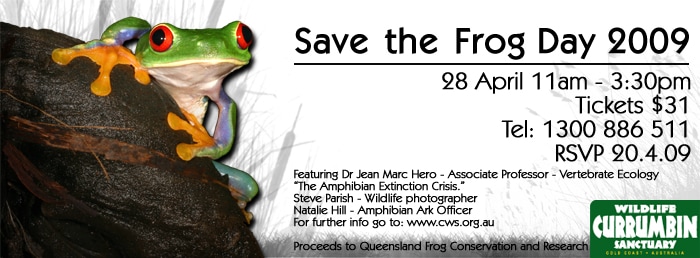
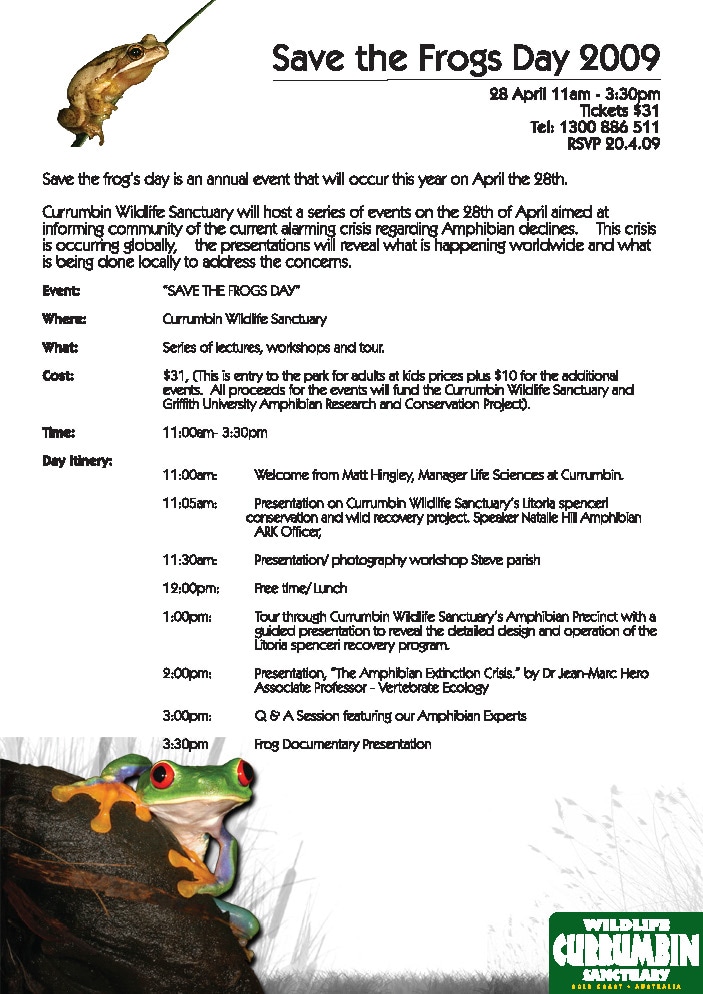
Currumbin Wildlife Sanctuary hosted a series of events on the 28th of April aimed at informing the community of the current alarming crisis regarding amphibian extinctions. The presentations revealed what is happening worldwide and what is being done locally to address the concerns. Featuring SAVE THE FROGS! Board Member Dr. Jean-Marc Hero and renowned wildlife photographer Steve Parish.
Elanora, Queensland, Australia
Biologist Clay Simpkins of Griffith University conducted a total of nine presentations at Elanora State Primary School. This included three Year 2 classes, a Year 3 class and six Year 6 classes. Each class contained between 23 and 28 students. Says Clay: “Teachers from each class were also present. They all enjoyed it and the teachers agreed that they had learnt a lot and that the information from the presentation would help in future lessons.”
Brisbane, Australia
University of Queensland, Saint Lucia Campus. Danial Stratford (PhD candidate, Griffith University) gave a free 45-minute lecture on the amphibian extinction crisis. This was a PowerPoint presentation with many photos of amphibians from around the world. Topics included the causes and extent of the problem, as well as ways to stop the population declines. There was a question and answer session after the talk. Talk was hosted by Queensland Frog Society, University of Queensland and Griffith University. Free and open to the public.
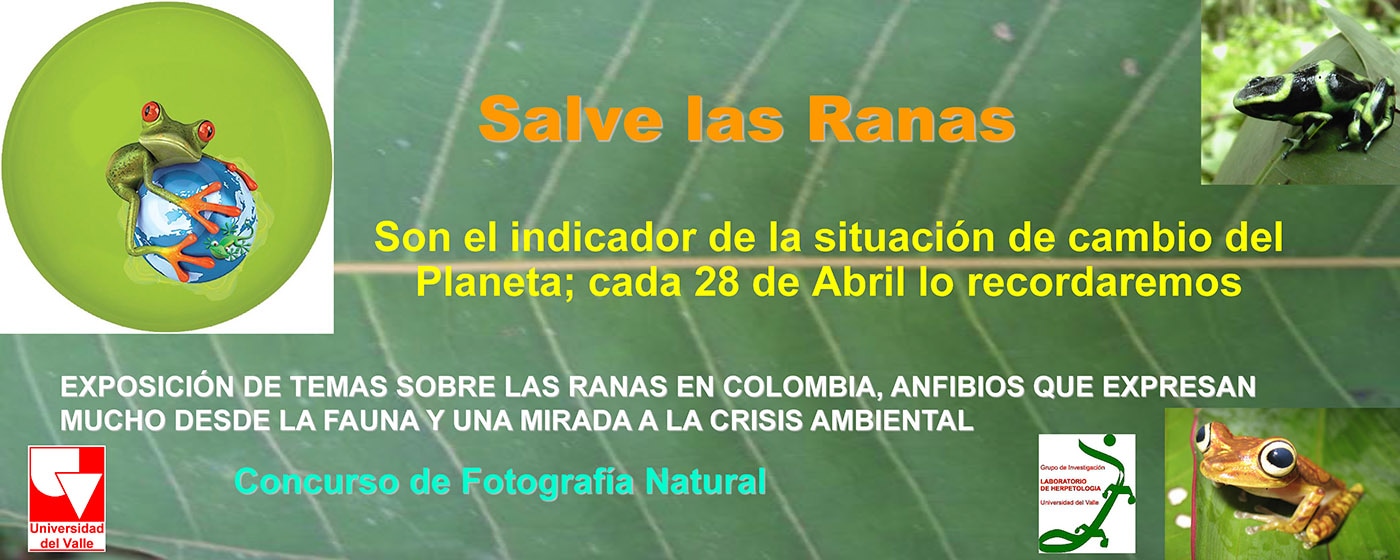
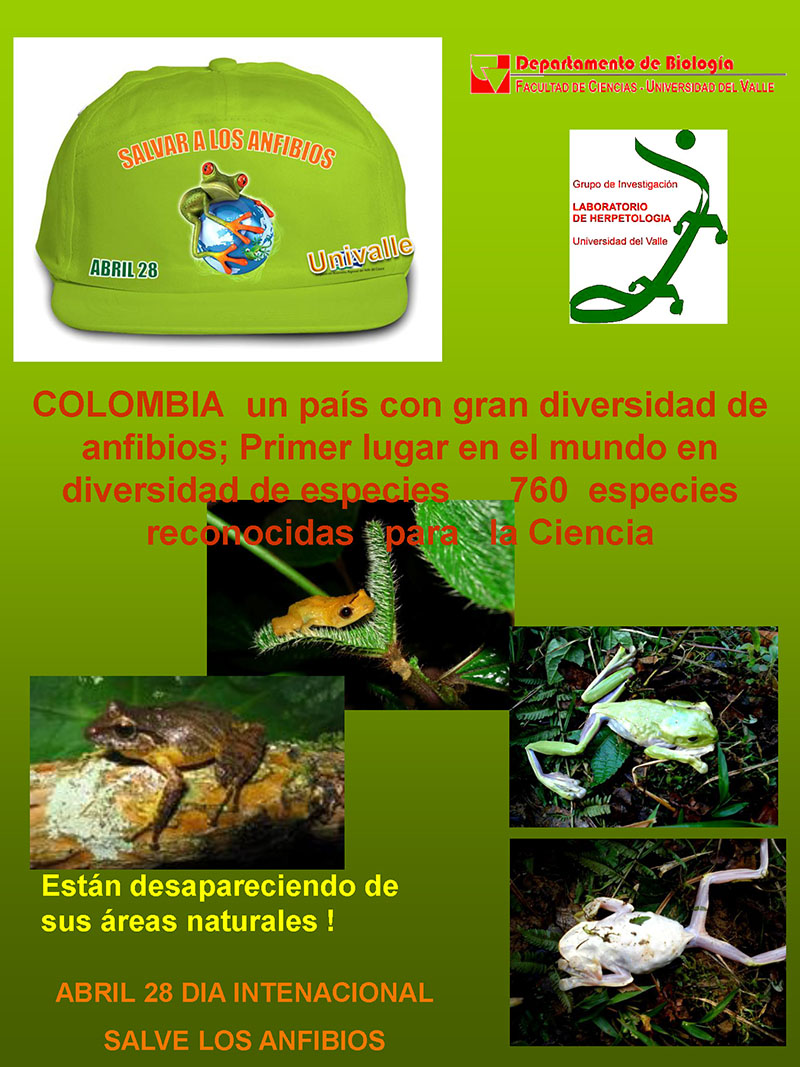
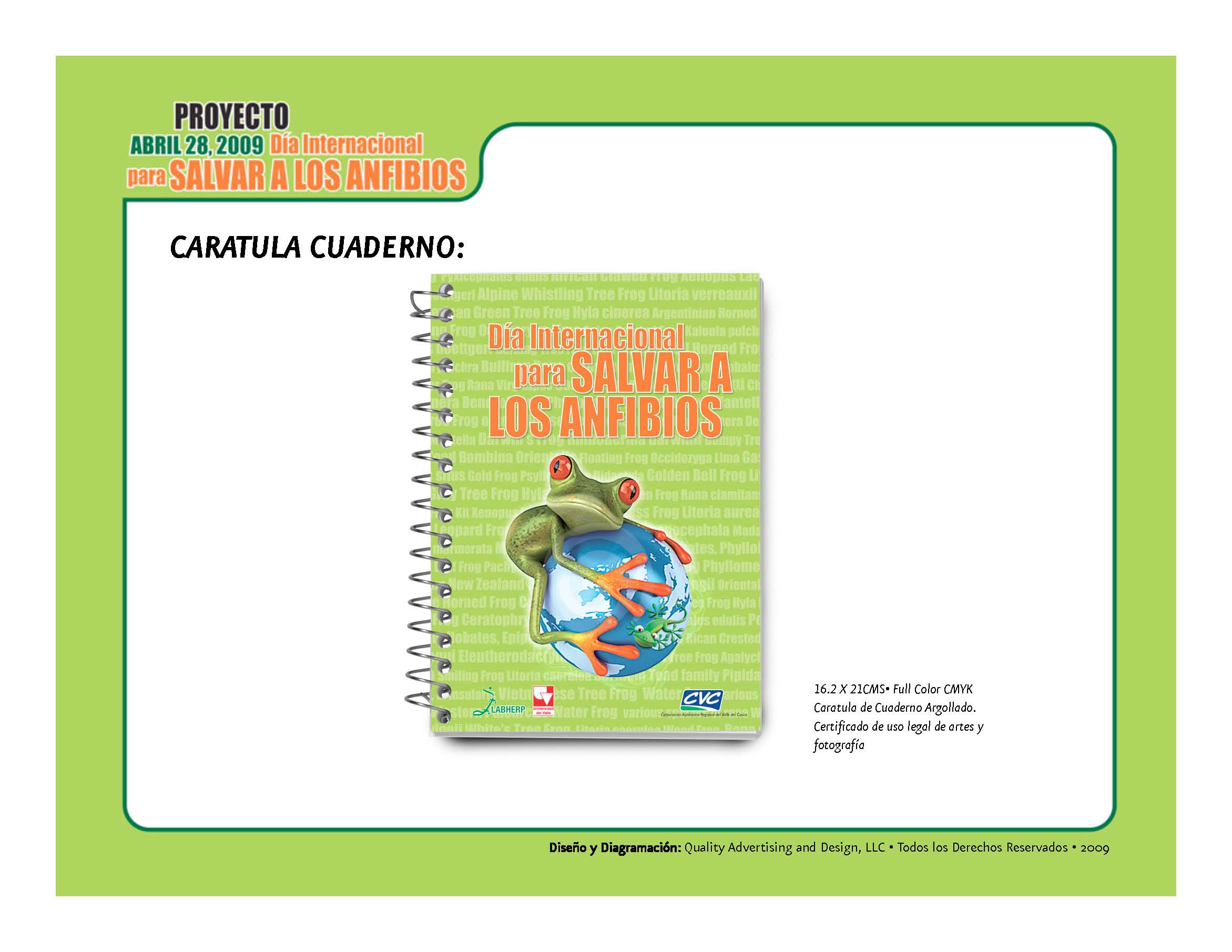
Cali, Colombia
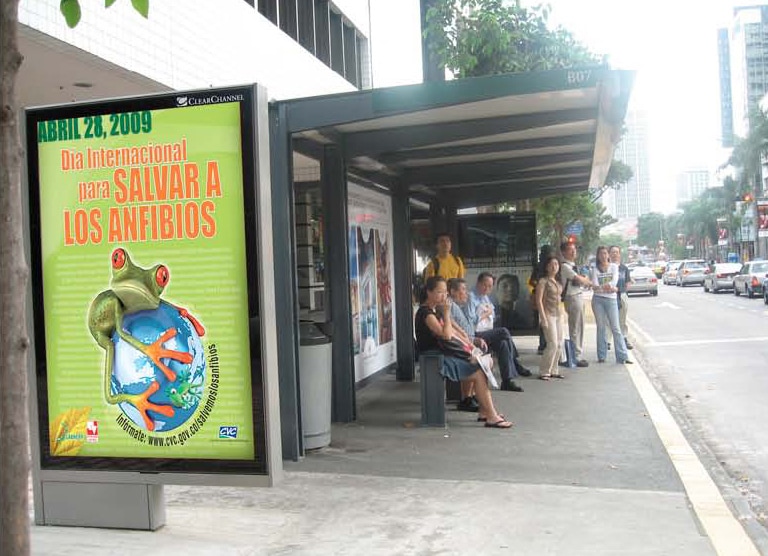
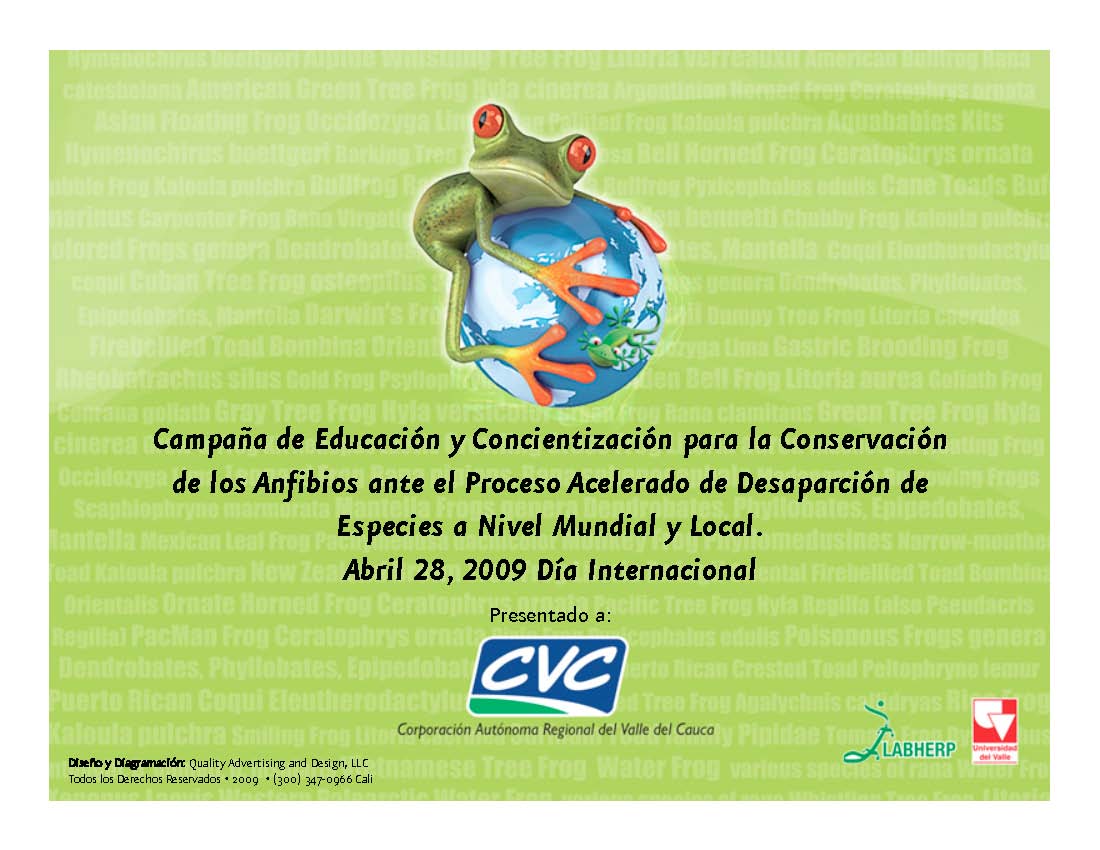
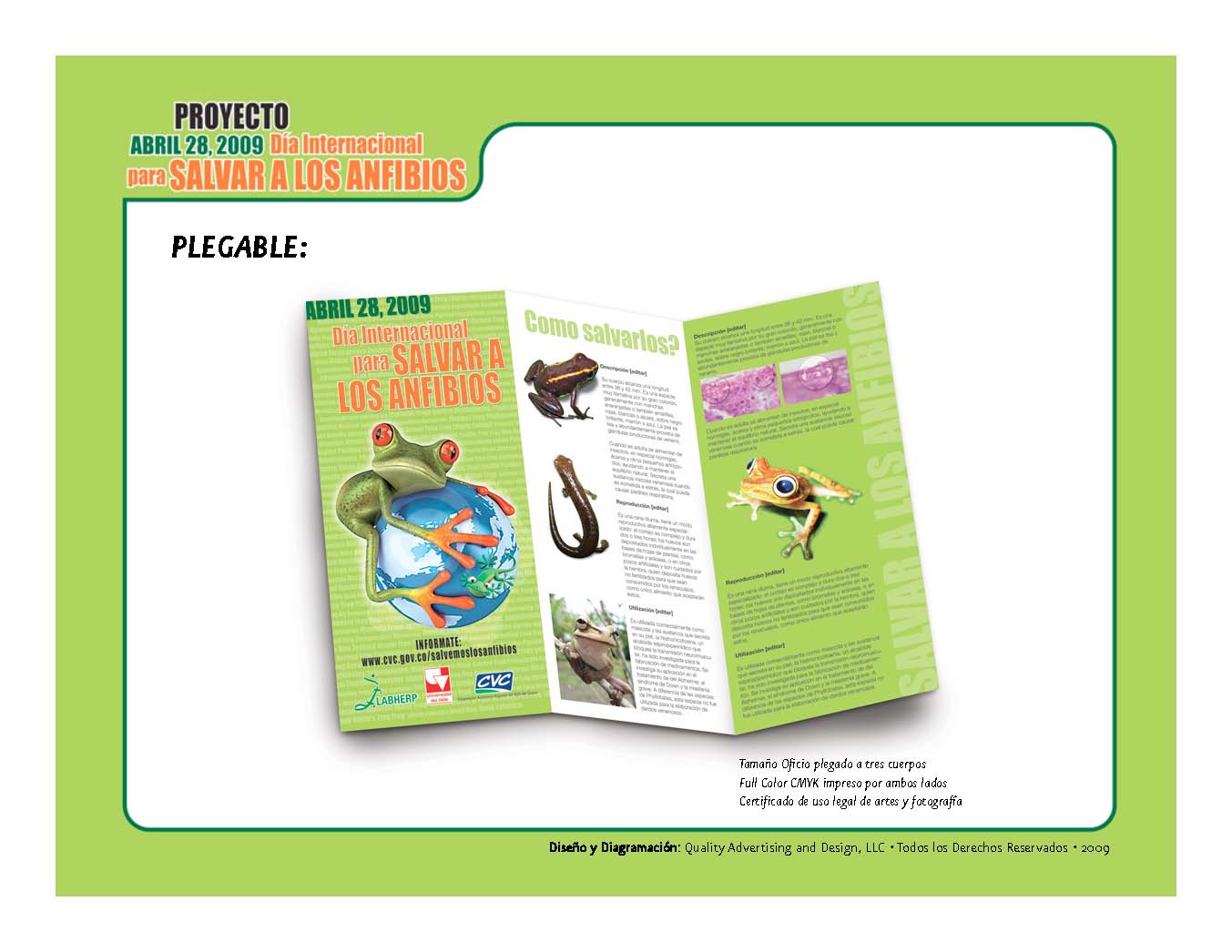
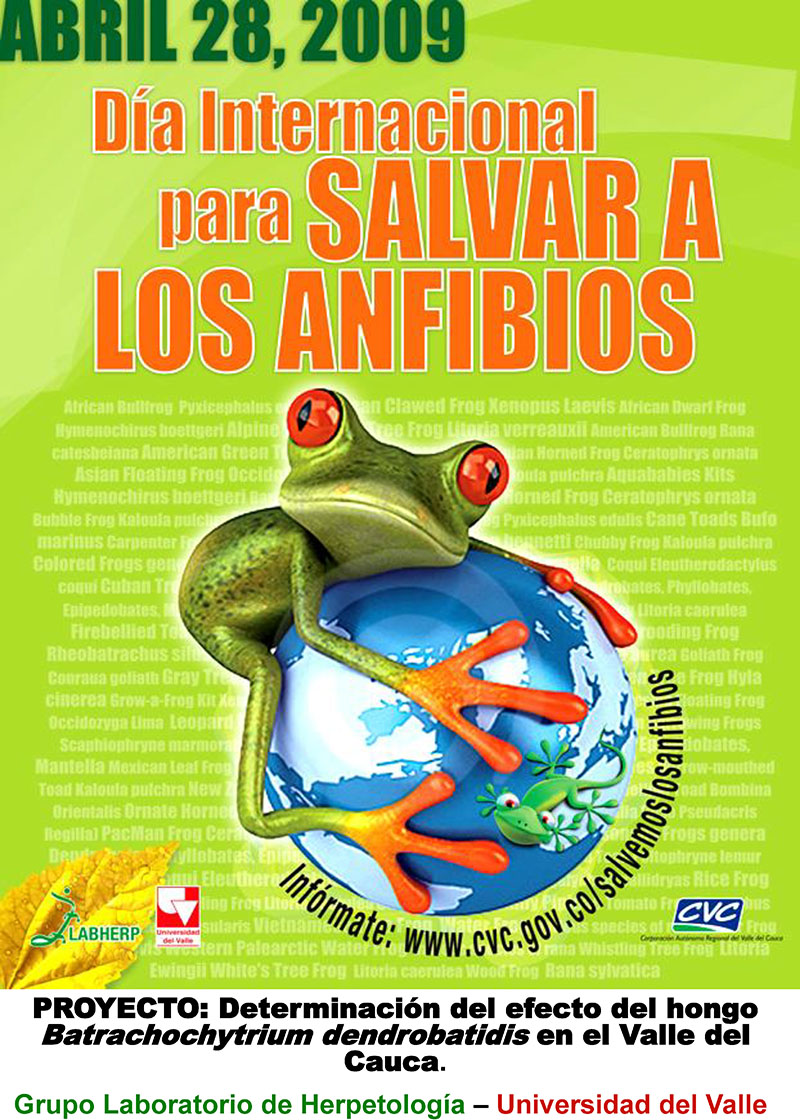
Fernando Castro organized a series of Save The Frogs Day 2009 events and promotional campaign with the local government of Valle del Cauca (CVC).
Torino, Italy
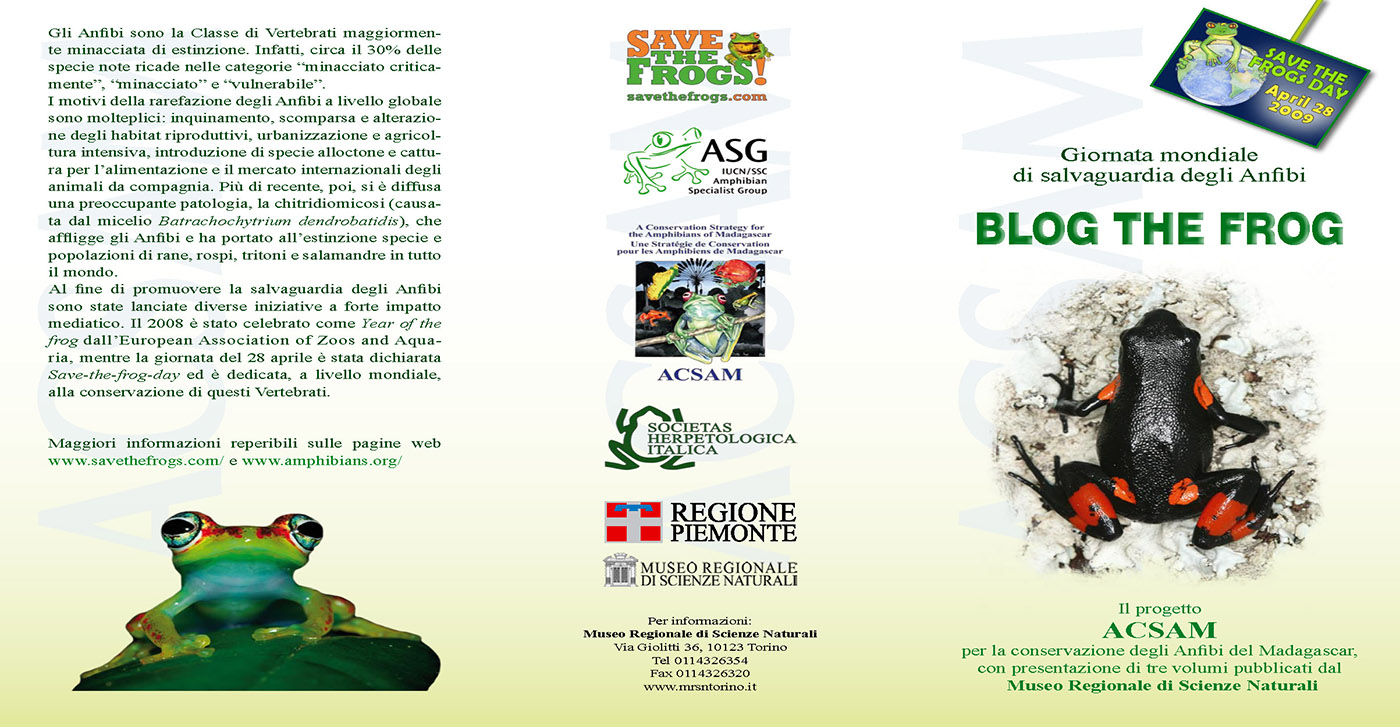
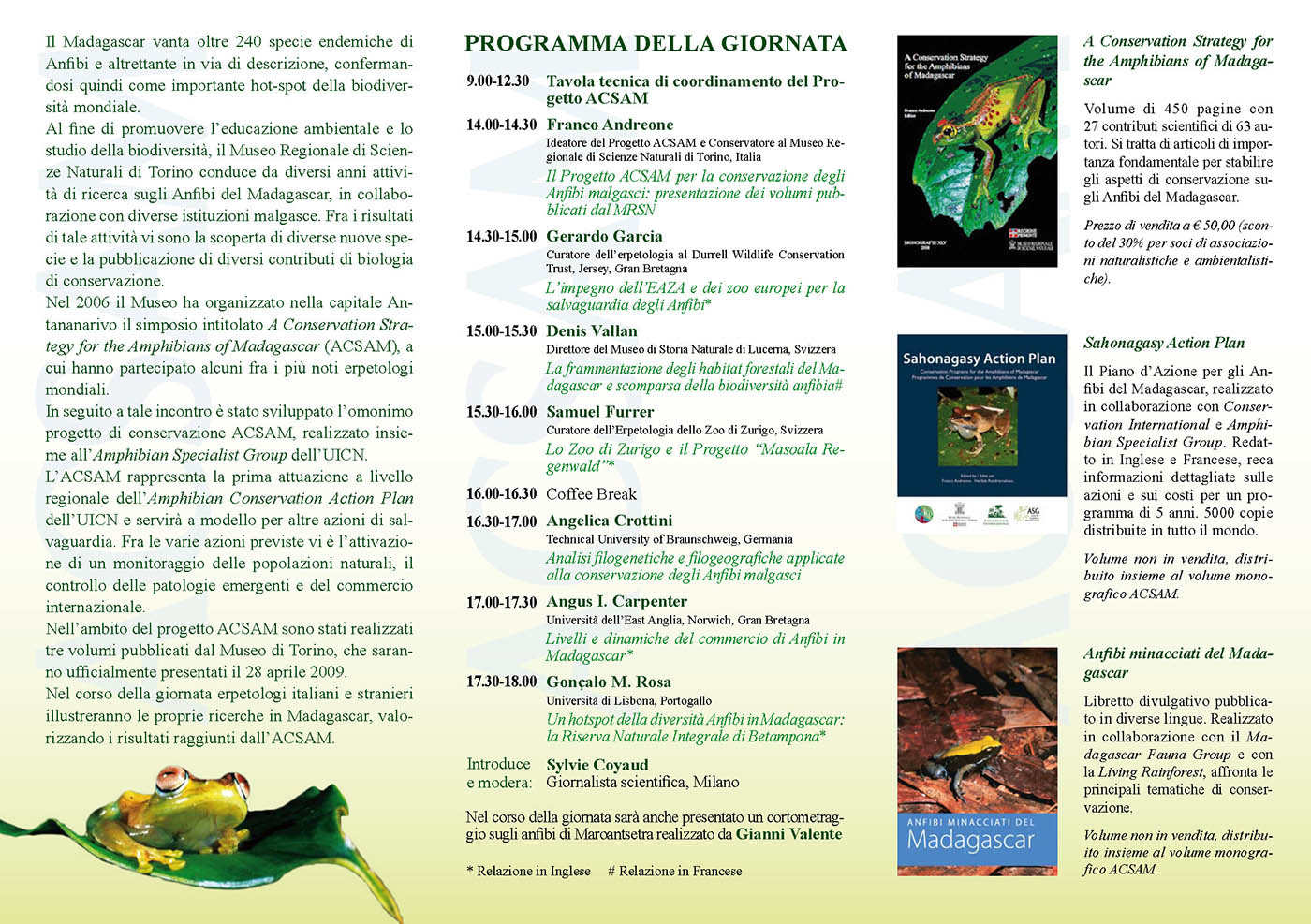
Museo Regionale di Scienze Naturali, Via Giolitti, 36, Conference Room. The day was dedicated to the SAVE THE FROGS! events, and, in particular, to the presentation of the ACSAM (A Conservation Strategy for the Amphibians of Madagascar) and three related books published by the Turin Museum. In the morning there was a technical table for the ACSAM project, while in the afternoon there were talks by Franco Andreone, Gerardo Garcia, Denis Vallan, Samuel Furrer, Angelica Crottini, Angus I. Carpenter, and Gonçalo Rosa. Talk was hosted by Museo Regionale di Scienze Naturali.
The images below are from this downloadable program summary.
Johannesburg, South Africa
Location: Board Room at the Endangered Wildlife Trust’s Head Offices, The Gold Fields Environment Centre, Johannesburg Zoological Gardens, Erlswold Way, Parkview, South Africa. Giant Bullfrog Project Executant and PhD student Caroline Yetman gave a free 1.5-hour lecture on the amphibian extinction crisis. Topics included the extent and causes of the crisis, recent international amphibian conservation campaigns, the conservation status of South Africa’s frogs, and time-permitting, a crash-course for recognizing the ten main types of frogs found in South Africa. Free & open to the public. EWT
St. Francis, South Africa
St Francis Conservancy hosted a Fun Evening at St Francis Links to support SAVE THE FROGS!. Warren Mansen gave a talk on his Frogging Safaris, Les Brent showed her ingenious methods of saving frogs from drowning in swimming pools, and Carolyn Greathead showed some of her exquisite pictures of local wildlife. Tuesday 28th April, 6:00pm at the St Francis Links Clubhouse.
St. Francis Bay, South Africa
To support this wonderful cause and create local awareness of the necessity to protect amphibians, St Francis Conservancy hosted a ‘Save the Frogs’ evening at St Francis Links. Carolyn Greathead provided a spectacular slide presentation of her magnificent wildlife pictures, including many of the resident and endangered frogs. Les Brent provided information on ‘Frog Ladders’ for swimming pools, which have proved invaluable in saving hundreds of frogs from drowning, and Warren Manser gave a fascinating talk on his ‘Frogging Safaris’ conducted from The Dunes Country House. Joan Barnes created a charming poster to advertise the evening. Steyn from The Book and Sandra Hardie supported the cause with an abundance of environmental and identification books.

Vancouver, British Columbia, Canada
David Thompson Secondary School, Vancouver, BC, Canada. Urban Ecologist and Architect, David Wong gave a free presentation on the amphibian extinction crisis, and the value of frogs in the urban environment. This was a PowerPoint presentation with many photos of amphibians from around the world, and a collection of the native Pacific treefrog, and representative species from several continents. Topics included the causes and extent of the problem, as well as ways to stop the population declines, and the importance of frogs to humans. Free and open to all students and their invited guests.
Fort-Dauphin, Madagascar
Rio Tinto/QMM celebrated Save The Frogs Day on April 28th at the Centre d’interprétation in Mandena, Fort-Dauphin, Madagascar, with a full day of activities targeting employees and their families. The morning began with a frog inventory in the wetlands surrounding the Mandena conservation zone, followed by an afternoon presentation on the importance of amphibians to humans and ecosystems. Madagascar is home to 400 described amphibian species — all endemic — with 140 found exclusively in the Anosy region, making conservation efforts there especially significant. The event was part of QMM’s broader environmental education commitment, which has also included birdwatching days and the production of a children’s storybook for primary schools.
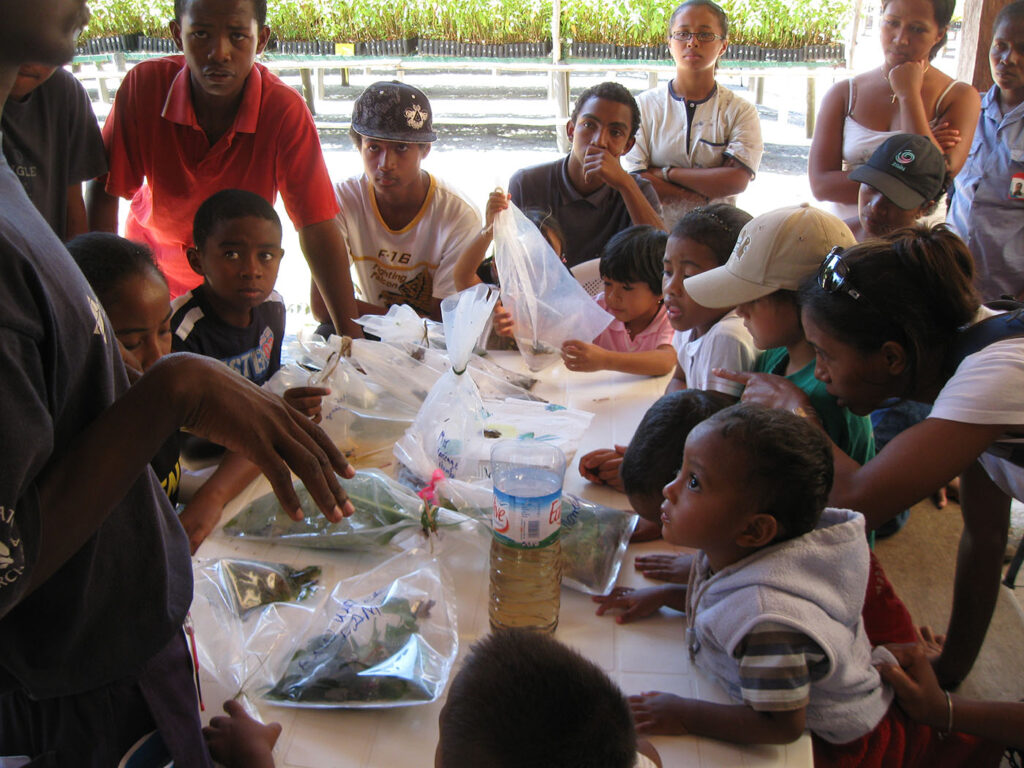
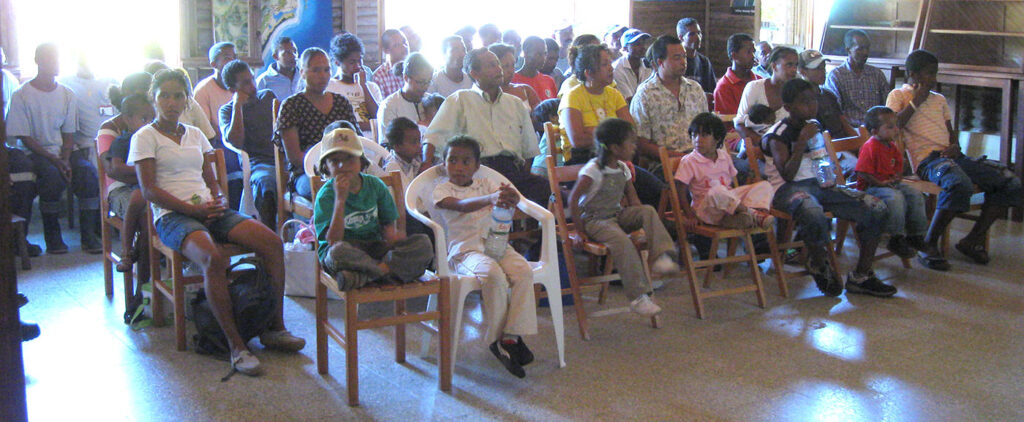
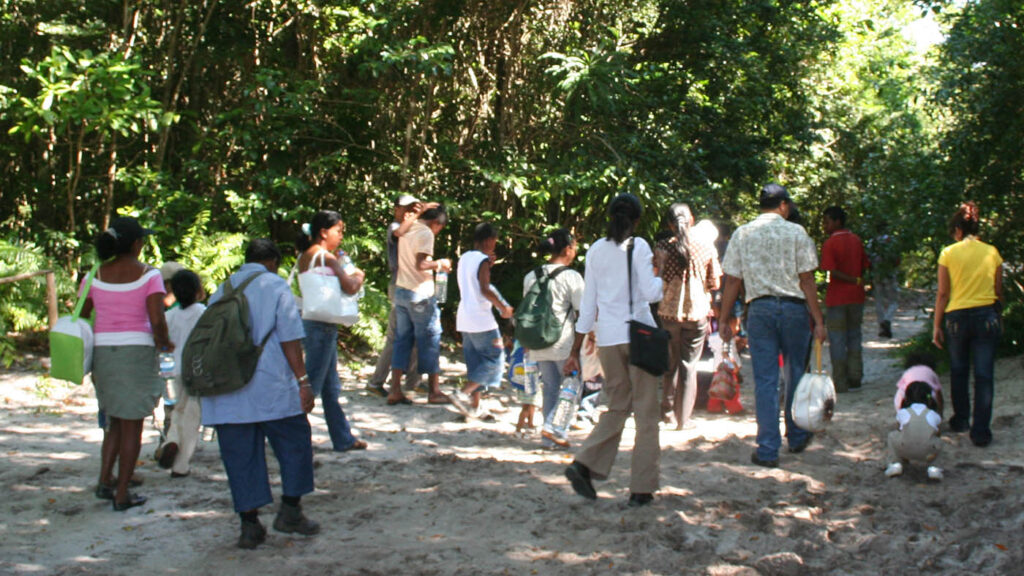
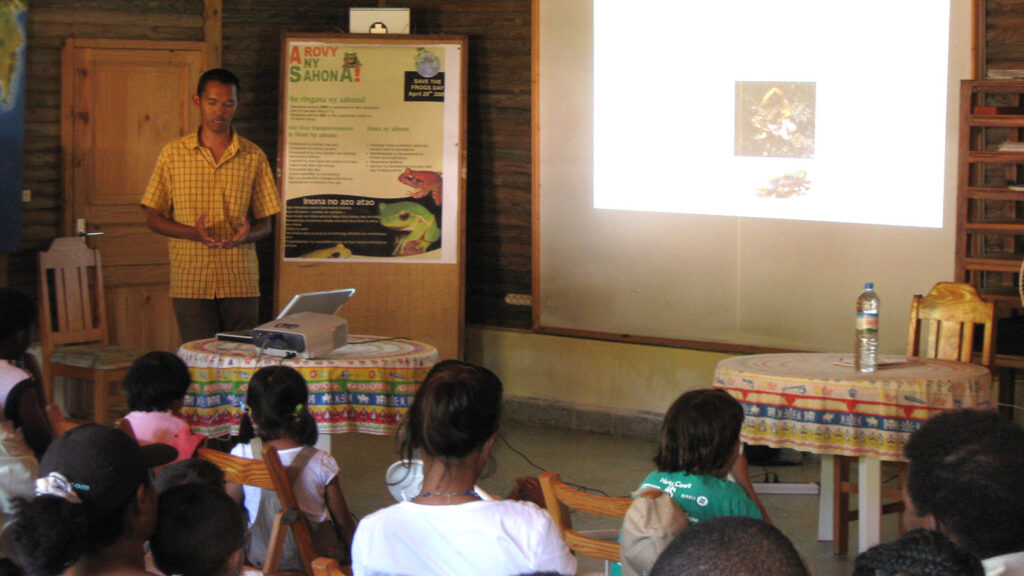
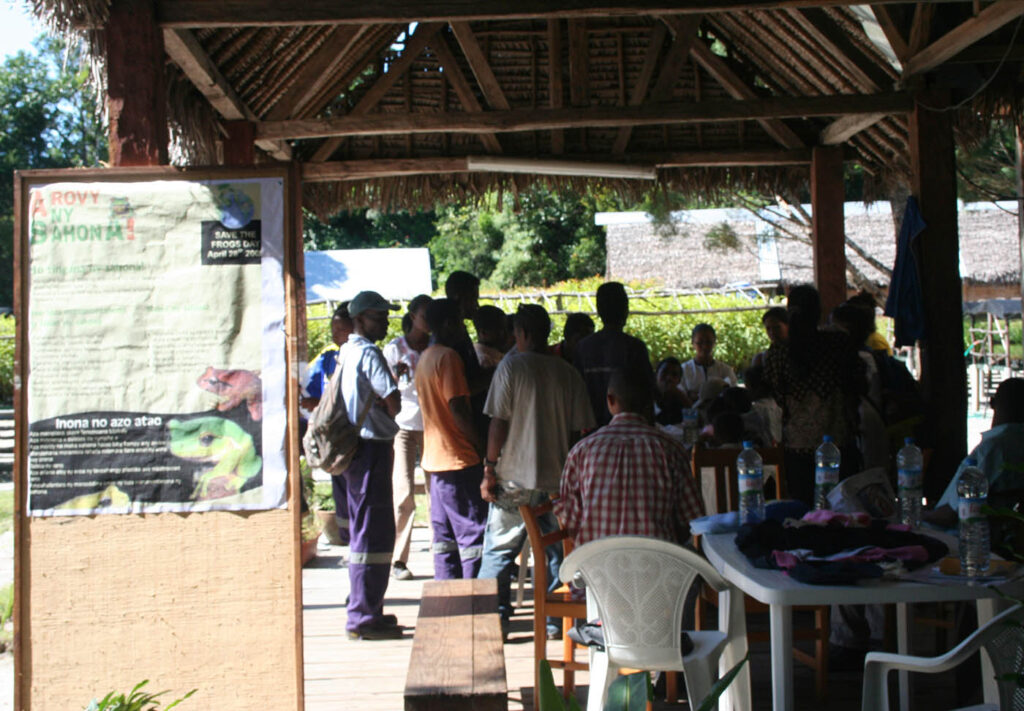

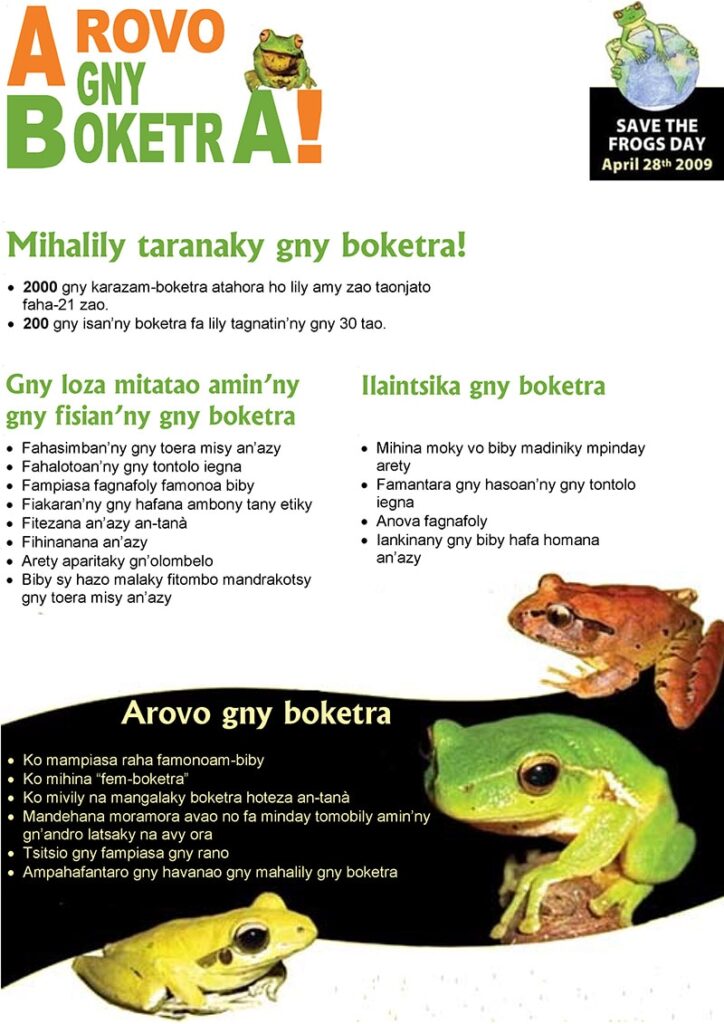

Photo of Heterixalus boettgeri by Jean-Baptiste Ramanamanajato

Zagreb, Croatia
Mila Loncar of the Croatian Herpetological Society (Hyla) gave a free 45-minute lecture on April 28th at School “Titus Brezovacki” in Zagreb, covering amphibian species found in Croatia, the causes and extent of the extinction crisis, and ways to help, followed by a question and answer session. Fliers, pins and wristbands were available, with funds going to SAVE THE FROGS! conservation efforts. The event was accompanied by a week-long amphibian exhibition in the school hall running April 24th through May 1st.
Lisbon, Portugal
Faculty of Sciences, University of Lisbon, Portugal. Dr. Eduardo Crespo gave a free 30-minute lecture on the history of herpetology in Portugal. Dr. Rui Rebelo gave a free 30-minute lecture on amphibian biology, ecology and diversity. Dr. Maria João Cruz gave a free 30-minute lecture on amphibian’s main threats, focusing on the invasive crayfish P. clarkii. Dr. Lucília Tibério, from Lisbon Zoo, gave a free 30-minute lecture on amphibian ex-situ conservation. There was a question and answer session after the lectures. Free and open to the public.
Habiganj, Bangladesh
Location: Sajahanpur Government Primary School, Teliapara. Hosted by Birds Bangladesh. The University of Chittagong joined in as well. Read all about this event on the Birds Bangladesh Blog.
Report from Sayam Chowdhury:
“We visited Sajahanpur Government Primary School (the one nearest to Satchari). We said a few words on frog conservation and arranged a painting competition. We also translated frog conservation education materials to Bangla and distribute amongst teachers. We targeted 5th grade students; approximately 50 students participated in the painting competition and PowerPoint presentation.
We have 34 species of amphibians in Bangladesh! To name one, the Htun Win’s Tree Frog (Rhacophorus htunwini) was first discovered in Myanmar (2005), and outside Myanmar lives only in Satchari National Park and some other mixed evergreen forests of Bangladesh. Hence this frog has a global significance and can play the role of the ‘frog conservation ambassador’ in Bangladesh. Thanks to all students & teachers of Teliapara Primary School and obviously SAVE THE FROGS! team for starting such nice awareness program!”

Bhaktapur, Nepal
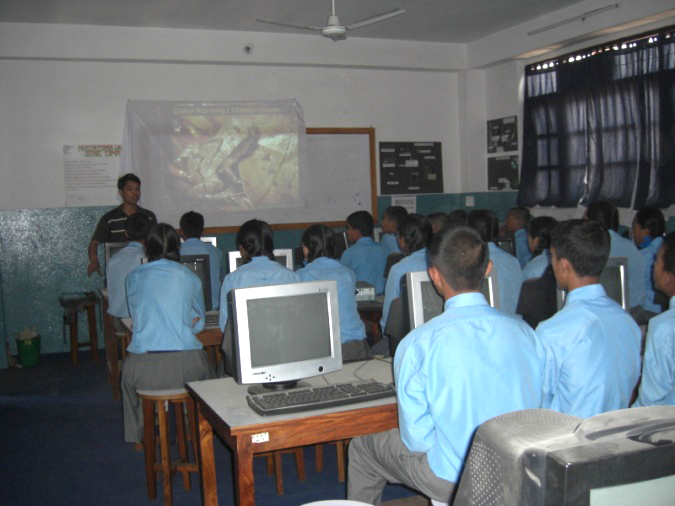
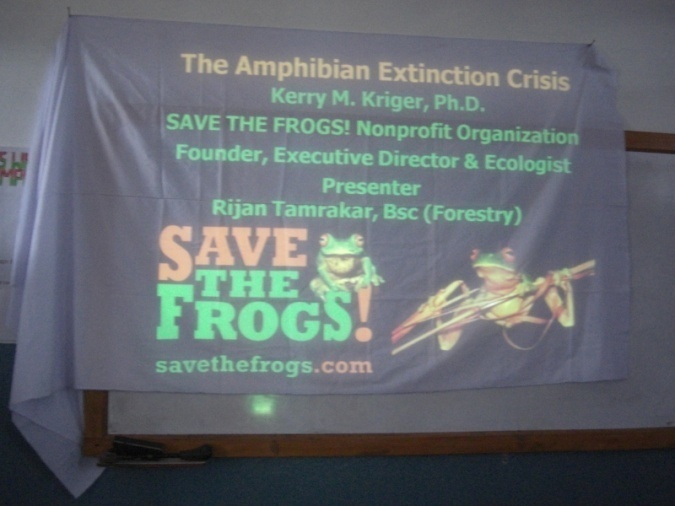
April 24th, 11am–12pm — Auditorium of Khwopa College, Bhaktapur, Nepal. Rijan Tamrakar of Nepal gave a free 45-minute lecture on the amphibian extinction crisis. This was a PowerPoint presentation with many photos of amphibians from around the world. 31 students attended. Topics included the causes and extent of the problem, as well as ways to stop the population declines. There was a question and answer session after the talk.
April 28th — Auditorium of Everest English School, Bhaktapur, Nepal. Rijan Tamrakar gave a free 45-minute lecture on the amphibian extinction crisis. Altogether 77 students in class nine took part in the program. Ms. Beauty Pandey, who attended the program, then presented the knowledge she gained during the session in front of the whole school (school assembly) on April 28th, 2009 on the occasion of Save The Frogs Day.
Talks were hosted by Everest School, Bhaktapur, Nepal, and by the Forum for Environment Management and Sustainable Development, Nepal (FEMSD, Nepal).
Guwahati, Assam, India
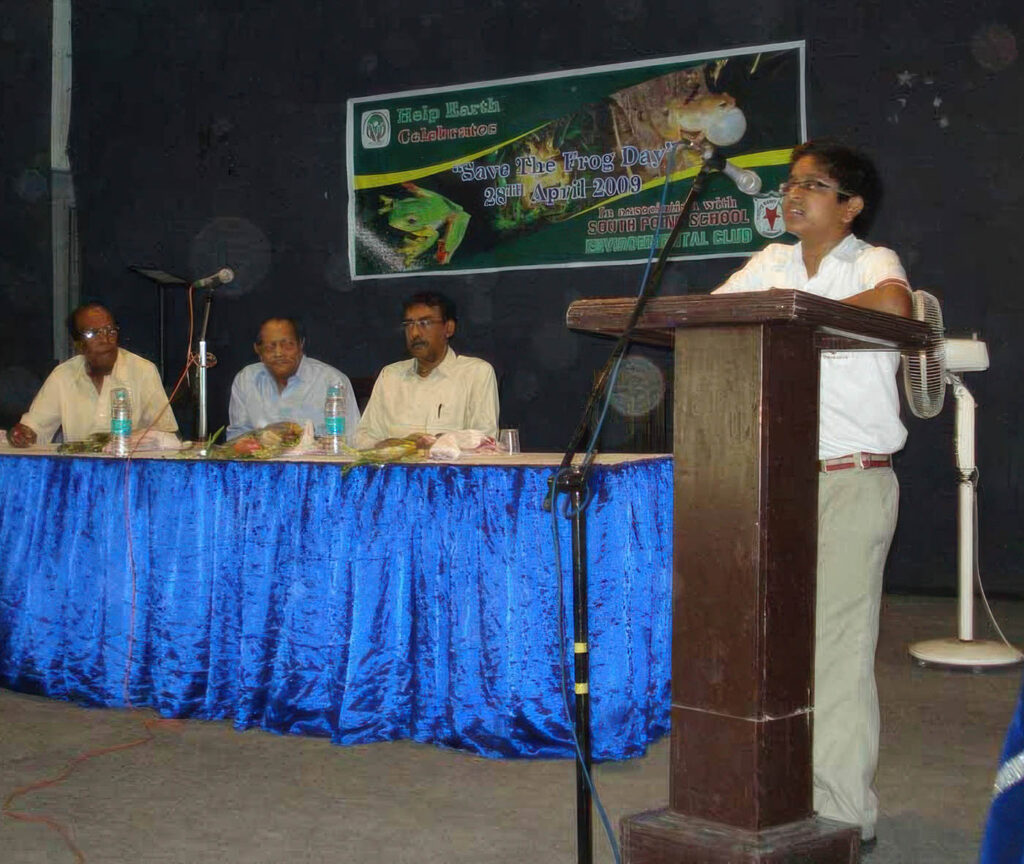
Help Earth, a volunteer organization dedicated to the conservation of nature and its resources, celebrated Save The Frogs Day at the South Point School Environmental Club at Lakhiram Baruah Sadan, Guwahati, India. 140 students attended the event, which was organized to spread awareness regarding frogs and highlighted their importance for all the other life forms on the earth, with special reference to human beings. The highlights of the event were the photographic gallery containing pictures showing frog diversity of the region, and issues related to the threats pertaining to their conservation. A speech competition titled “Frogs and Us” was held where students from different schools of the city participated. Slide Shows were presented by eminent herpetologists Mr. Abhijit Das of Aaranyak and Mr. Prashanta Kr Choudhury of Don Bosco College of Engineering and Technology. Brochures containing information on frogs and their importance were also distributed. This event was covered by The Assam Tribune.
Earliest Known Record of a Save The Frogs Day Article in Spanish
This piece in Paso Pacifico (based out of Nicaragua, El Salvador and California) from April 28th, 2009 is the very first known Spanish news article about Save The Frogs Day — or any annually observed amphibian conservation day for that matter: pasopacifico.org/save-the-frogs-day/
El registro conocido más temprano de un artículo de guardar las ranas en español
Esta obra en Paso Pacífico (basada en Nicaragua, El Salvador y California) de 28 de Abril, 2009 es el primer artículo de noticias españolas conocido sobre el Día De Salvar A Las Ranas — o cualquier día de conservación de anfibios que se haya observado anualmente en este asunto: pasopacifico.org/es/save-the-frogs-day/
Save The Frogs Day Featured On The Edge Of Existence Website
You can read about Save The Frogs Day on this Edge Of Existence webpage published March 17th, 2009 (United Kingdom).
Save The Frogs Day Factoid
SAVE THE FROGS! Founder Dr. Kerry Kriger conceived Save The Frogs Day one cold December night in Budapest.
Thanks for your support – together we can SAVE THE FROGS!

Please Donate to Help SAVE THE FROGS!
Your tax-deductible contribution will prevent amphibian extinctions through environmental education, scientific research, legal defense, and through the acquisition of critical amphibian habitat.