












Introduction
In an AI-centric world, every click, prompt, and search uses electricity and, often, a surprising amount of water for cooling data centers. These hidden resource demands contribute to climate change and water stress that directly threaten amphibian habitats worldwide. This article offers practical, frog-friendly ways to use technology wisely so your conservation impact grows while your digital footprint shrinks.
Why AI and data centers matter for frogs
Modern data centers powering AI tools and cloud services use large amounts of electricity and often withdraw significant volumes of freshwater for cooling, which can strain rivers, aquifers, and wetlands. As utilities in places like Georgia rush to build huge new power capacity largely to serve data centers, amphibians may feel the downstream effects through habitat loss, altered water regimes, and climate impacts.
Wetlands buffer floods, filter water, store carbon, and provide critical habitat for frogs, toads, and salamanders, yet they are among the ecosystems most at risk from climate change and development. As AI-driven energy and water demand rises, protecting and restoring wetlands becomes even more important for amphibians’ long-term survival. Learn more about how climate change affects amphibians and what you can do at: https://savethefrogs.com/climate

Where AI’s energy goes
AI’s footprint comes from two main activities:
- Training large models (like frontier chatbots) on huge datasets, which uses massive bursts of energy and water over weeks or months. Training runs are relatively rare but extremely intensive.
- Inference, which is running those models every time someone gets an AI search summary, autocomplete suggestion, or chatbot reply. Each inference uses much less energy than training, but collectively they happen billions of times, so their total footprint is huge over time.
A growing share of data-center energy is projected to be used for AI inference integrated into everyday tools, including search engines that add AI overviews even when users did not explicitly request them. Intentional AI sessions (opening a chatbot to ask targeted questions) are still important, but “always-on” default features are becoming a big and rising slice of the pie.

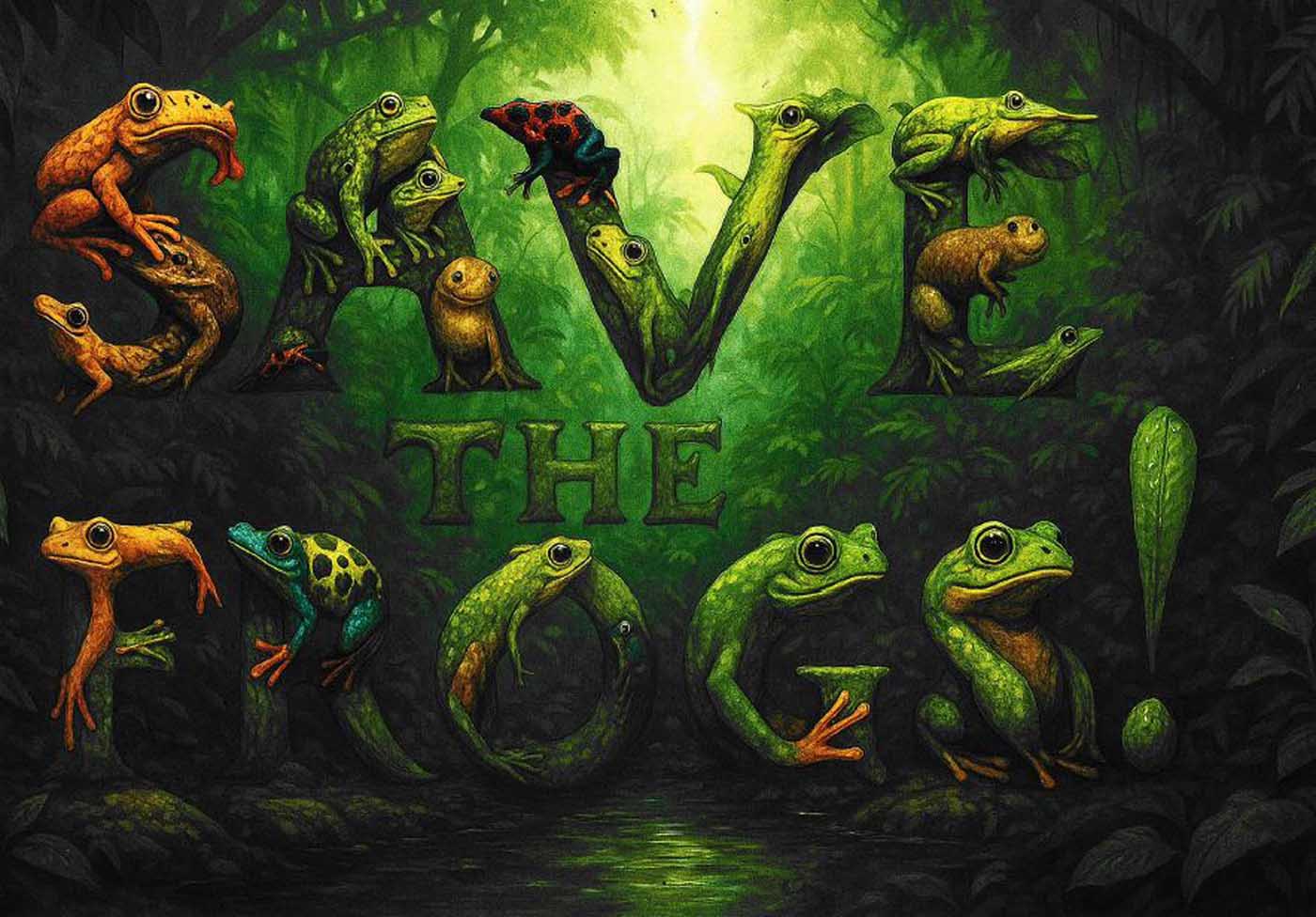
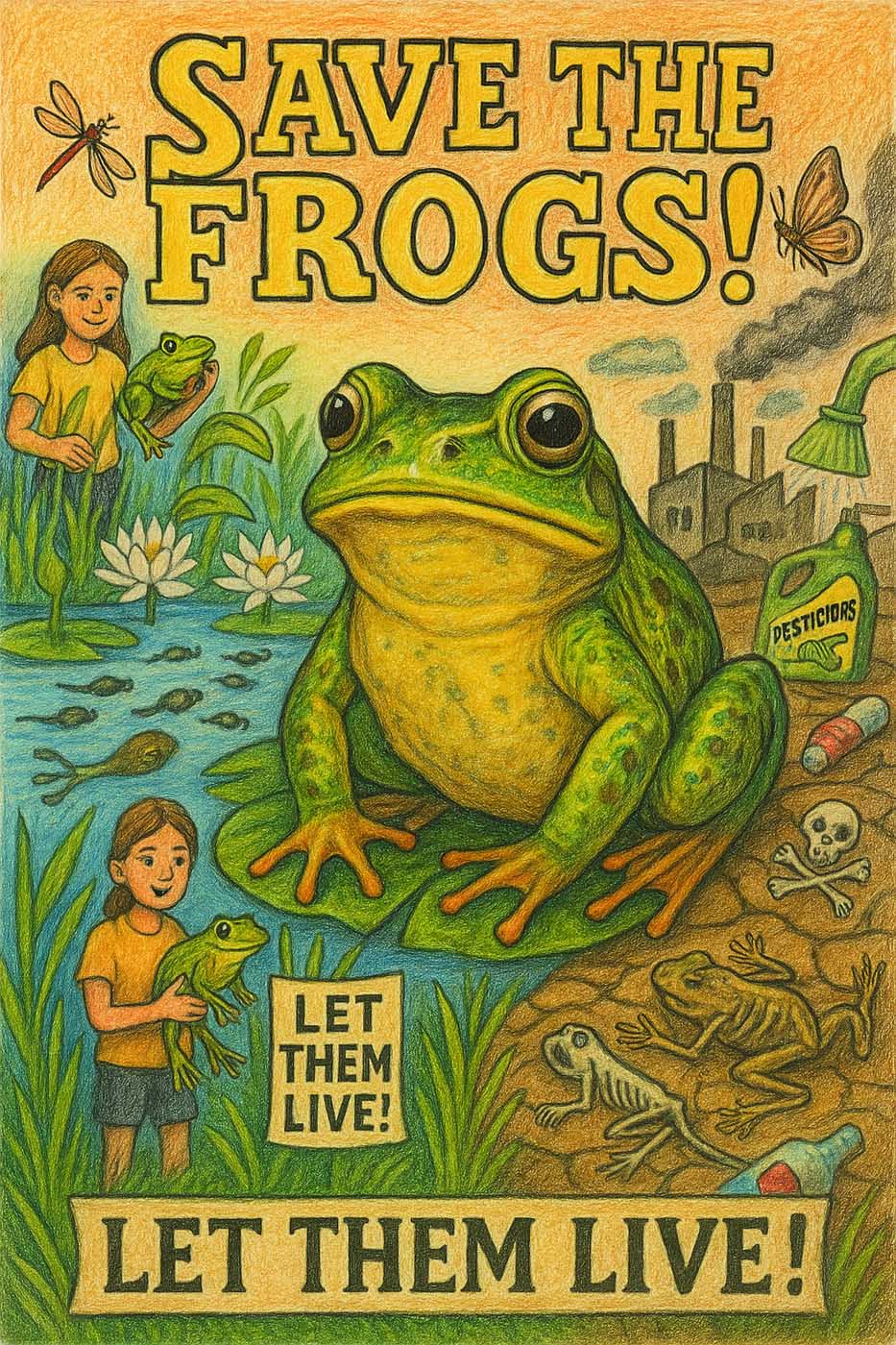
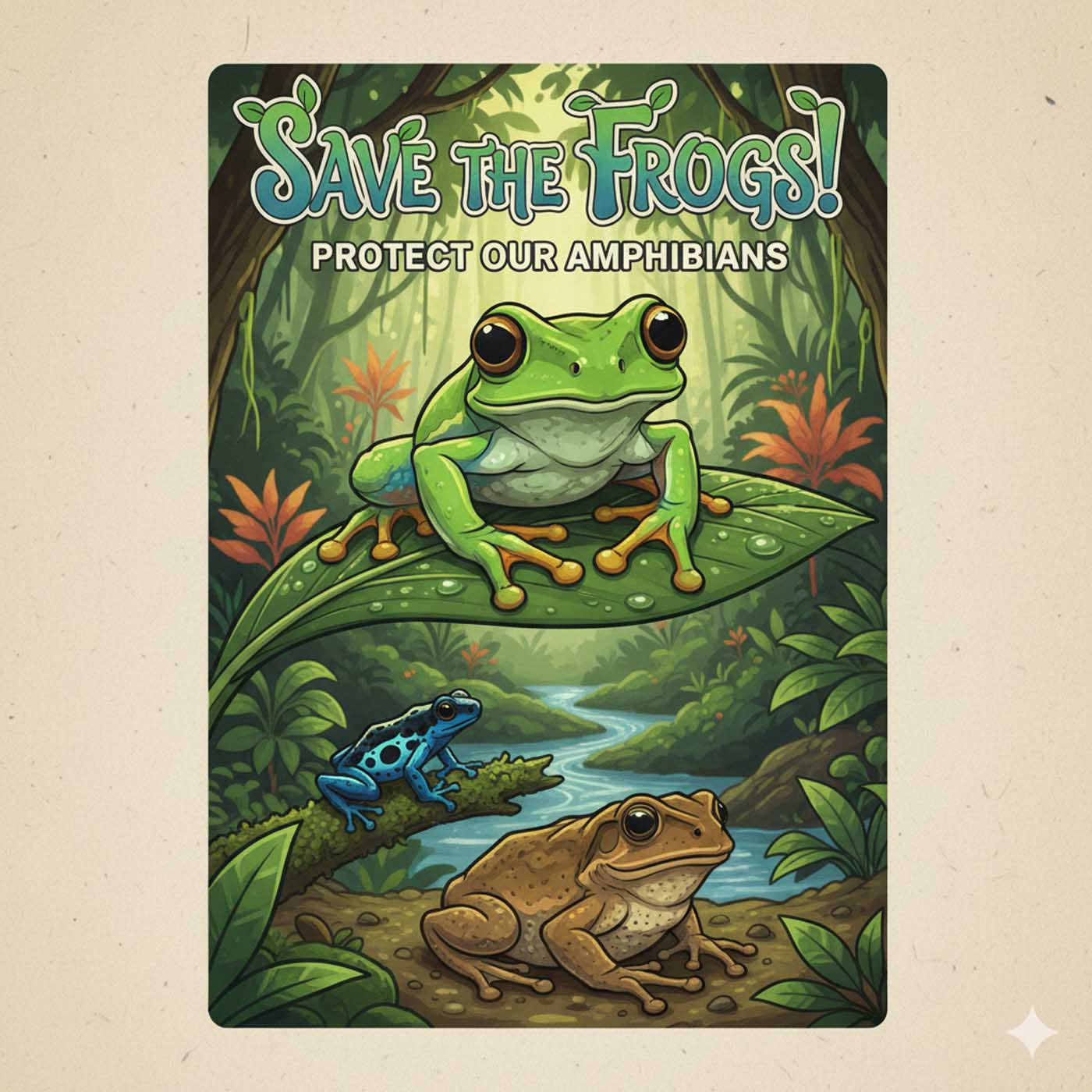
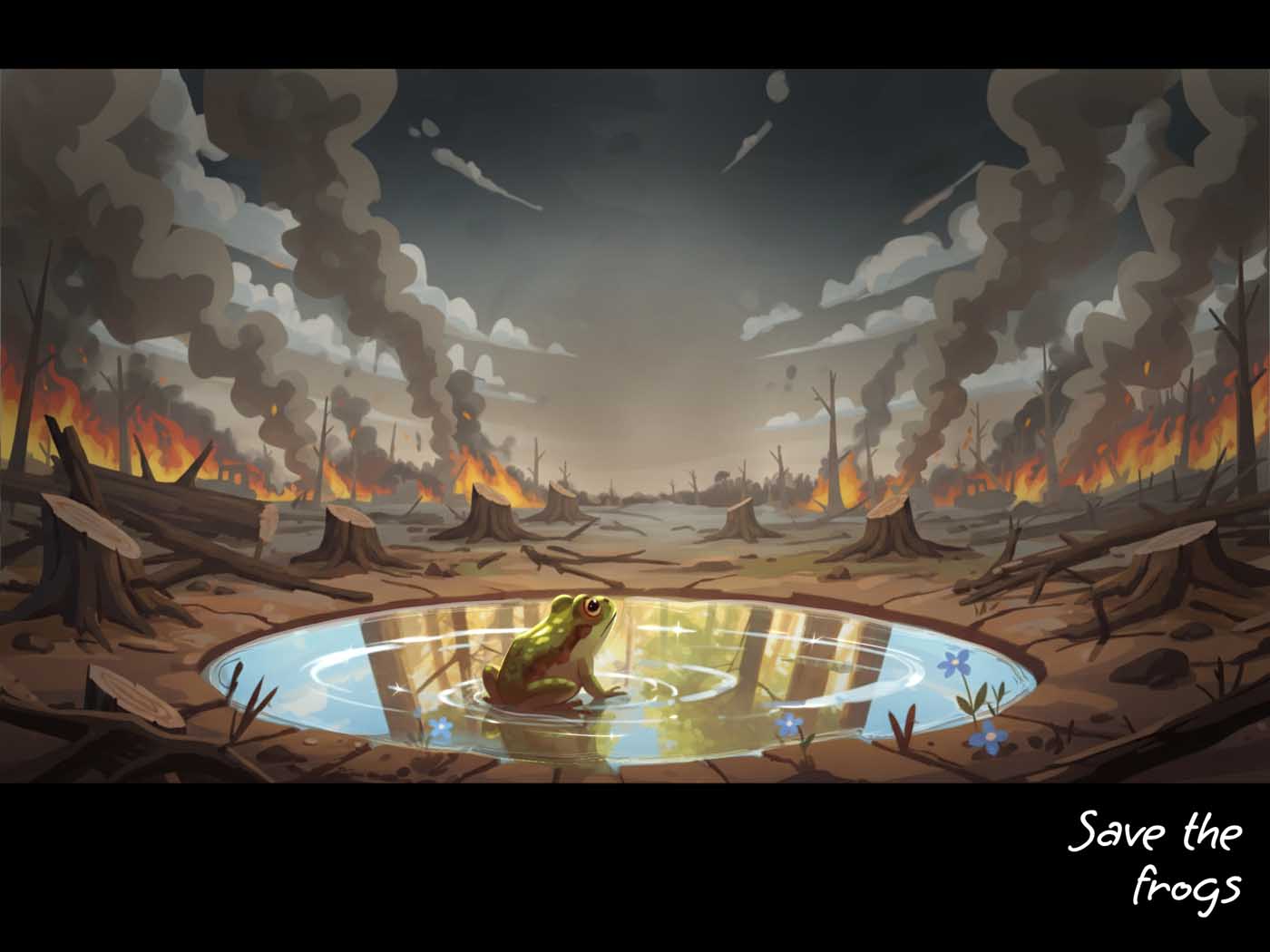
All the art on this page was AI-generated by SAVE THE FROGS! supporters. Whether you love or hate AI art and its potential impacts on the planet, you can’t deny that some of it – like what you see on this page – is awesome, and that if we have the files, we may as well share them on a page like this!
Make your searches more frog-friendly
Search is one of the highest-volume digital activities, so small efficiency gains here really matter.
- Prefer simple, non-AI search results when possible, and turn off or bypass forced AI answers in search settings where that option exists. In Google search bar simply type -ai at the end of your query to disable the distracting and energy-consumptive AI results.
- Consider eco-oriented search engines and browsers such as Ecosia, which invests revenue into tree-planting and emphasizes renewable energy, rather than defaulting to high-overhead AI results on every query.
- When you do use an AI assistant, batch your questions into fewer, deeper sessions instead of many short, scattered prompts to reduce repeated overhead.
These habits help ensure your daily research on frogs, field sites, and conservation tools does not use more energy and water than necessary.
Choosing AI tools with values in mind
No AI company is perfect, but some show more transparency and social commitments than others. Public reports and independent analyses suggest that the biggest cloud and AI providers vary widely in how much detail they share about data-center energy use, renewable energy sourcing, and AI-specific water and energy metrics. Transparency is not the same as sustainability, but it is a key first step and allows frog lovers to make more informed choices.
Anthropic, the company behind Claude, is a certified B-Corporation, meaning it has written certain social and environmental commitments into its governance structure. This does not guarantee optimal energy or water practices, but B-Corp status is generally a positive signal compared with firms that do not formally embed such goals. Regardless of the brand, look for AI and cloud services that:
- Publish regular environmental or sustainability reports with data-center energy and water details.
- Disclose the share of their operations powered by renewable or carbon-free electricity.
- Commit publicly to improving energy efficiency and reducing cooling water use.
Compare providers’ sustainability reports, third-party environmental ratings, and certifications before choosing which AI tools to use regularly.
Use AI where it helps frogs most
If you are going to spend energy on AI, aim for a strong conservation “return on investment.” AI can:
- Help draft educational materials, event descriptions, and outreach emails so you can reach more people about amphibian conservation in less time.
- Assist with organizing amphibian survey data, analyzing patterns, or summarizing field notes, which can free up more time for hands-on conservation.
- Translate frog conservation messages into multiple languages to reach new audiences and supporters.
- Create exceptional software that helps you save time and money (making it easier for you to donate to SAVE THE FROGS! 🐸)
The key is intentionality: use AI when it directly advances amphibian conservation, and avoid it when it merely adds convenience or novelty. Asking yourself, “Does this AI query meaningfully help frogs?” is a simple personal filter.

This article was drafted by SAVE THE FROGS! Founder Dr. Kerry Kriger in the back of a taxi, with AI assistance. Without AI, it likely wouldn’t exist – demonstrating exactly the kind of intentional, high-value conservation use we recommend.
Start fresh chats when you can
Every message in a long conversation requires the AI to re-process the entire chat history, consuming more tokens and energy as the conversation grows. When possible, start a new chat instead of continuing an extremely long thread – especially for unrelated topics.
For developers using AI-powered IDEs like Cursor, well-planned projects with clear roadmaps and specifications can enable concise, focused conversations that accomplish more with less context. Tools like SpecStory help you create detailed project specifications upfront, so you can have shorter, more efficient AI sessions and start fresh without losing important context. Each focused chat uses less energy than one sprawling conversation that carries unnecessary history.
Think of it like conservation fieldwork: a well-planned survey with clear protocols is more efficient than wandering aimlessly and re-covering the same ground.

Hardware, hosting, and cloud choices
Your devices and hosting choices matter too:
- Keep phones, tablets, and laptops in service as long as possible; repair rather than replace when you can, and choose energy-efficient models when upgrades are unavoidable.
- For websites and cloud tools used by frog groups, favor providers that publish sustainability data and use or purchase significant amounts of renewable energy.
- Optimize images, videos, and downloads on your frog-related websites so pages load quickly and use less bandwidth and server time.
- If you’re going to have a website, make it awesome…we host our sites on Rocket and encourage you to as well.
These behind-the-scenes decisions can cumulatively reduce the energy load associated with spreading amphibian conservation messages online.

More ways to lighten your AI footprint
- Choose lighter models when appropriate: Many AI tools offer different model sizes (like Claude Haiku vs. Sonnet). Use faster, lighter models for simple tasks and save the powerful models for complex work that truly needs them.
- Write clearer prompts: A well-crafted prompt gets better results on the first try, avoiding the energy cost of multiple regenerations or follow-up corrections.
- Use text over images/video: AI image and video generation uses significantly more energy than text. When text will accomplish your conservation goal, skip the visuals.
- Stop streaming when you have your answer: If the AI has already given you what you need, you don’t have to wait for the full response to finish generating.
- Reuse and cache: If you have a good AI-generated email template, species description, or educational outline, save it and adapt it rather than generating from scratch each time.
- Turn off features you don’t need: Many AI tools offer optional features like web search, image analysis, or code execution. If you don’t need them for a particular task, disable them to reduce processing overhead.
- Use project knowledge files: Instead of pasting the same context (field site descriptions, species lists, project backgrounds) into every conversation, use tools that let you upload reference files once and draw on them as needed.
Protecting wetlands in an AI-heavy era
Because data centers often rely on large volumes of water for cooling, increased AI demand can intensify competition for freshwater and indirectly threaten wetlands and streams that amphibians depend on. In some regions, heavy industrial or data-center water withdrawals can lower water tables or alter flow patterns, putting extra stress on already fragile aquatic habitats.
Companies that build, own, or heavily use data centers should help mitigate their local and global impacts by investing in wetland restoration, construction, and protection, especially in regions where data-center water withdrawals or cooling infrastructure could stress freshwater ecosystems. Governments at all levels should require strong environmental standards for new data centers, including limits on water withdrawals, protections for nearby wetlands, and meaningful mitigation measures such as funding wetland restoration and creation through grants and permitting conditions. From a frog’s point of view, every hectare of wetland saved or created matters far more than any single data-center efficiency tweak.
SAVE THE FROGS! works globally to protect and restore wetlands:
https://savethefrogs.com/wetlands
You can also take hands-on action at home by learning how to build a backyard wetland, which provides habitat, stores water, and supports local biodiversity:
https://savethefrogs.com/courses/wetlands

The AI-generated artwork on this page was created by artists from around the world who participated in the 2025 SAVE THE FROGS! Art Contest: Selen Çetinkaya (Turkey), B. Pereira (Brazil), Agatha Messeder (USA), Eloísa Ferreira Santos (Brazil), Anny Freitas (Brazil), Hunter Ottaviani (USA), Elli Lechner Momma (Germany), Thu Cao (Vietnam), Esmira Mammadova (Azerbaijan), Navonil Debnath (India), and Nayel Mirza (United Kingdom). Their creativity demonstrates how AI can amplify artistic expression in service of amphibian conservation. That being said, we will likely not permit AI-generated art in future contests as we cannot control how many prompts or which software contestants use. You can view more AI-generated frog art in the Museum of Modern Frog Art.
Your actions matter
As a tech-savvy frog enthusiast, your choices about devices, browsers, search engines, and AI tools echo through the energy and water systems that shape amphibian habitats. By favoring transparent, conservation-minded services, minimizing unnecessary AI use, and actively supporting wetland protection, you help ensure that the digital future is safer for frogs and for the ecosystems they call home.

