


Saving Critically Endangered Frogs In Kenya
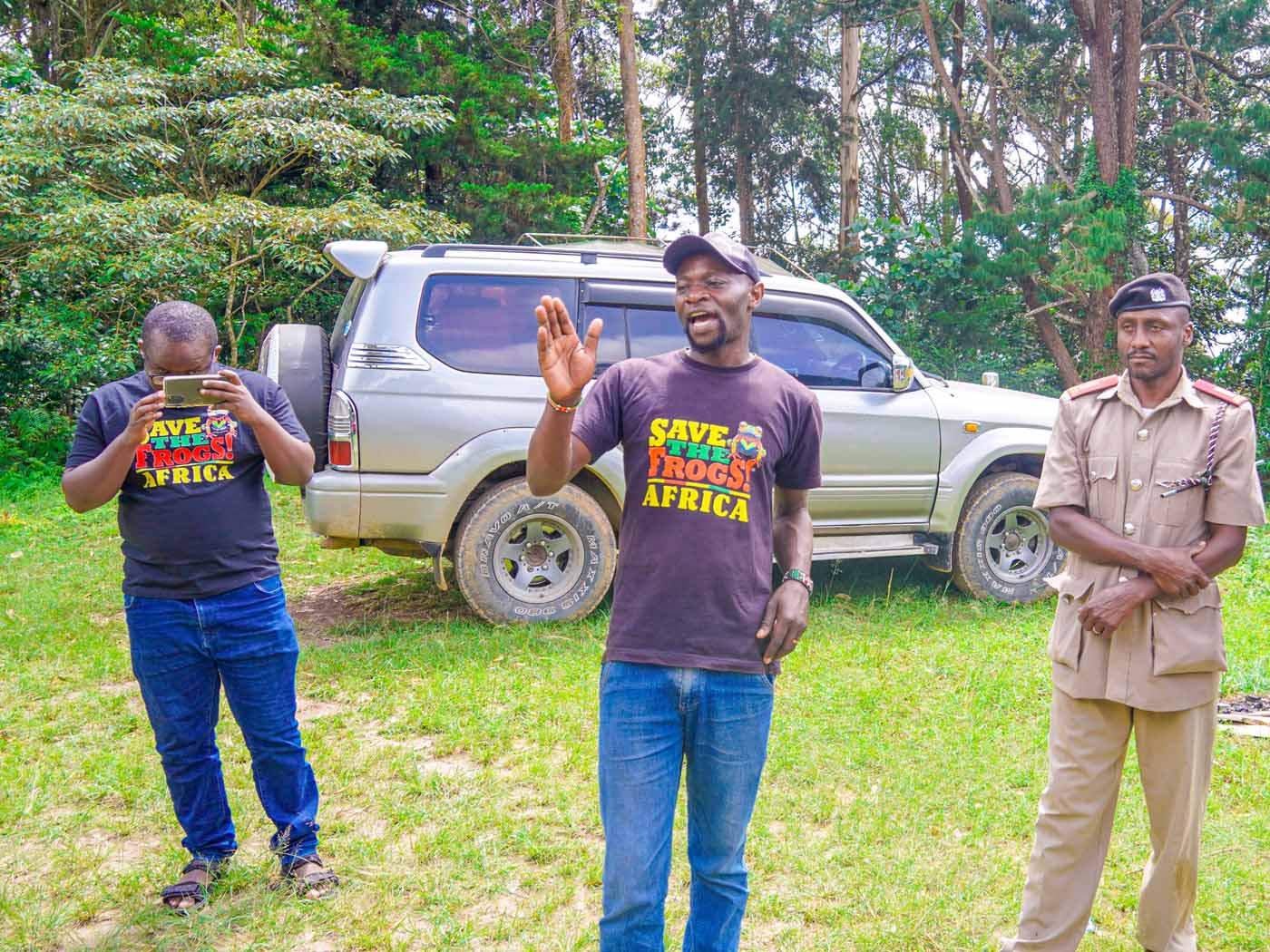
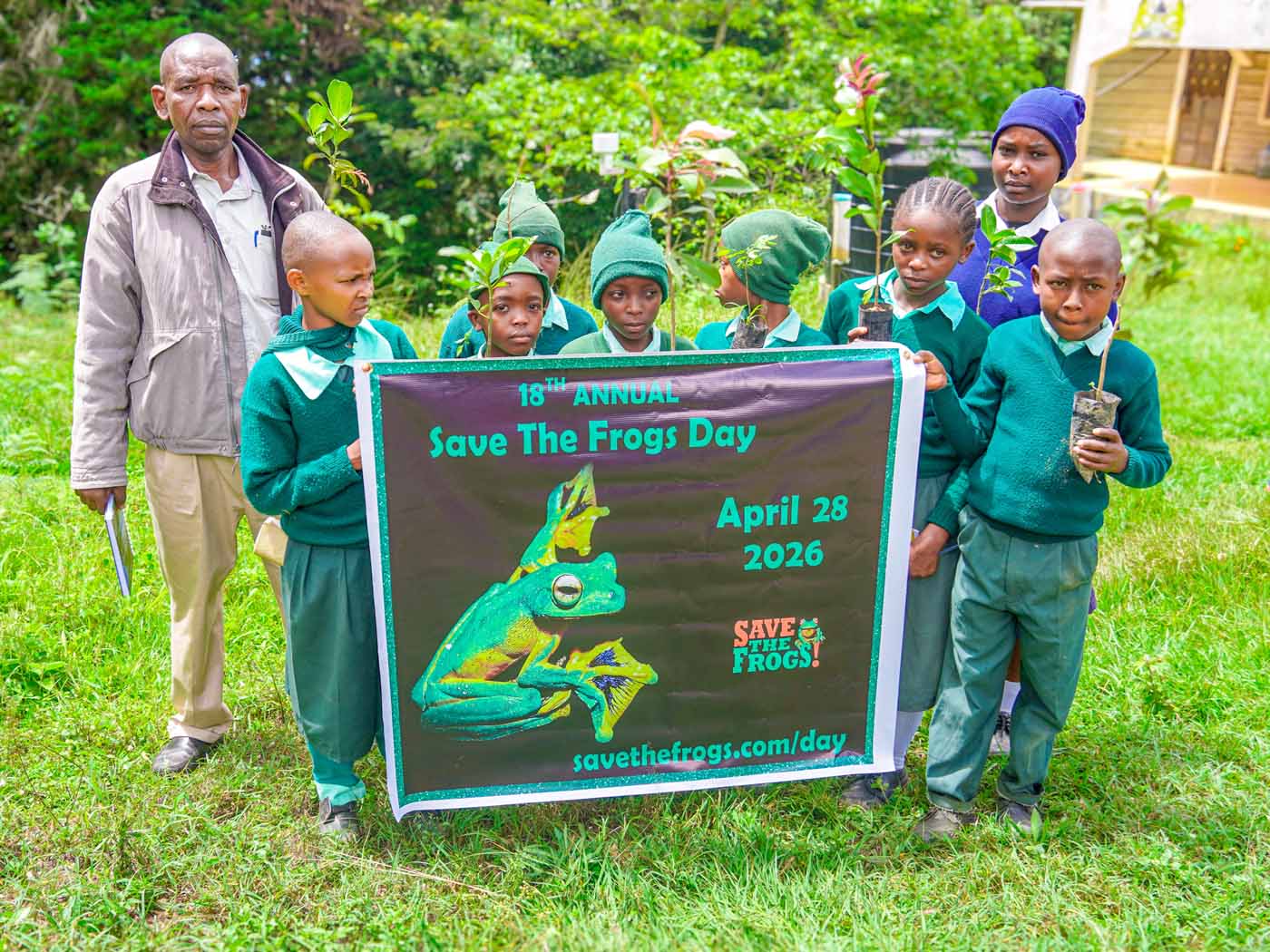
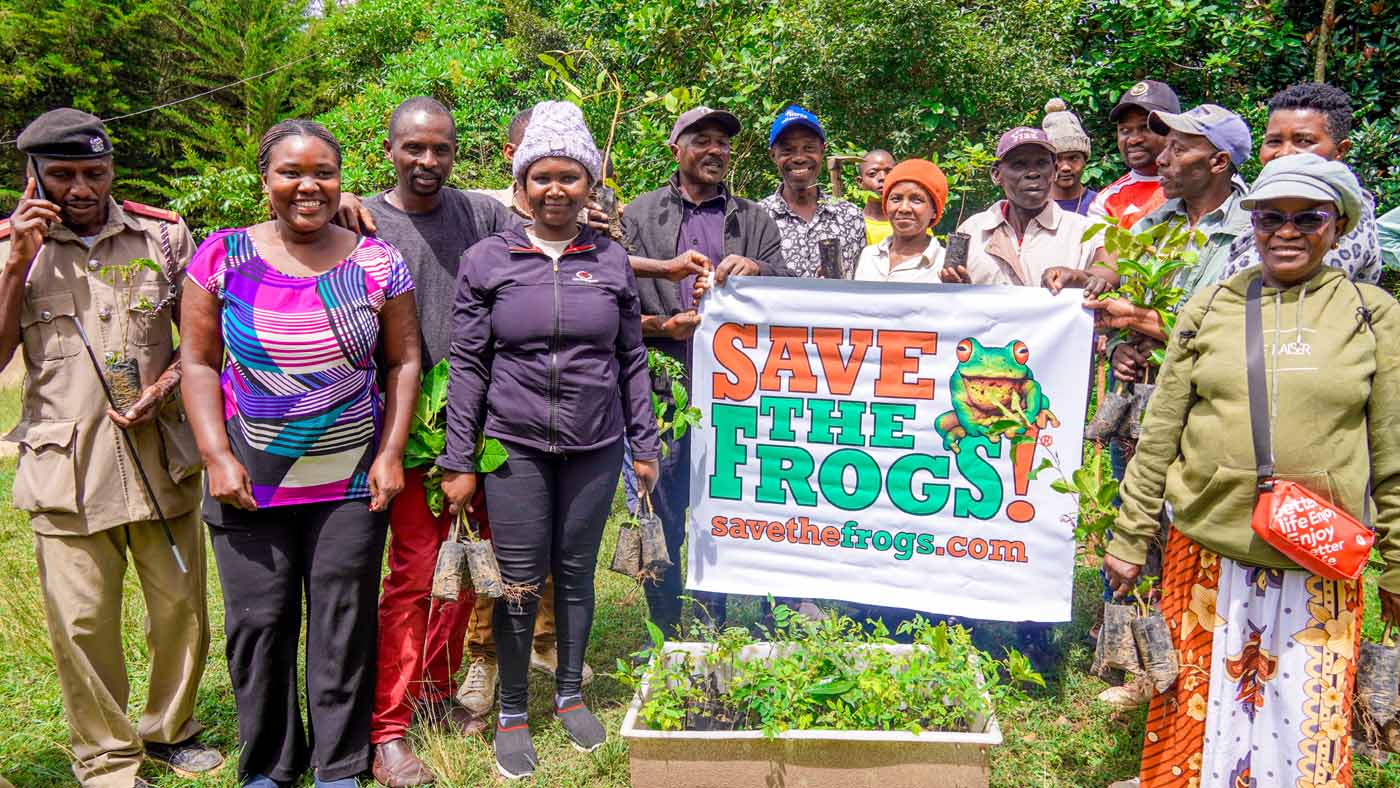
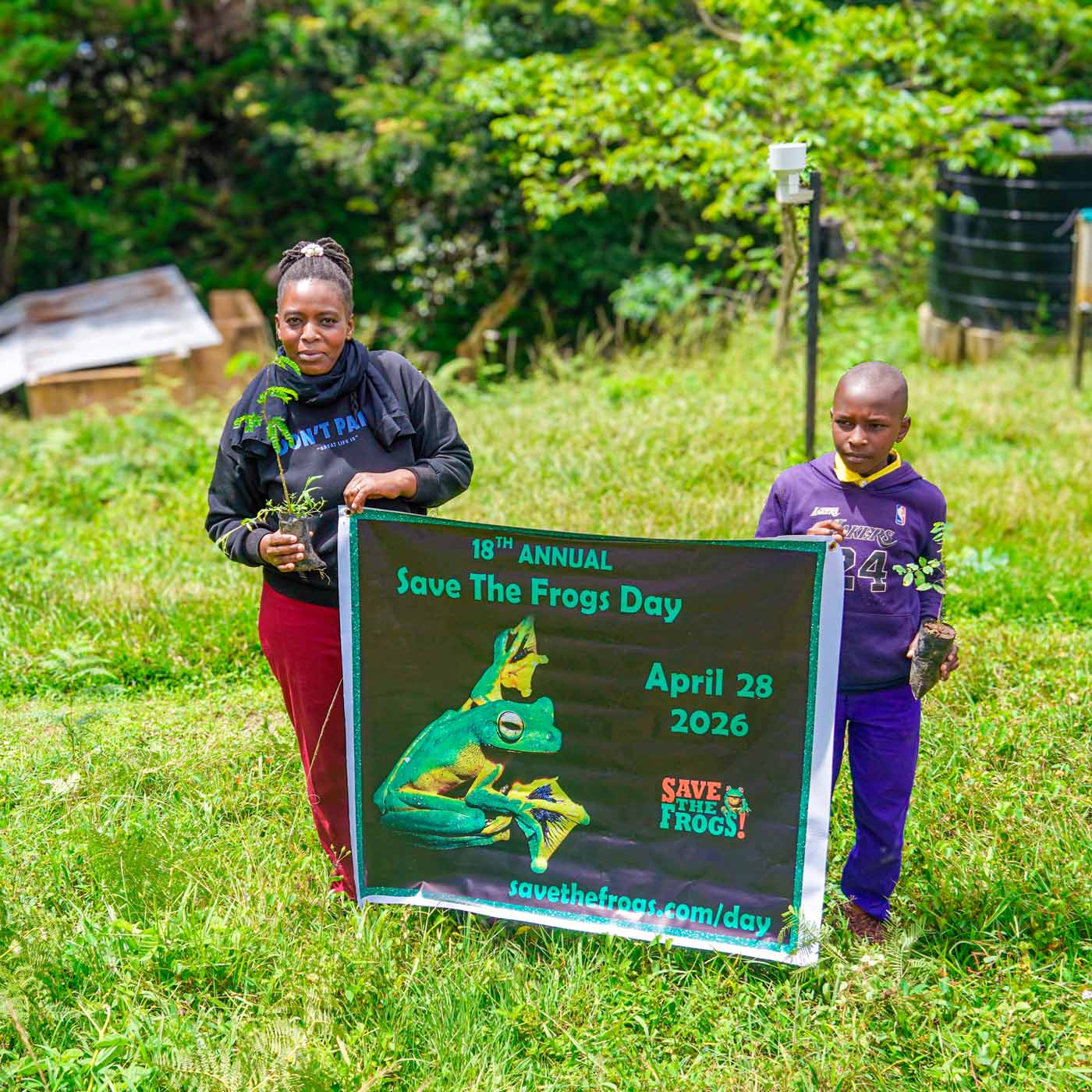
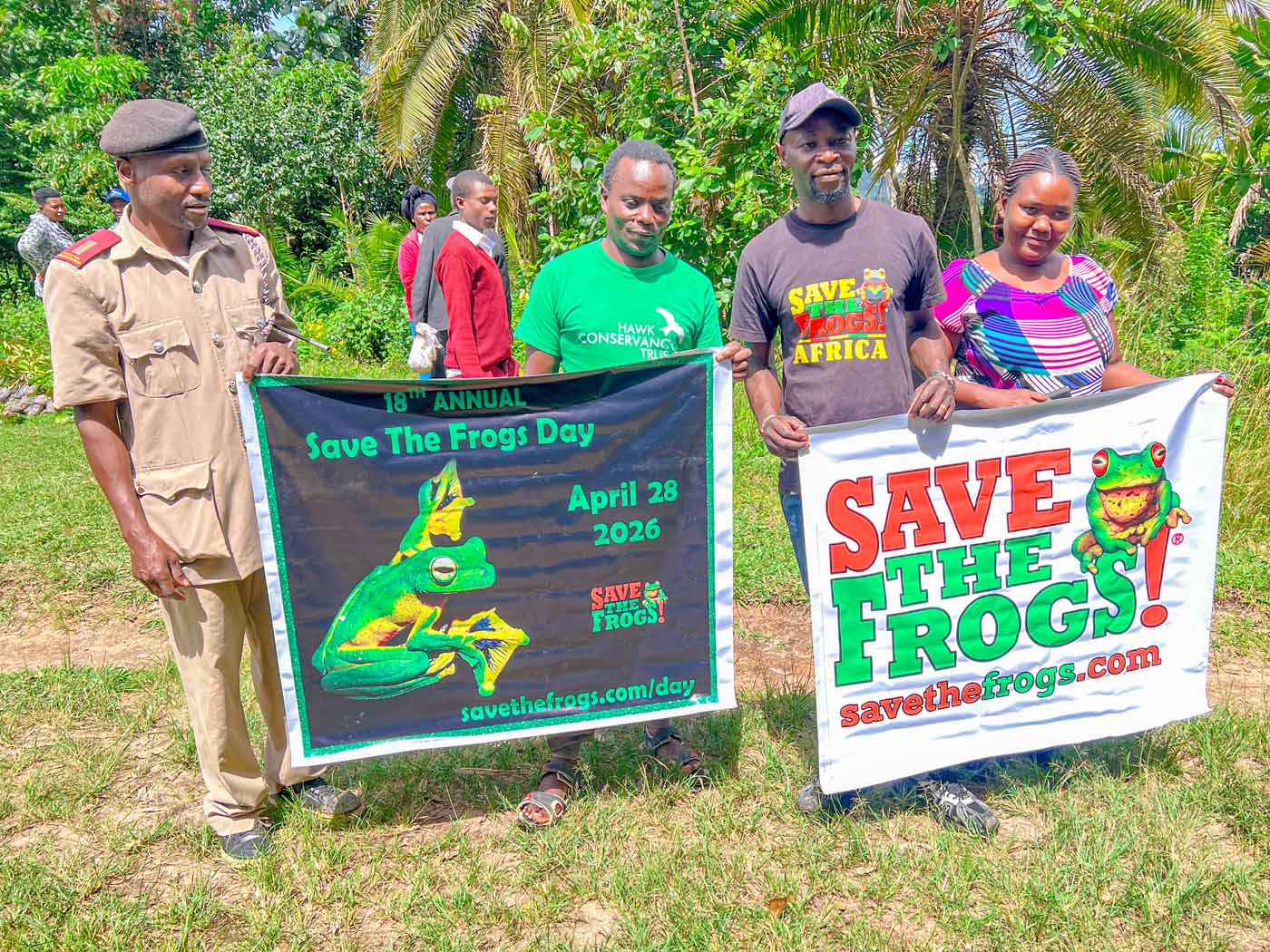
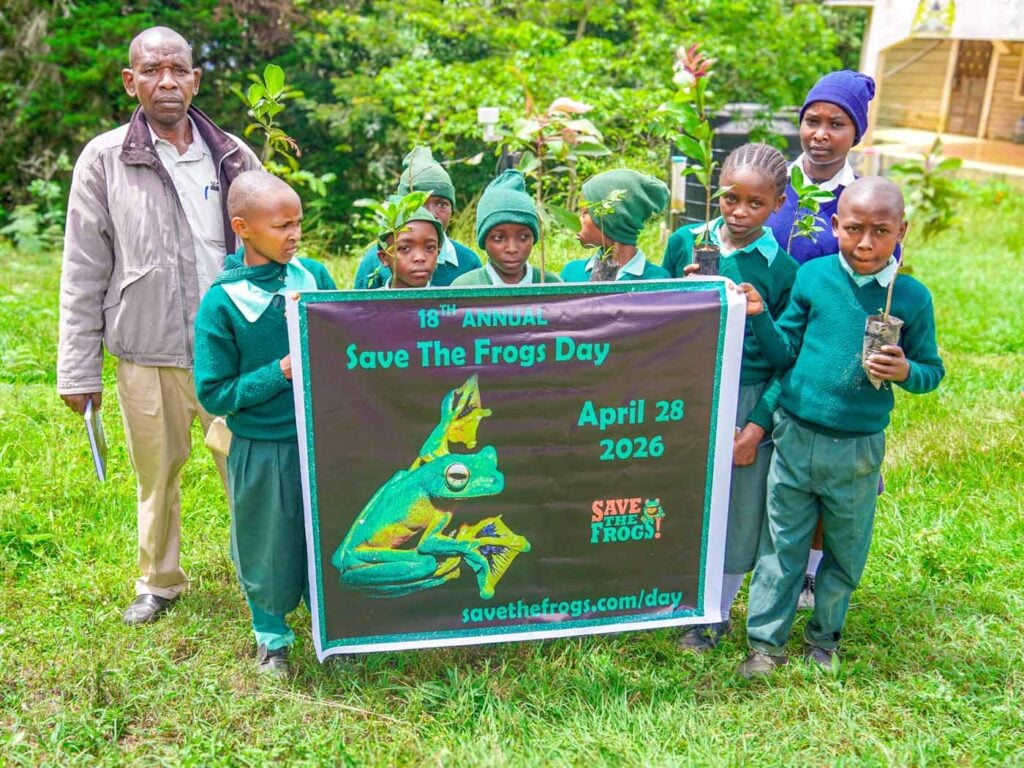
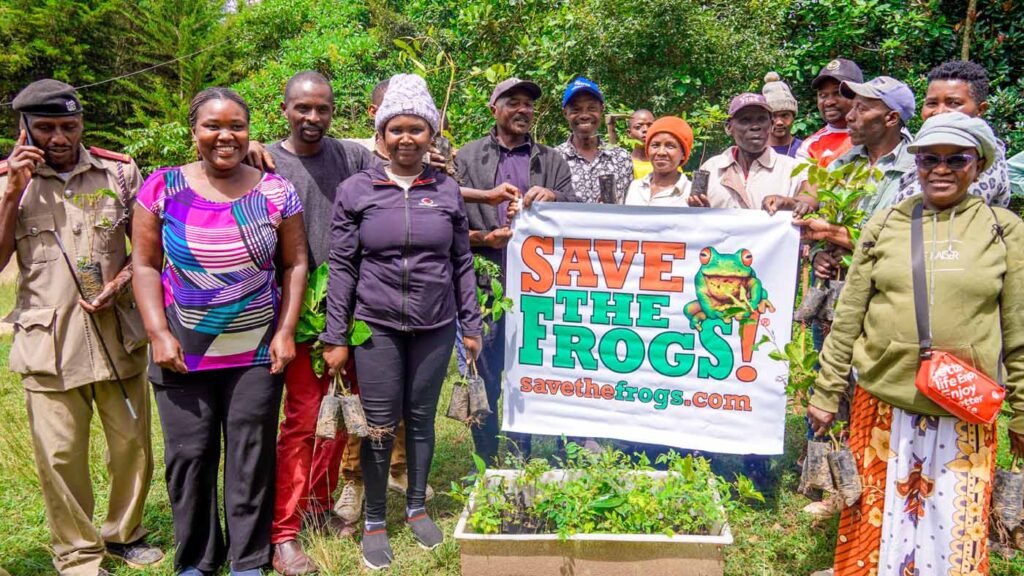
On Tuesday, April 28, 2026, Naturehub Collective hosted Kenya’s first major Save The Frogs Day event in Wundanyi, Taita Hills — bringing 150 people together to protect the critically endangered Taita Hills Warty Frog (Callulina dawida), a species that survives in just 4.3 square kilometers of fragmented montane forest. The seven-hour, free event was funded by a $750 Save The Frogs Day Grant and was part of the 18th Annual Save The Frogs Day, celebrated worldwide on April 28th.
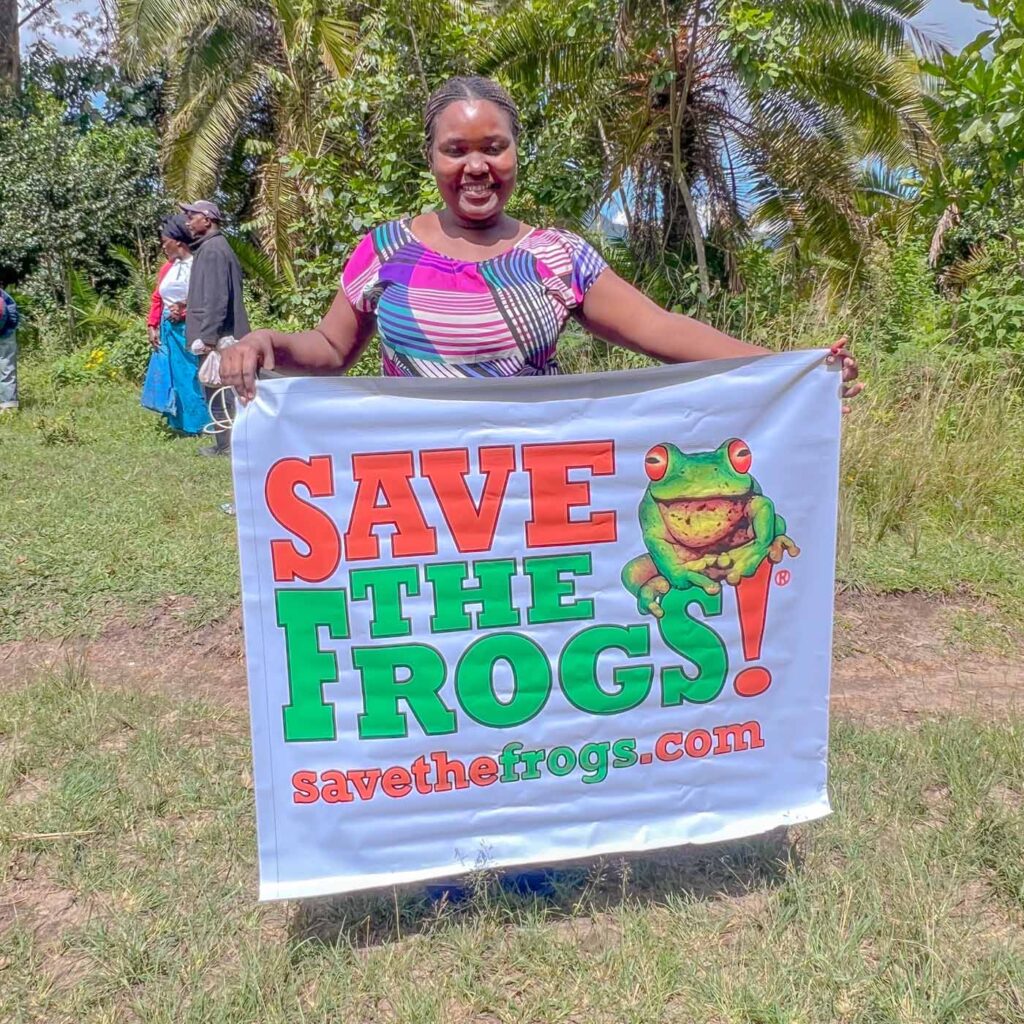
A Morning of Education
The day opened with presentations delivered in Swahili and the Taita language, covering the warty frog’s Critically Endangered status and its unusual direct-development reproduction — females guard 30–40 terrestrial eggs, with no free-swimming tadpole stage. Participants learned why the species is a flagship for the Taita Hills Key Biodiversity Area, practiced amphibian identification, and connected frog conservation to watershed health and clean water for the more than 400,000 residents living downstream.
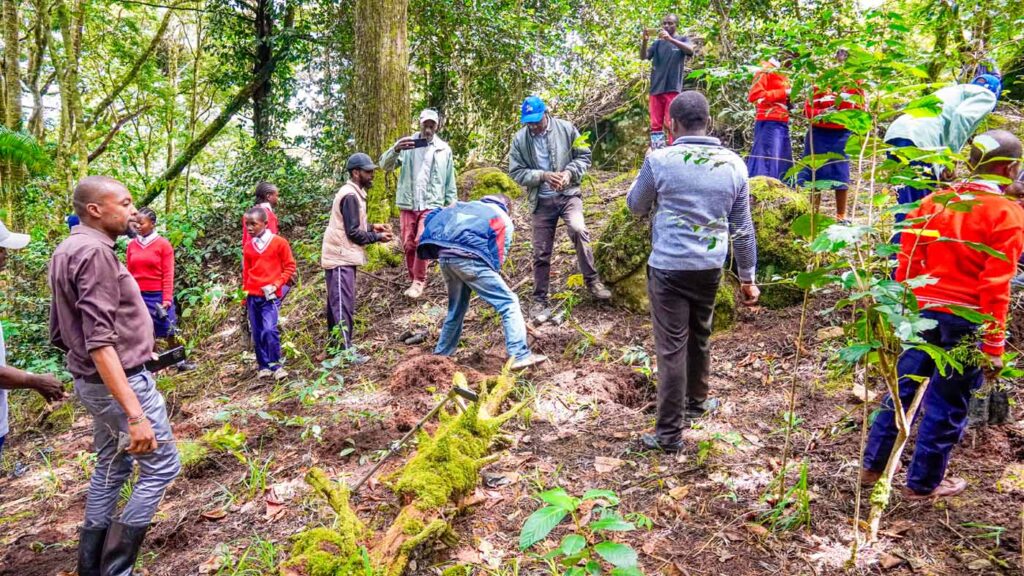
Into the Forest
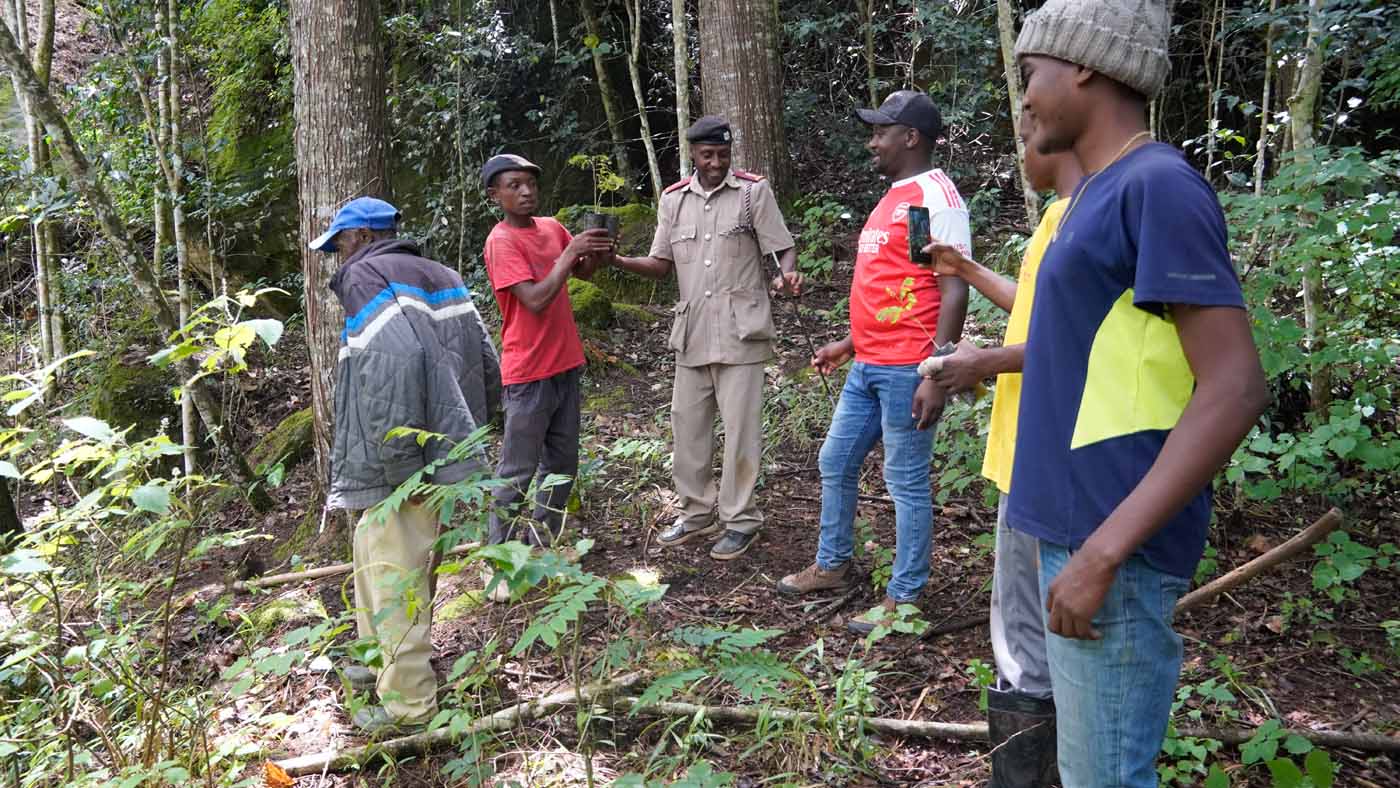
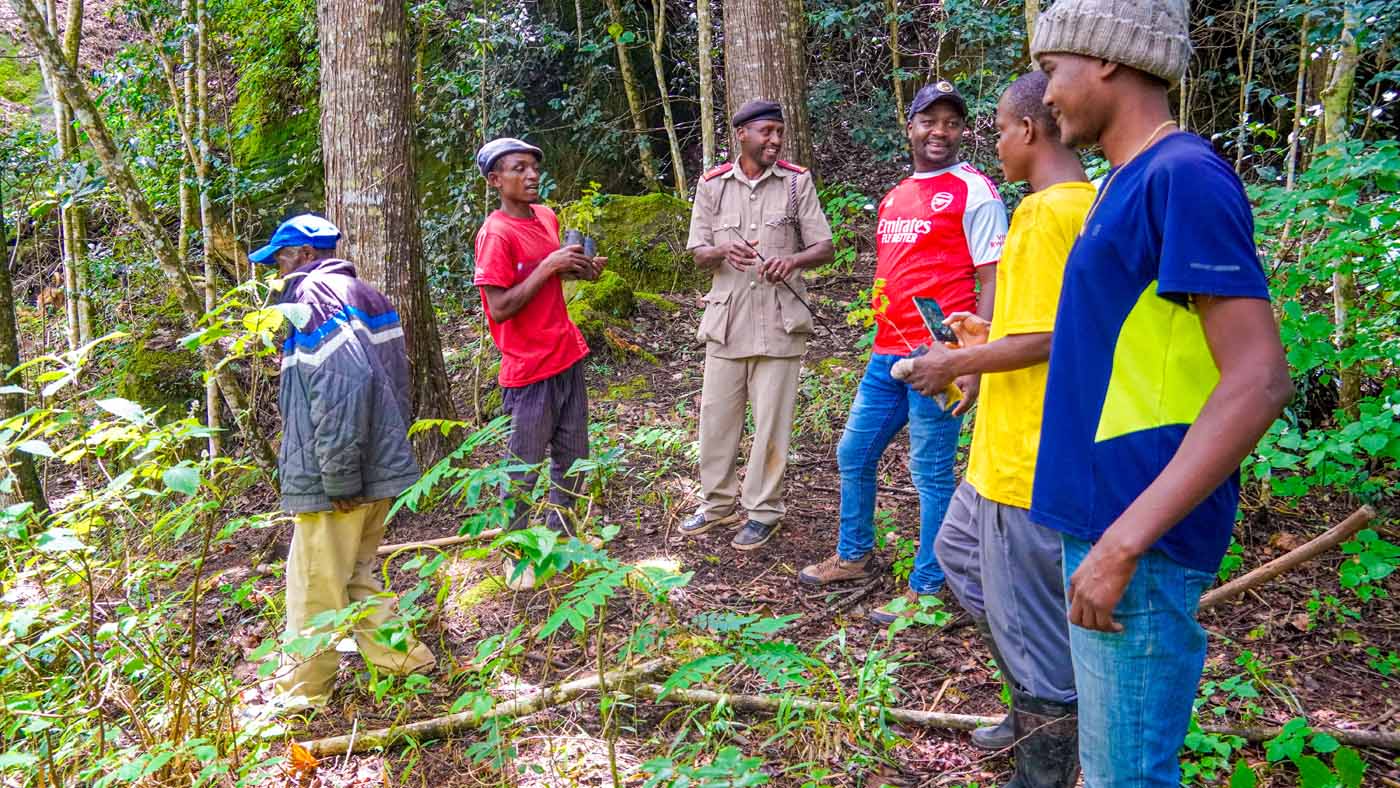
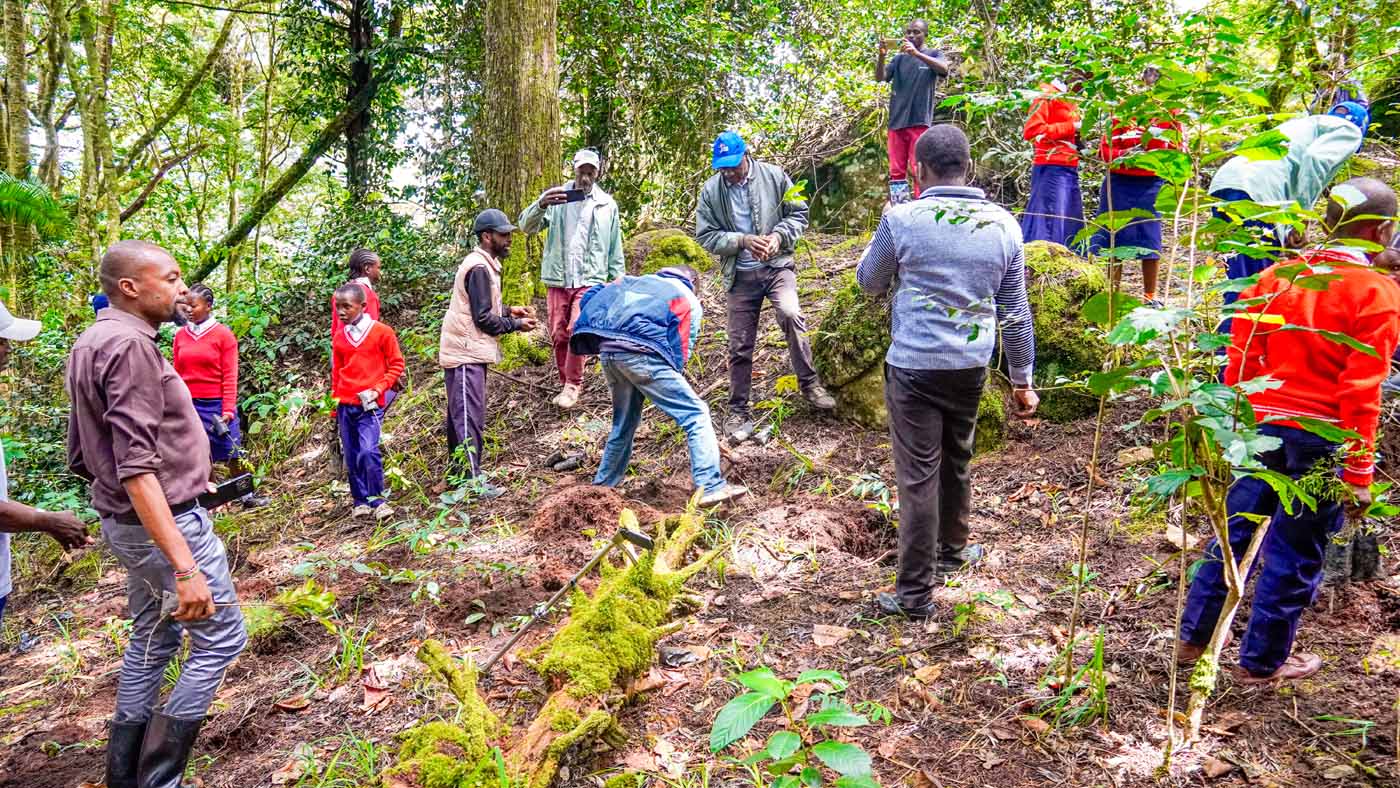
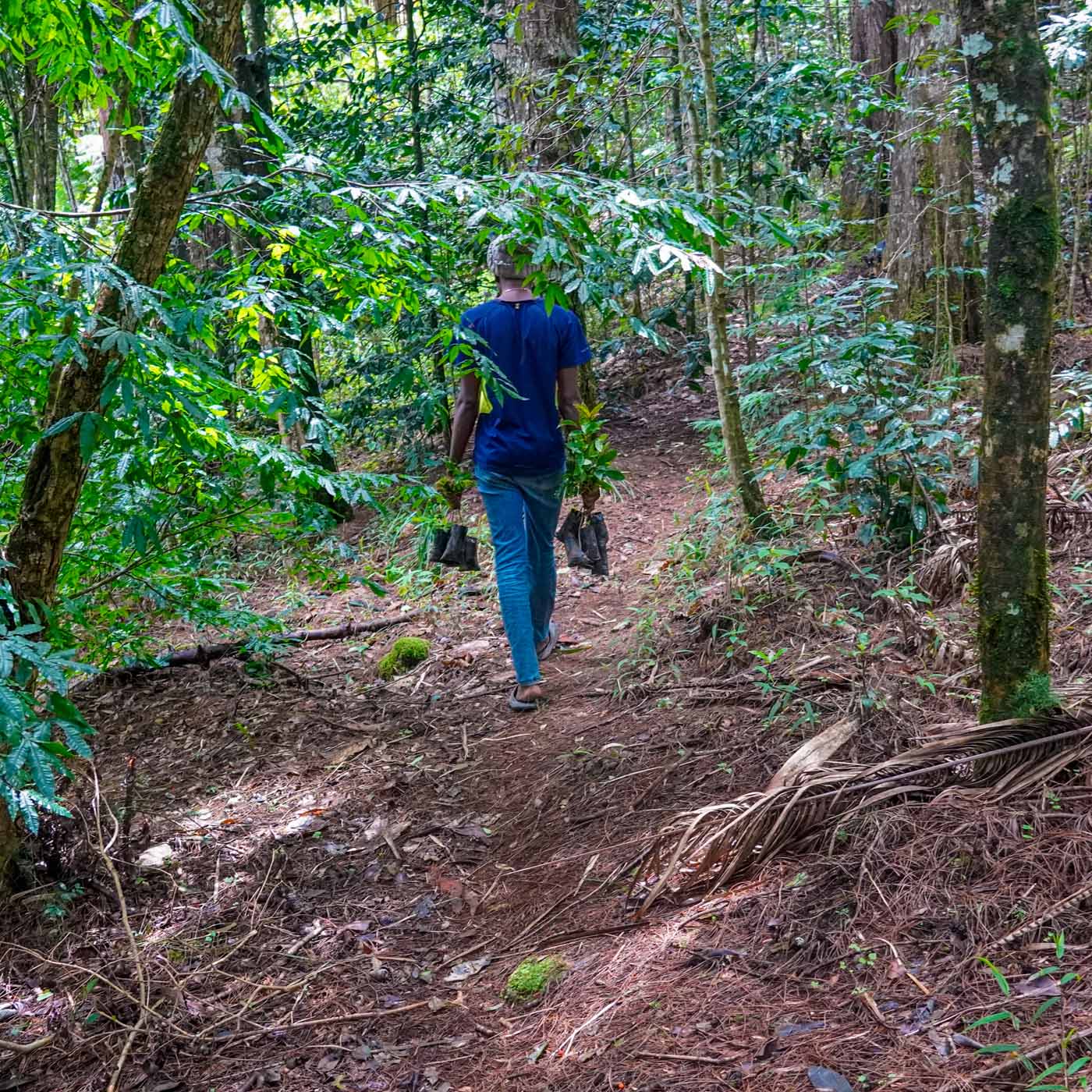
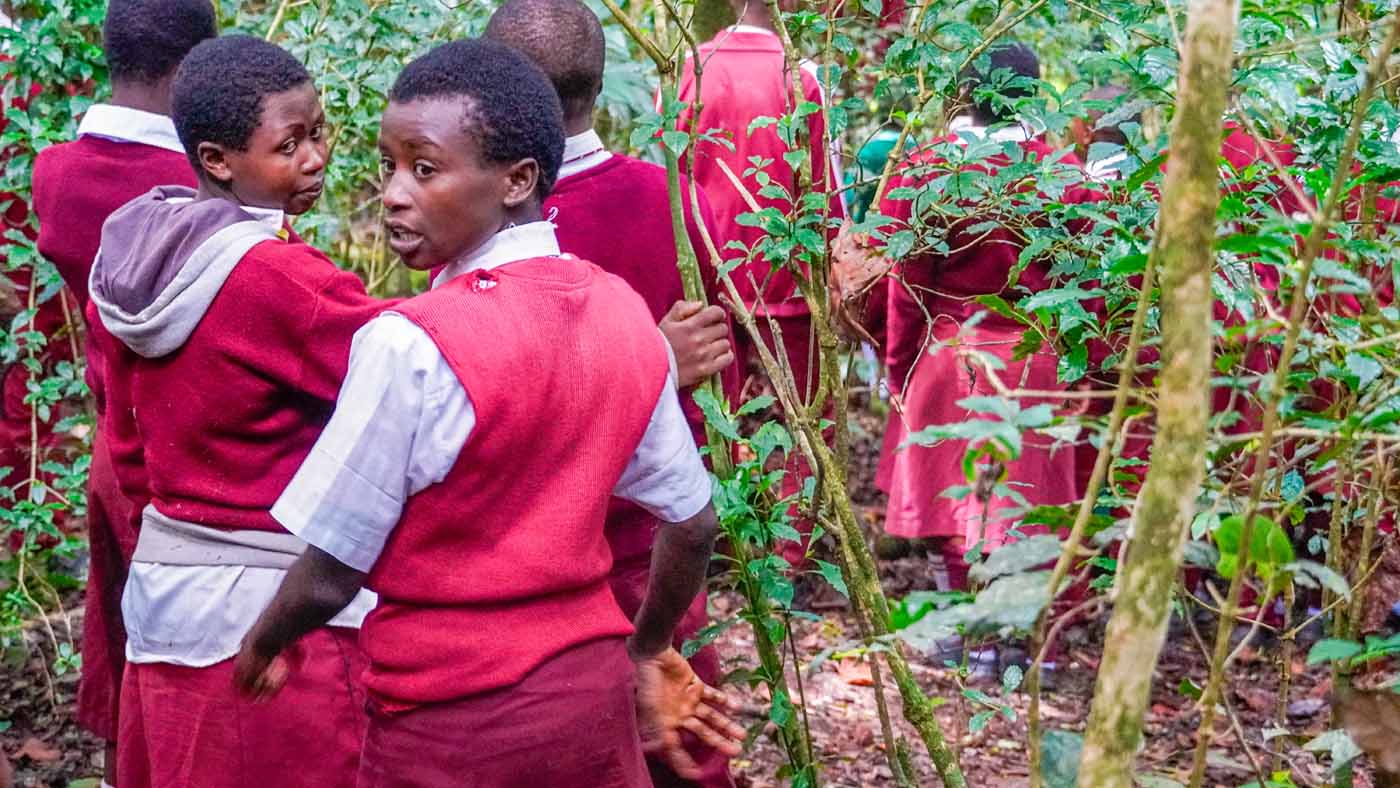
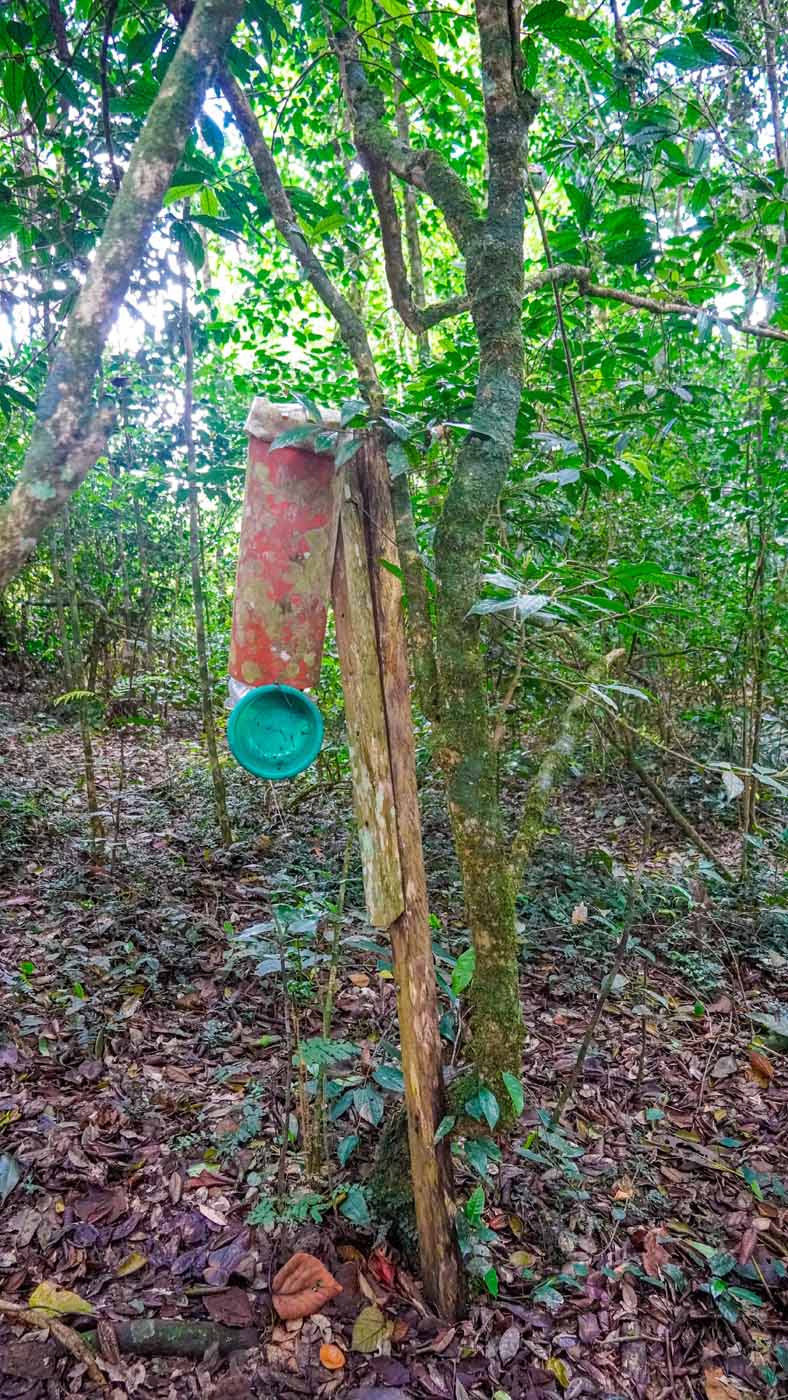
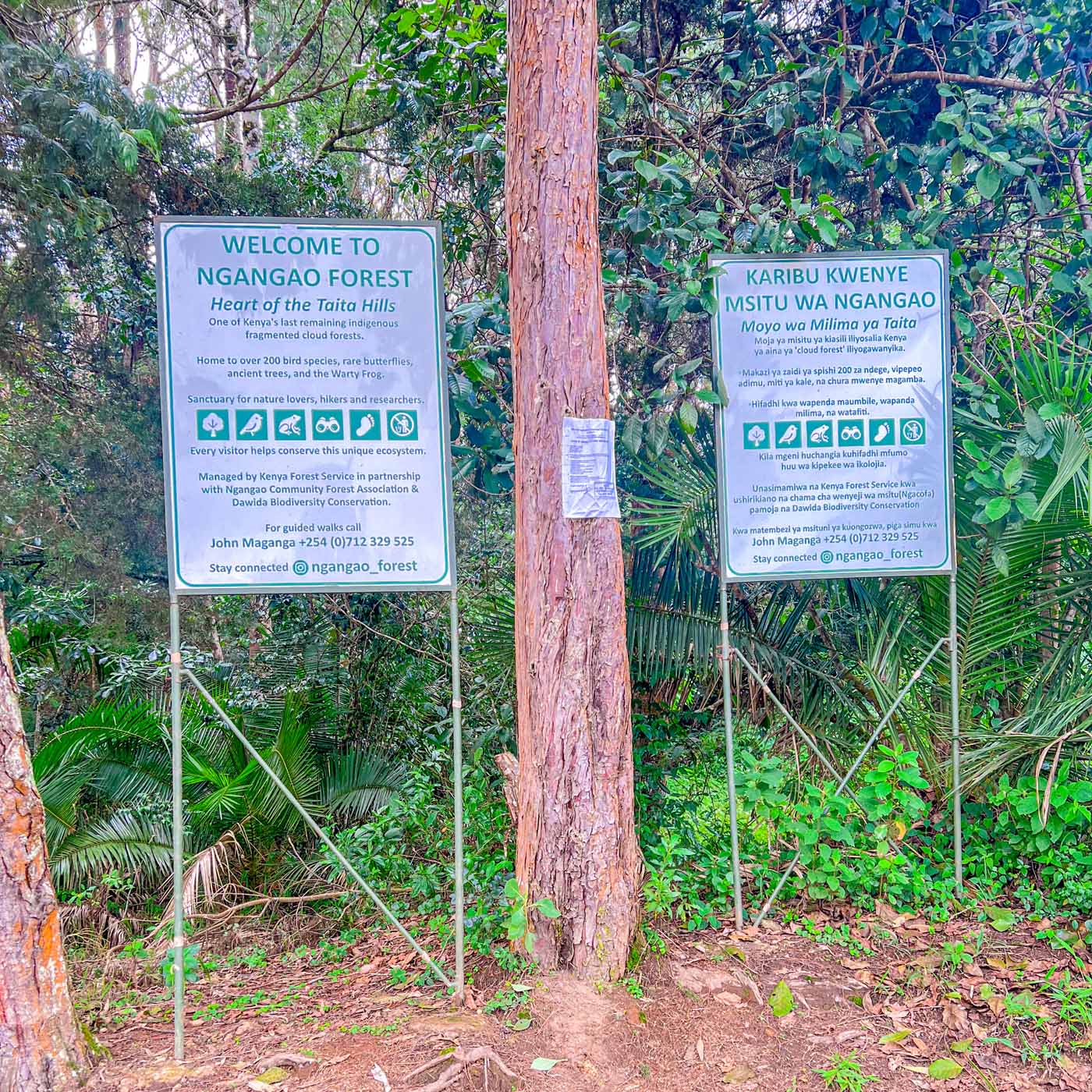
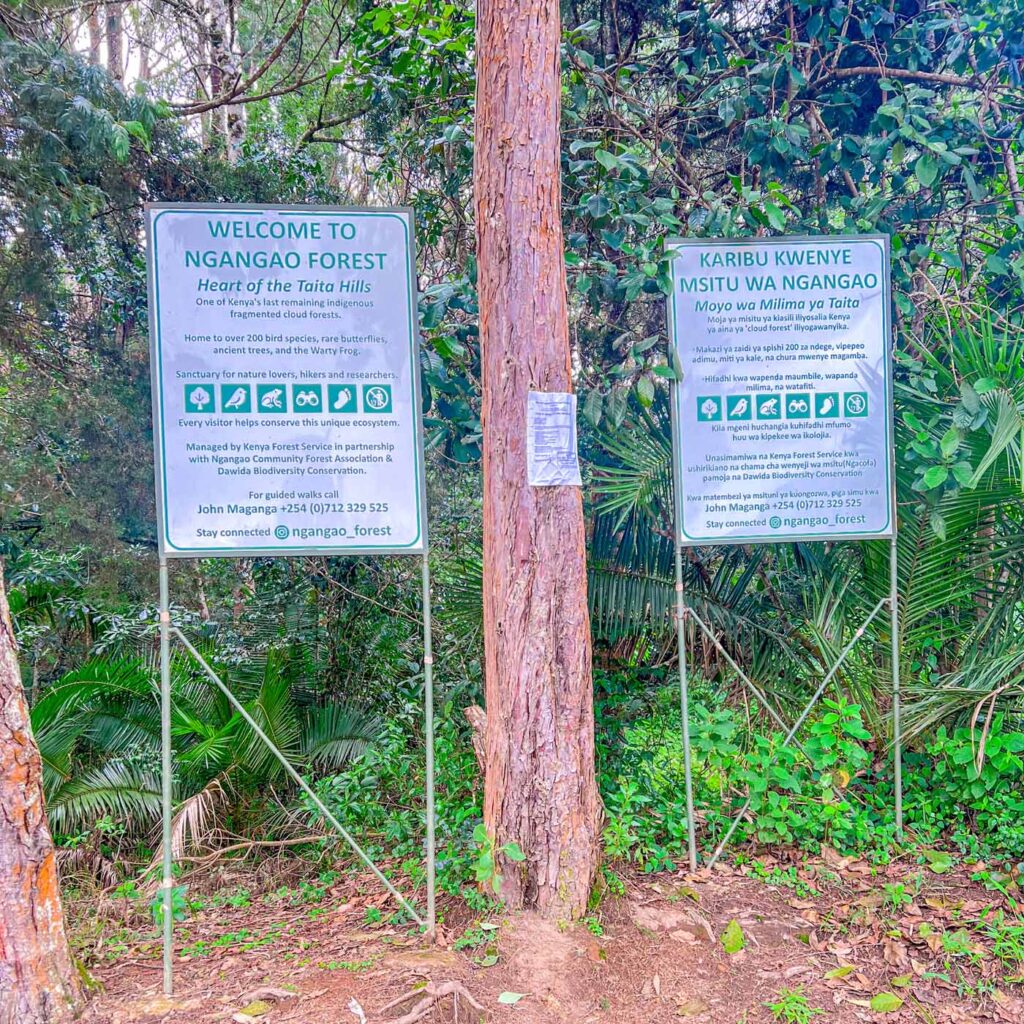
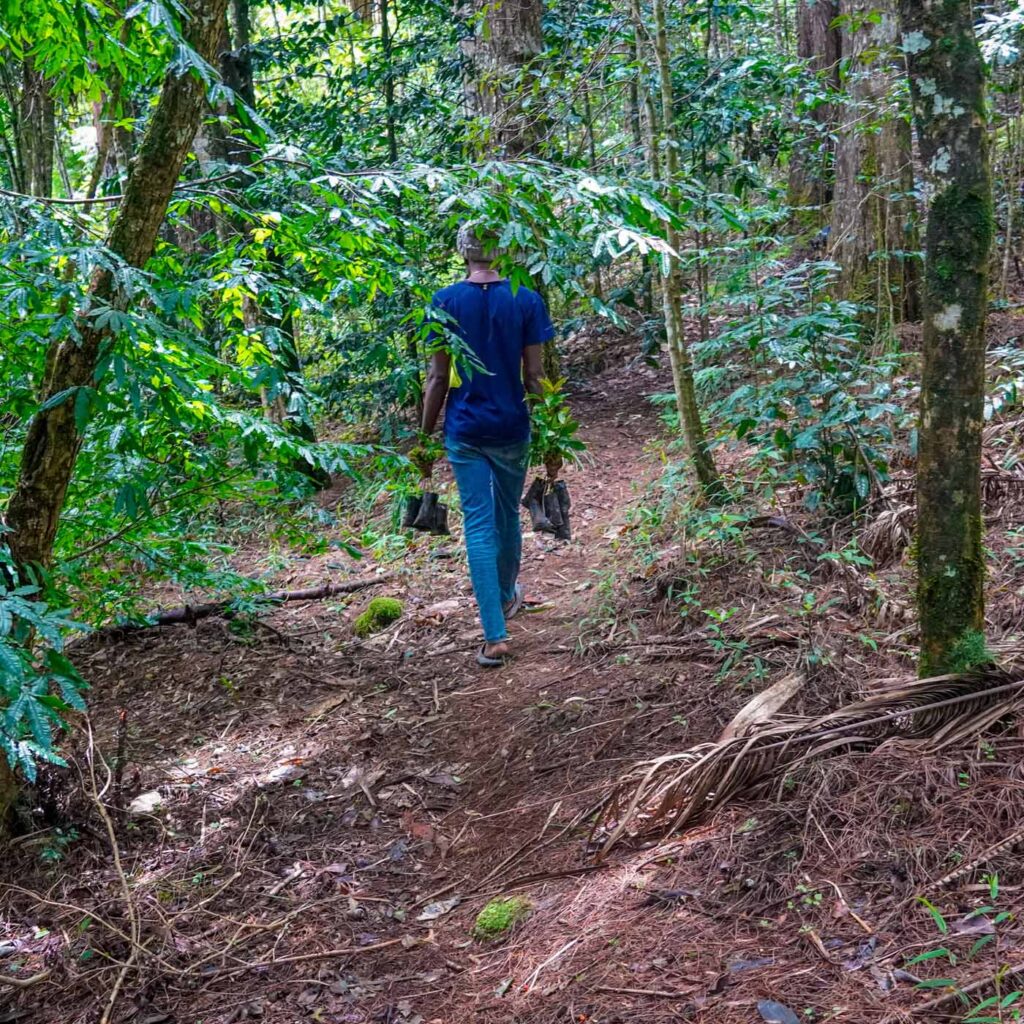
Guided walks took participants to actual breeding sites in the Dawida forest block, where they observed the frog’s habitat firsthand — preferred microhabitats in deep leaf litter and decomposing logs — and saw the threats up close: fuelwood extraction and agricultural encroachment fragmenting an already tiny range. Attendees documented habitat conditions and learned the survey techniques they’d use for ongoing monitoring.
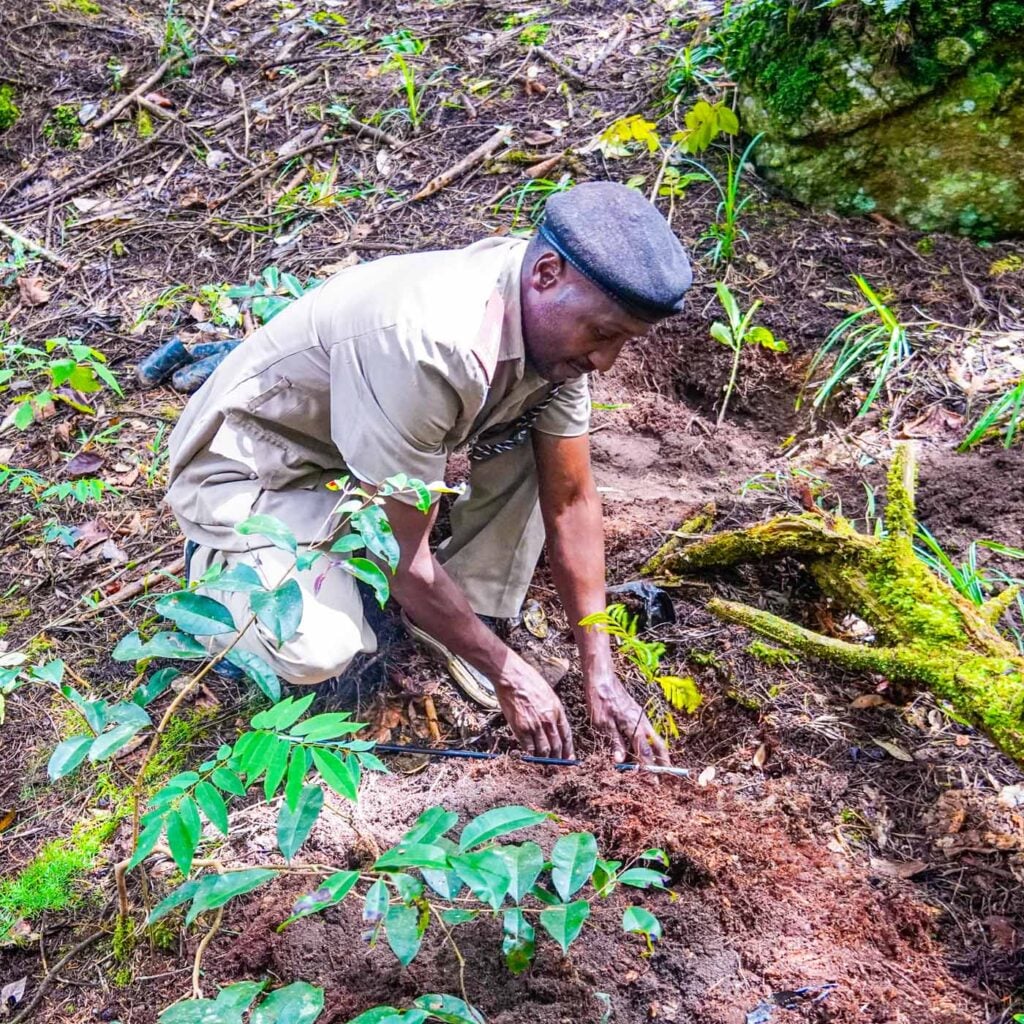
500 Trees for the Warty Frog
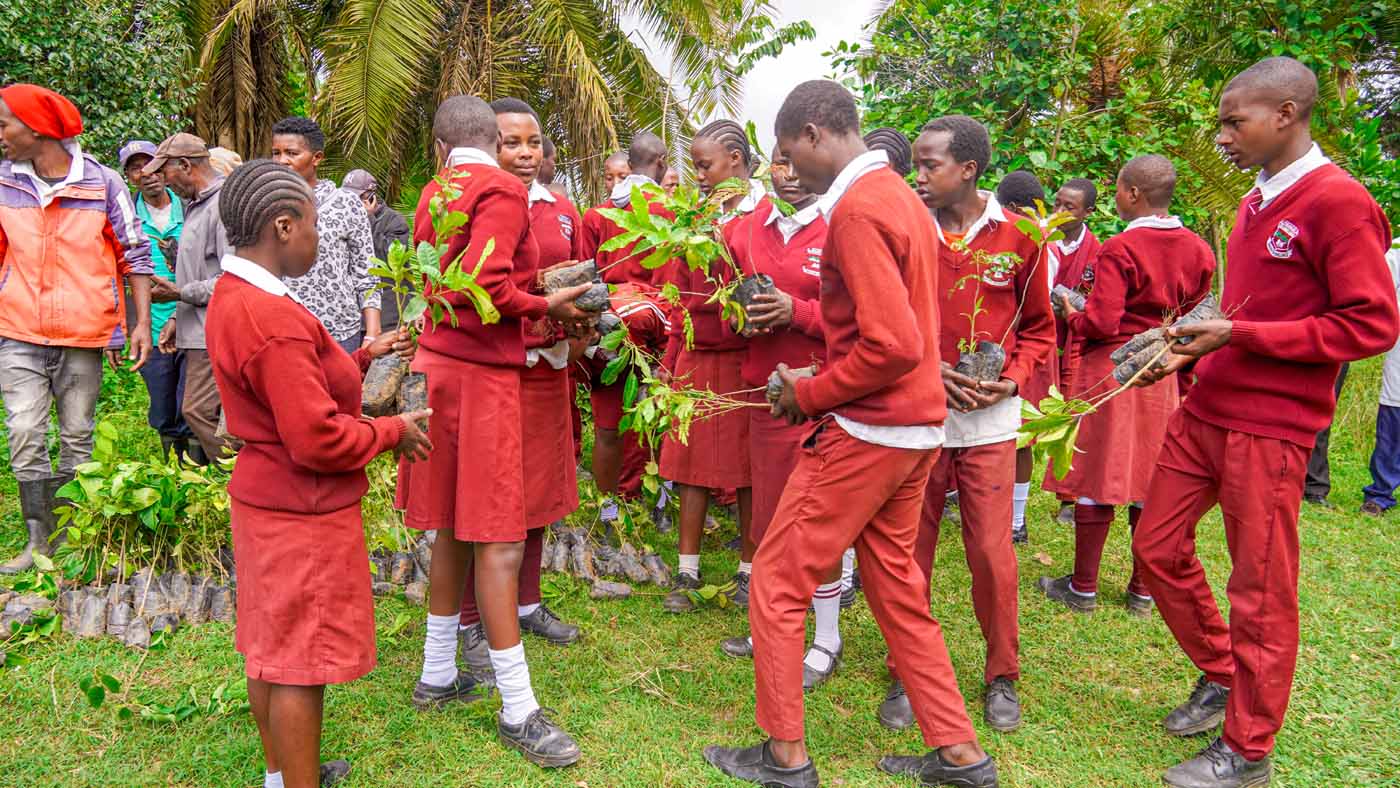
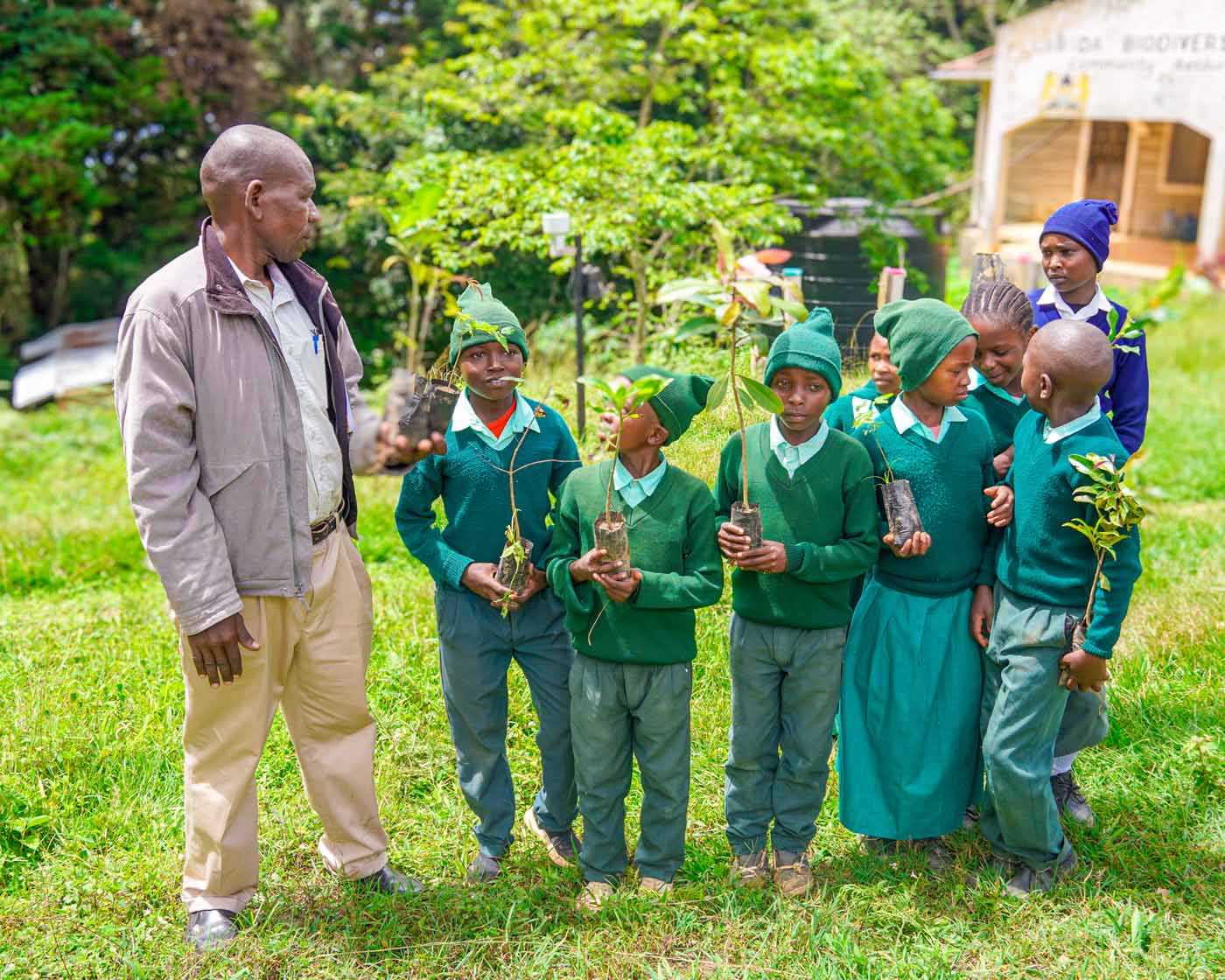
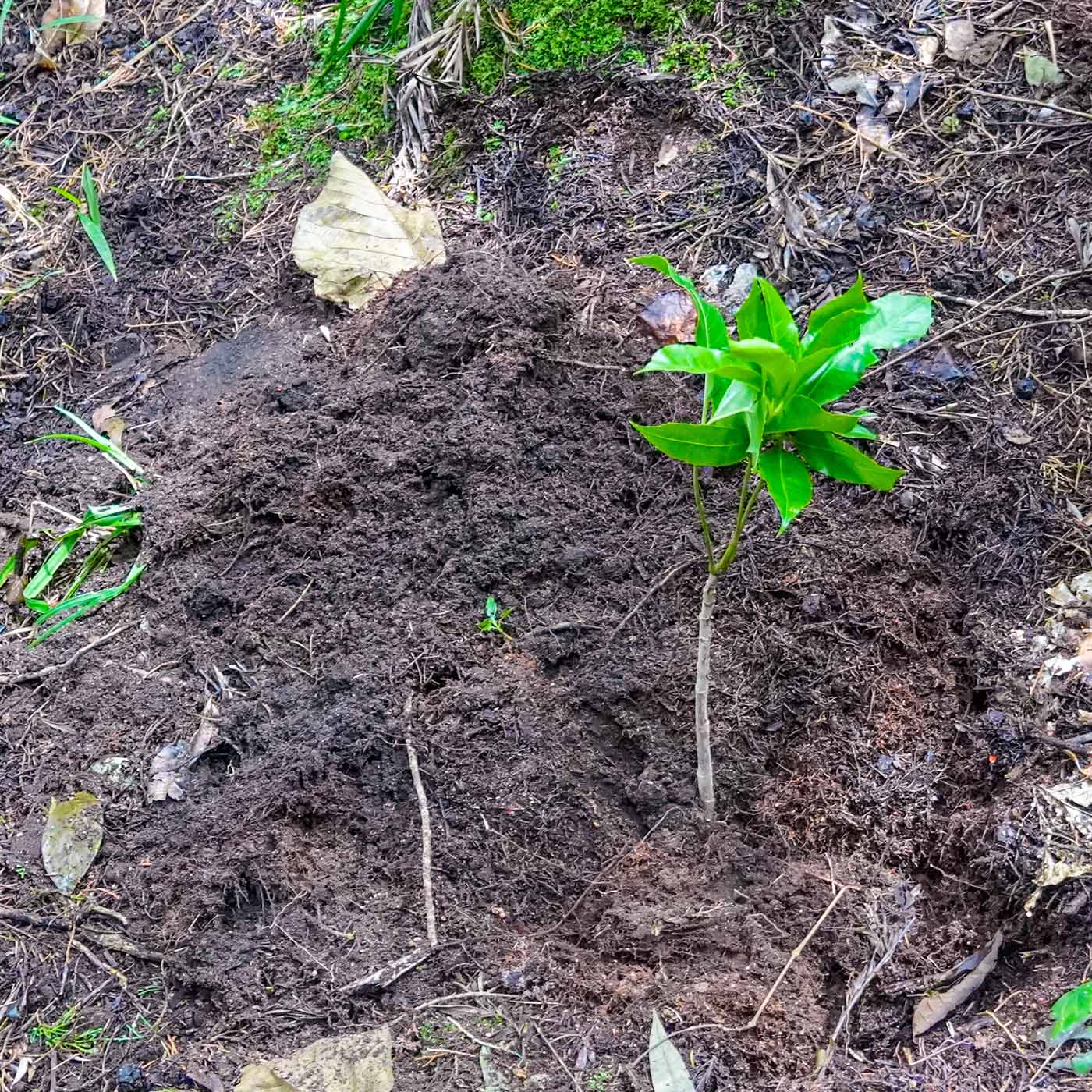
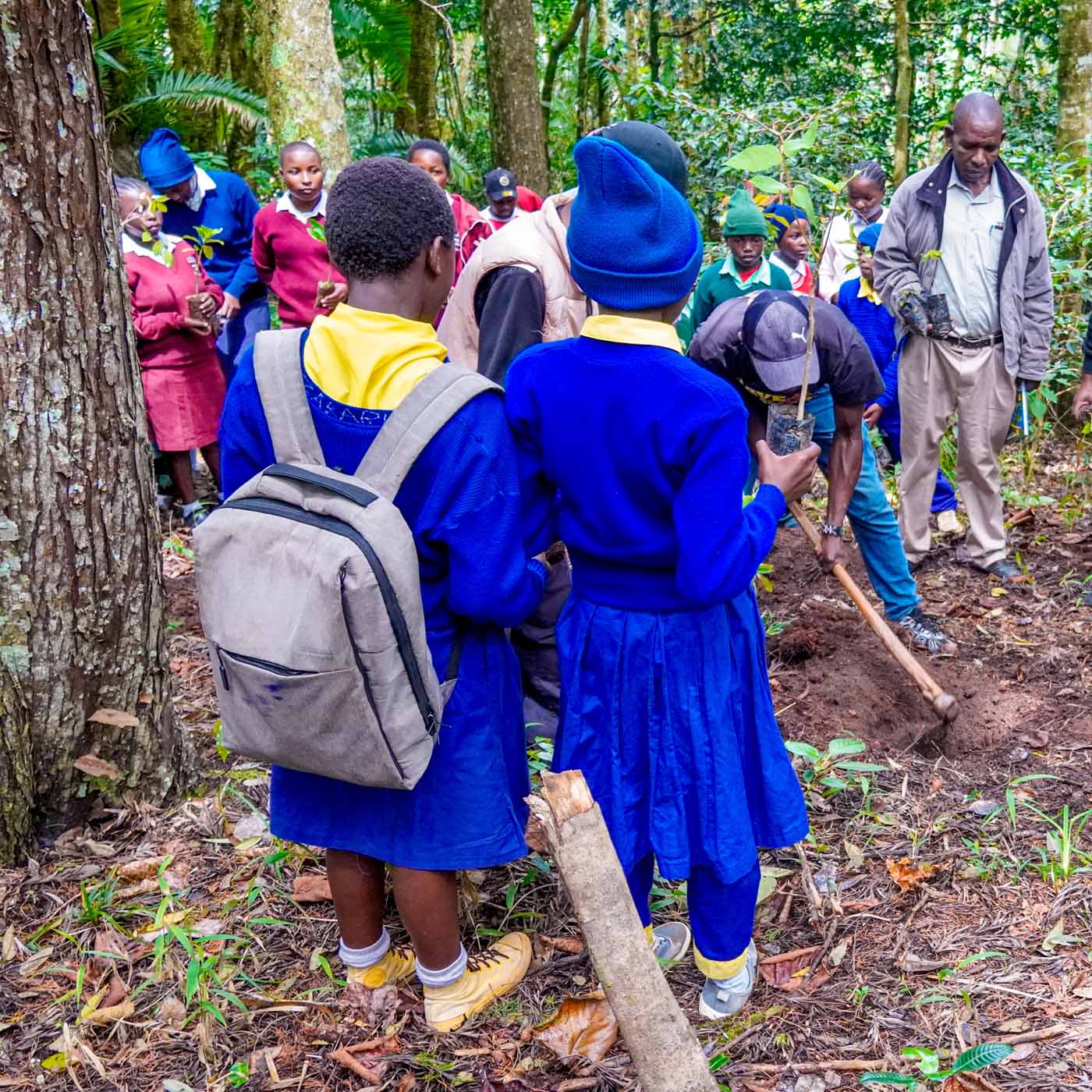
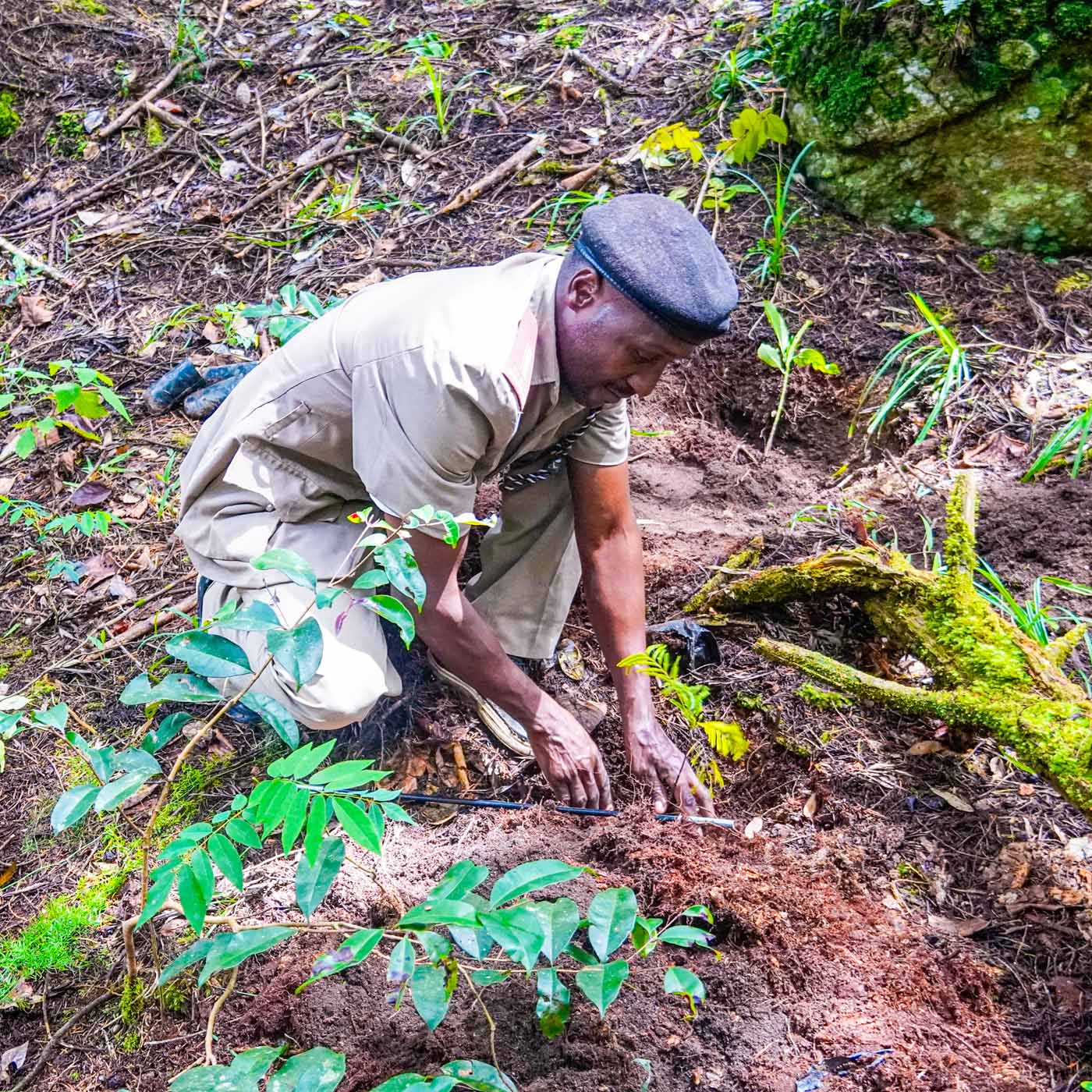
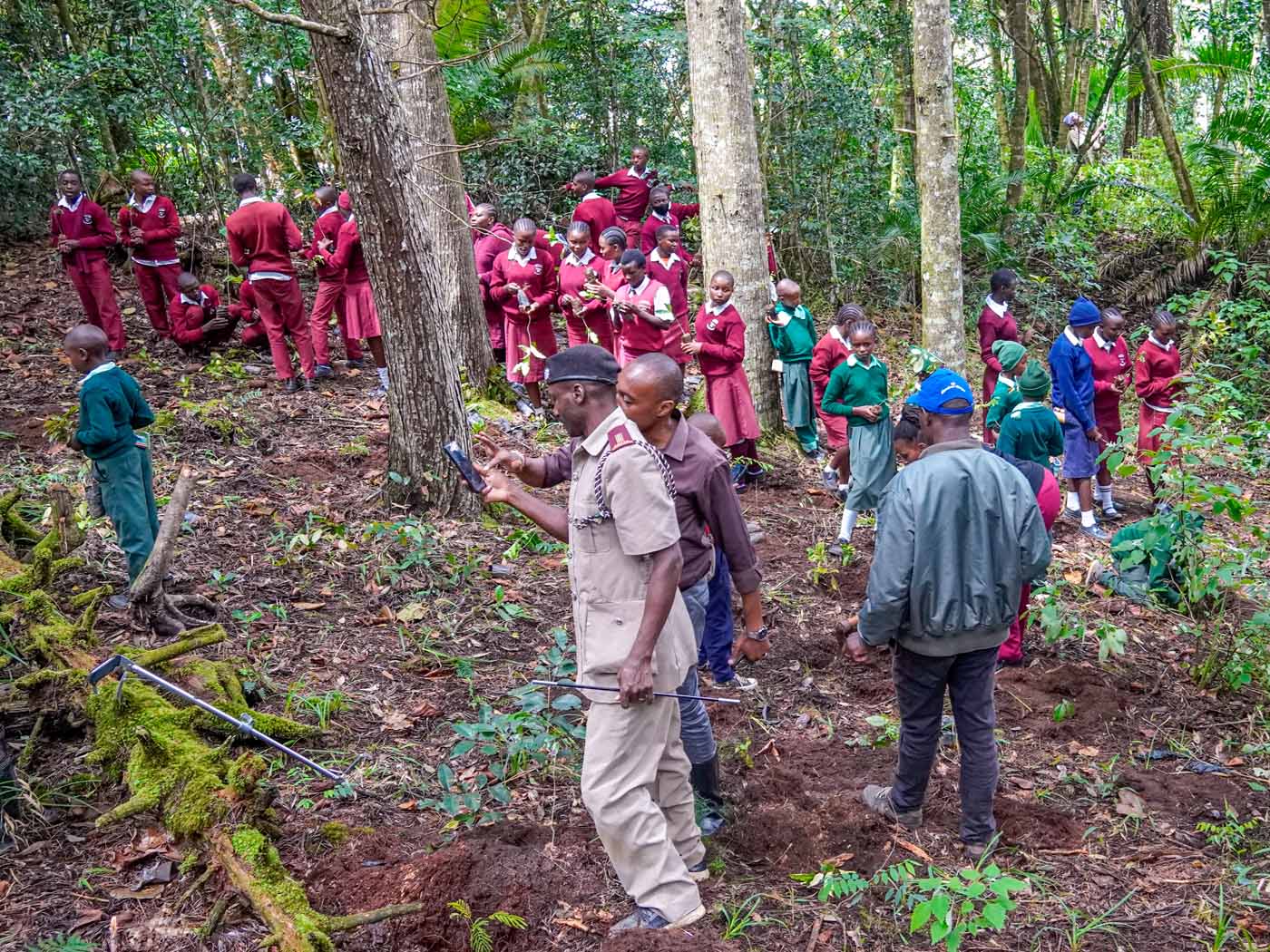
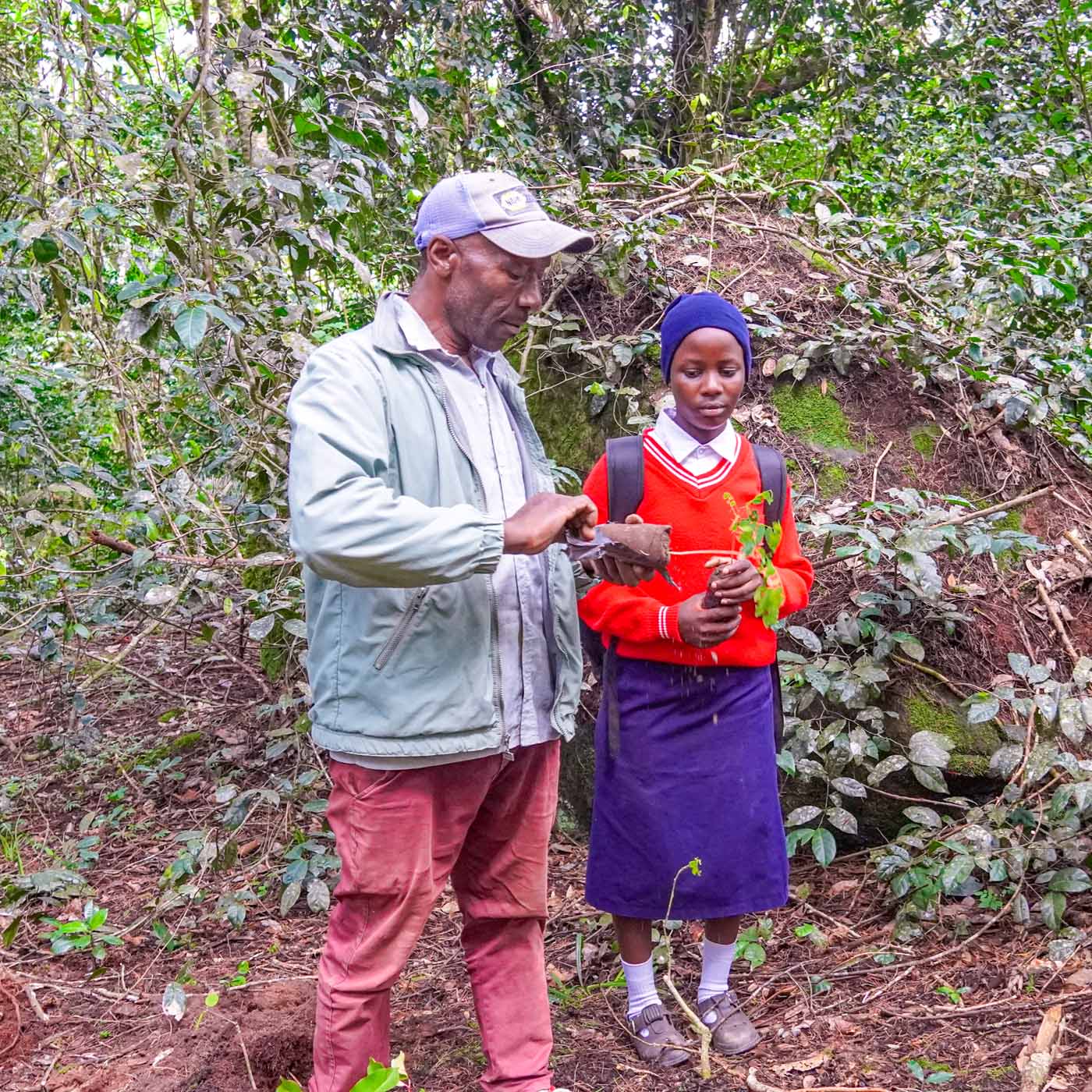
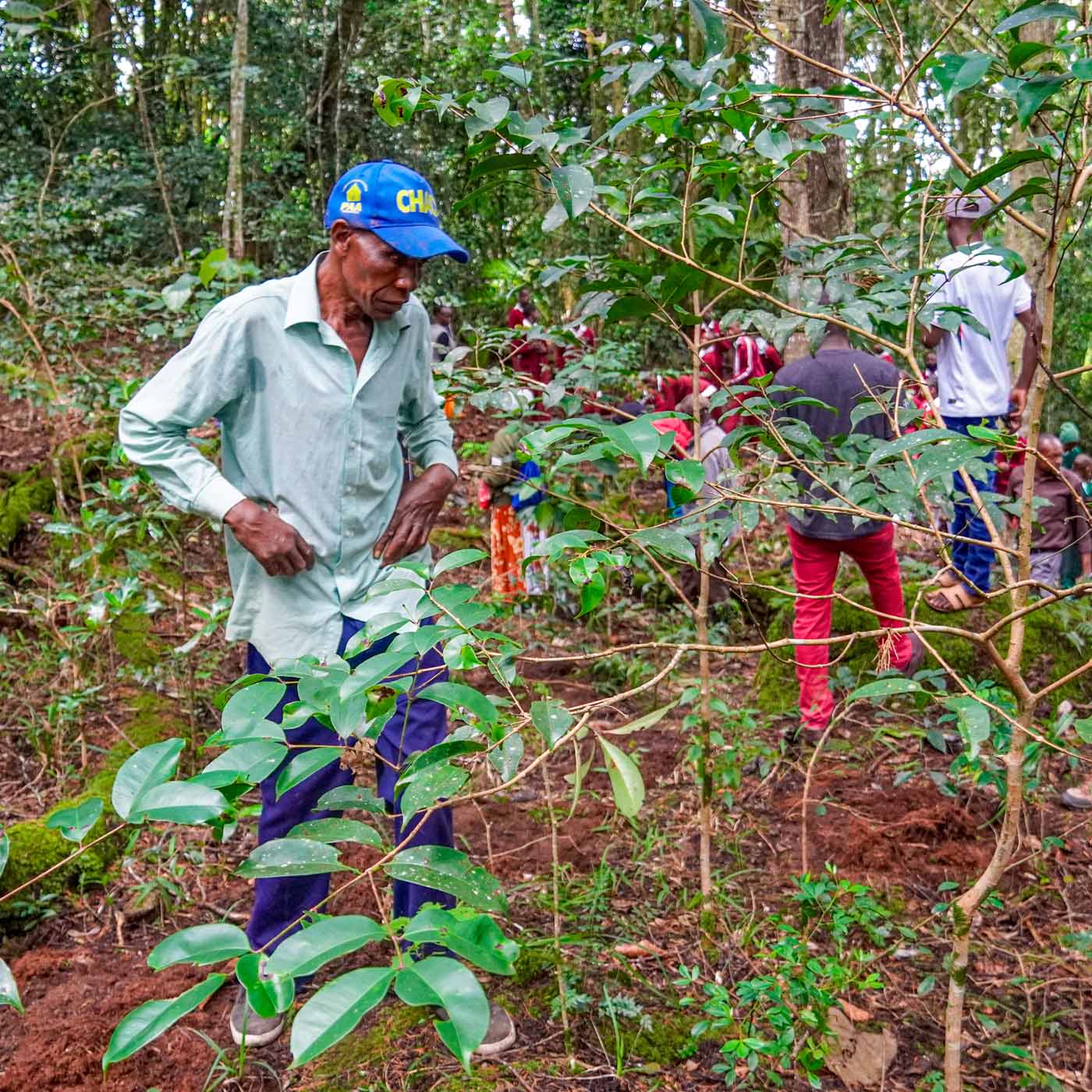
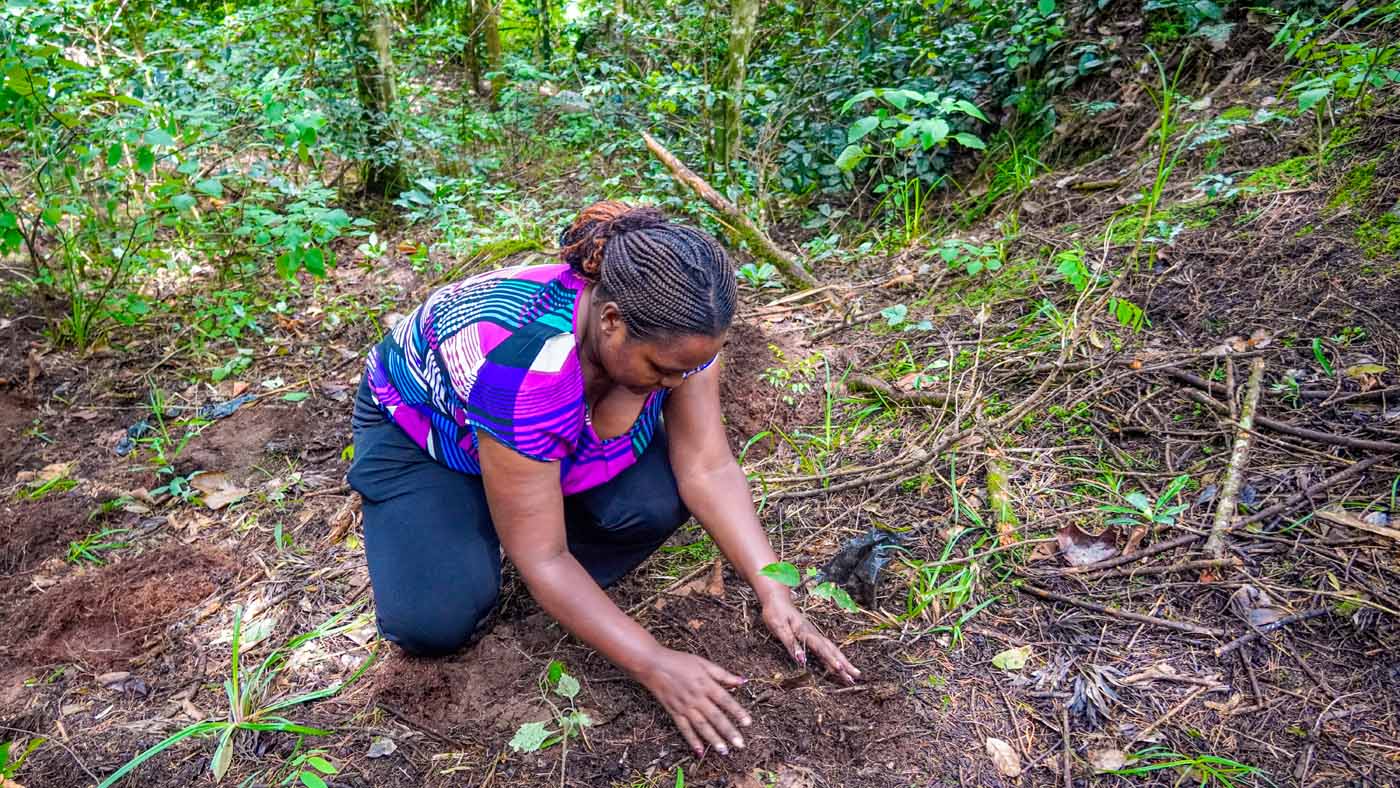
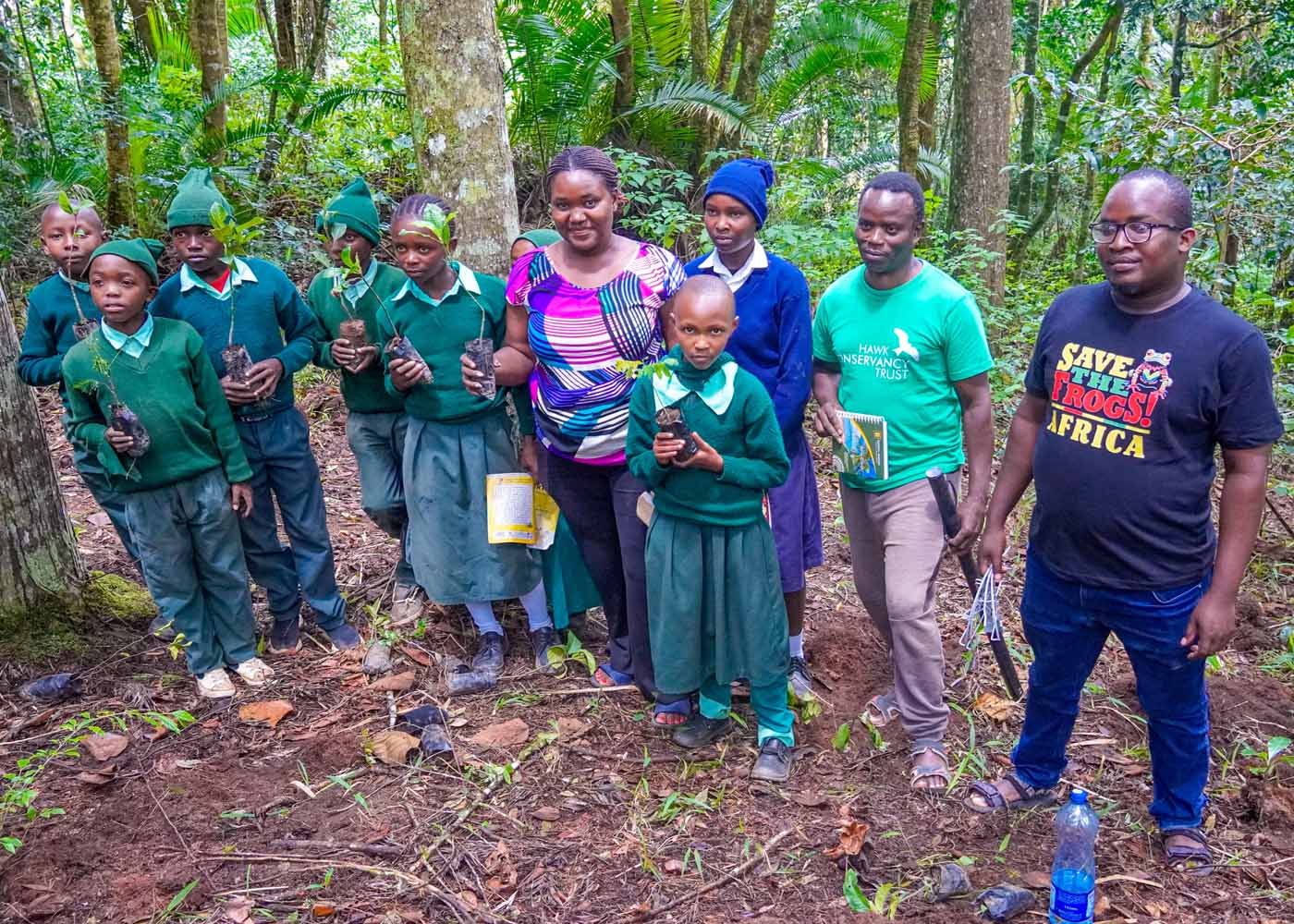
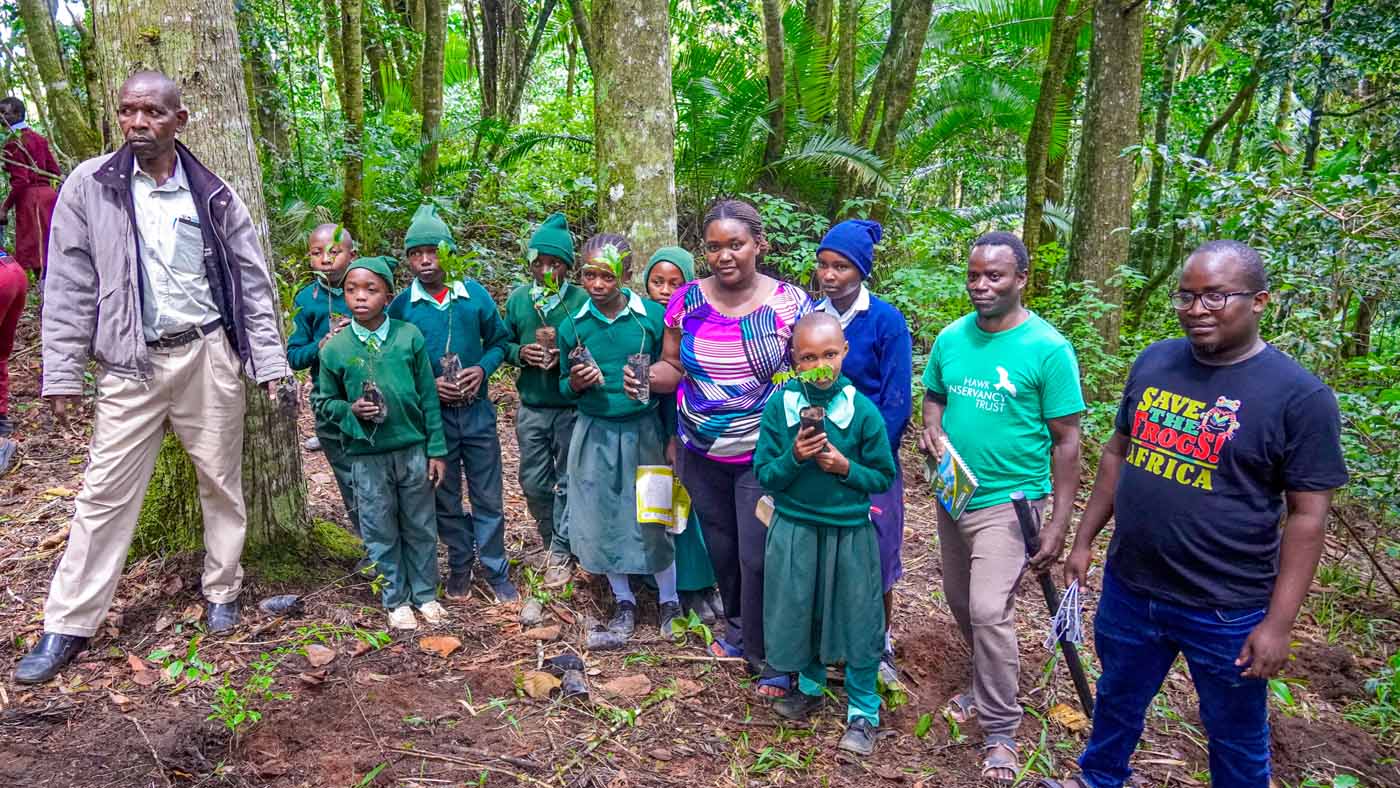
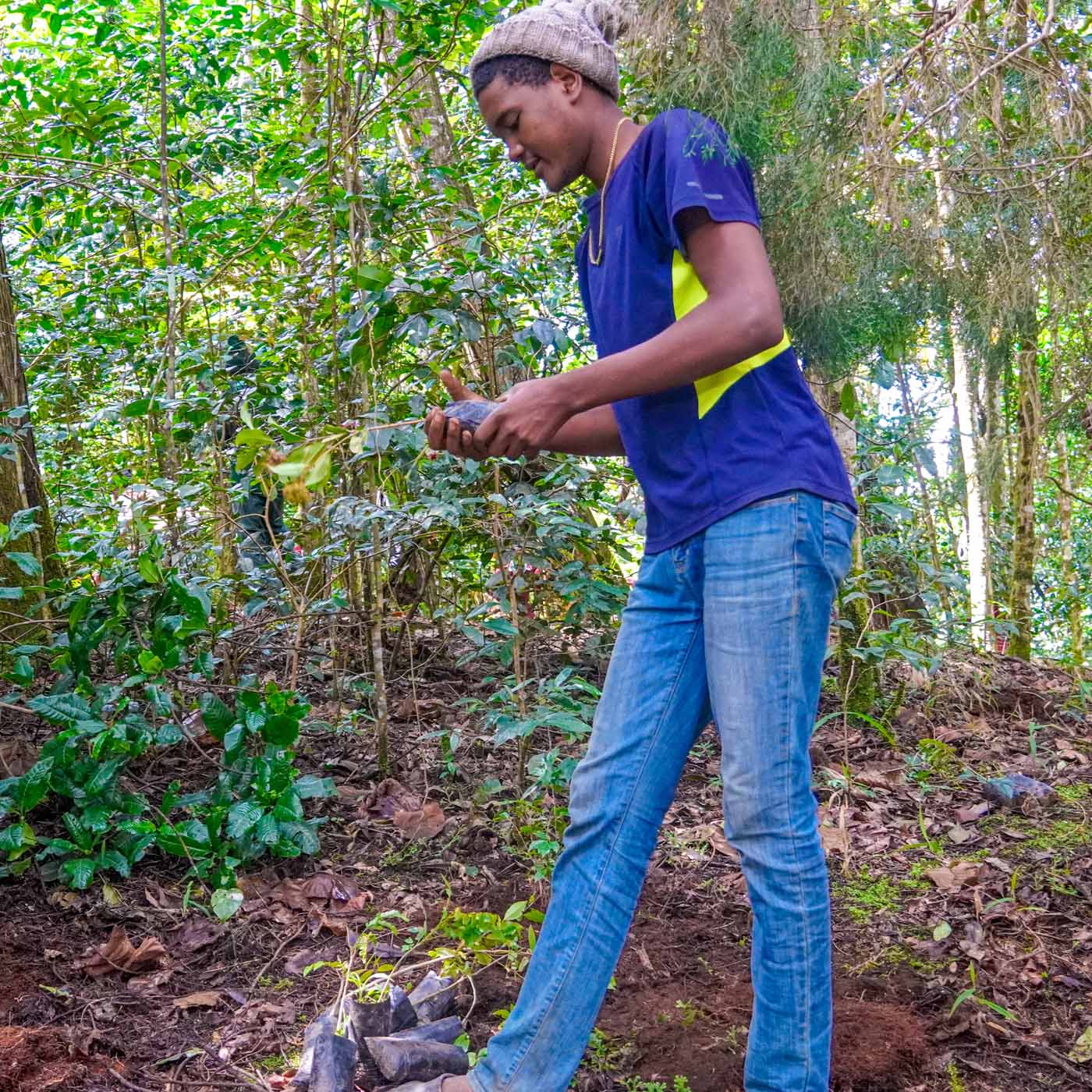
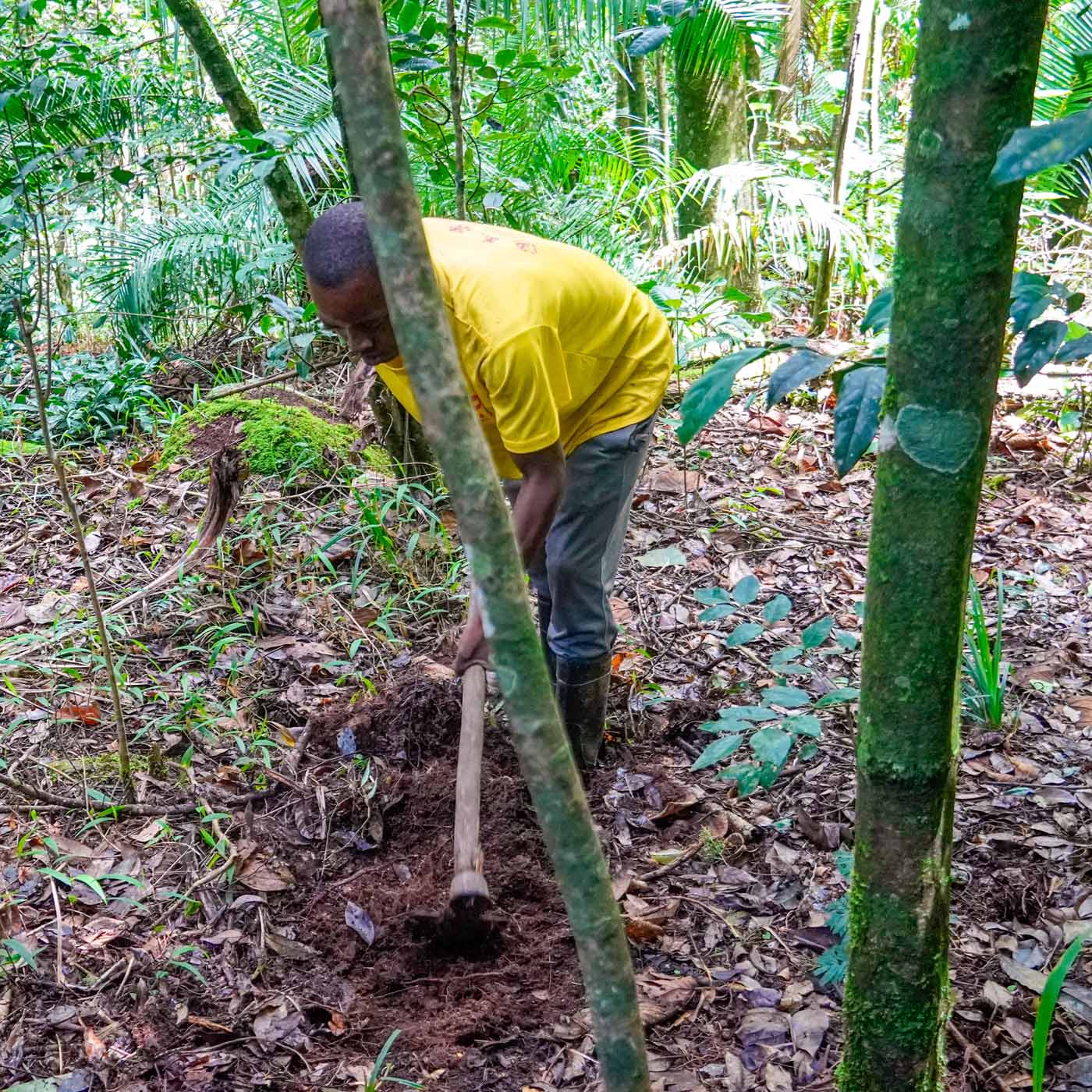
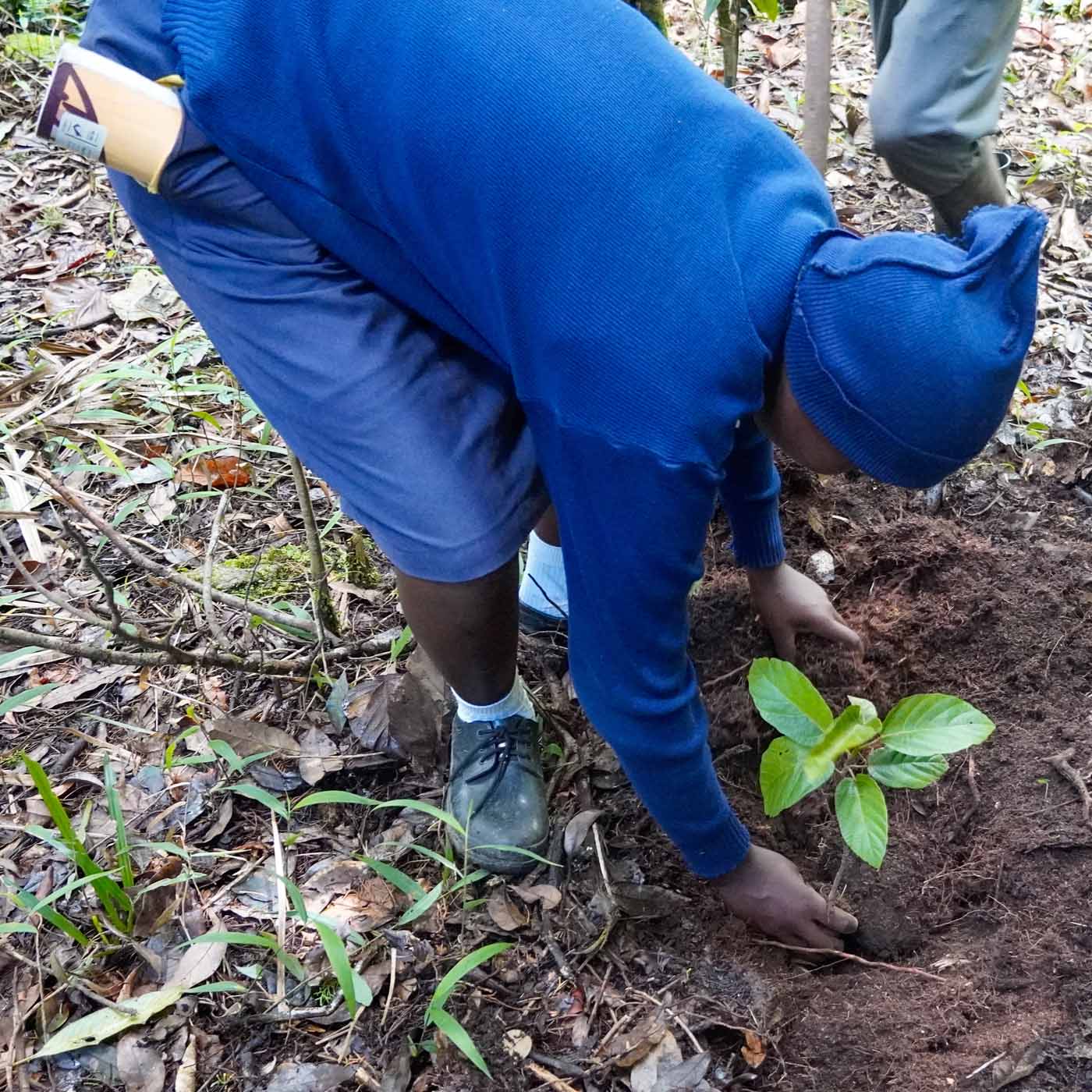
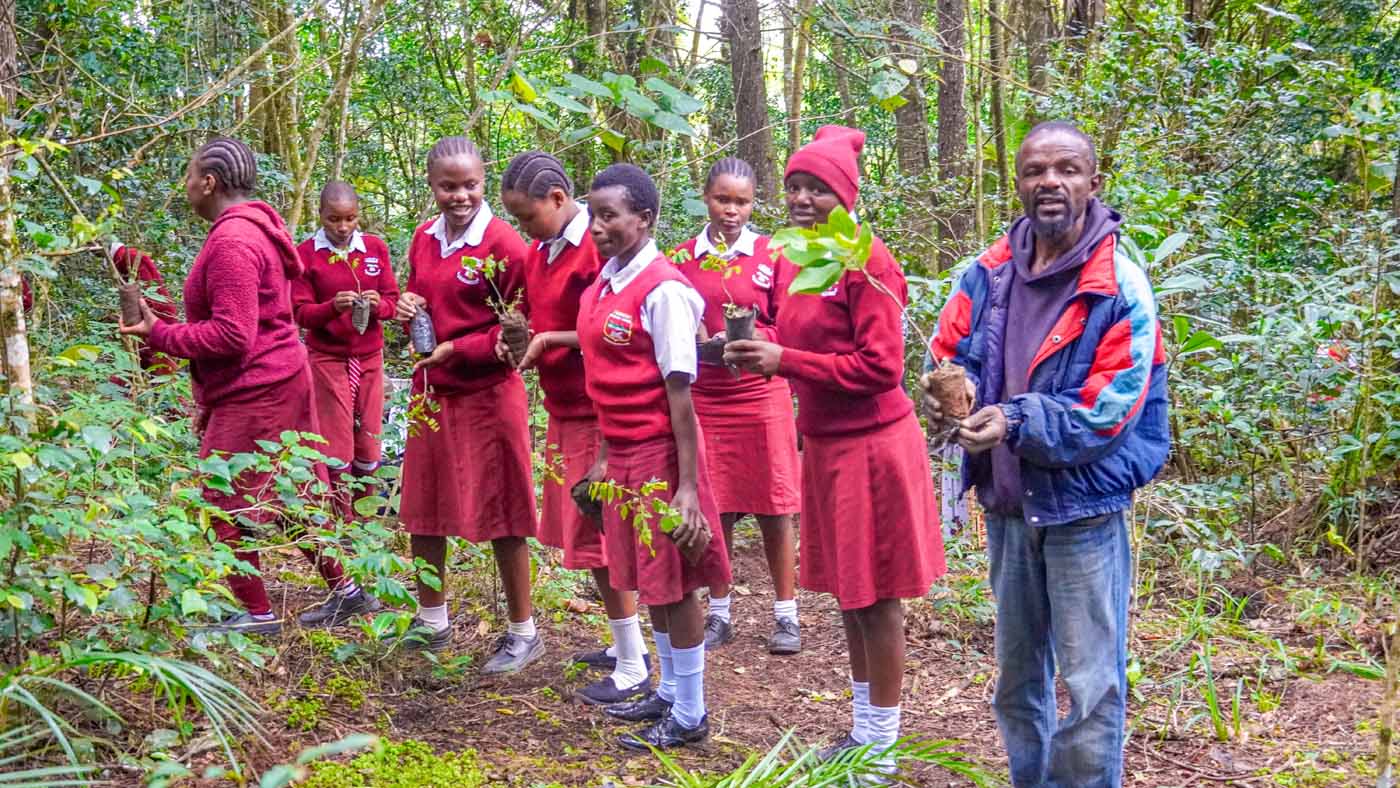
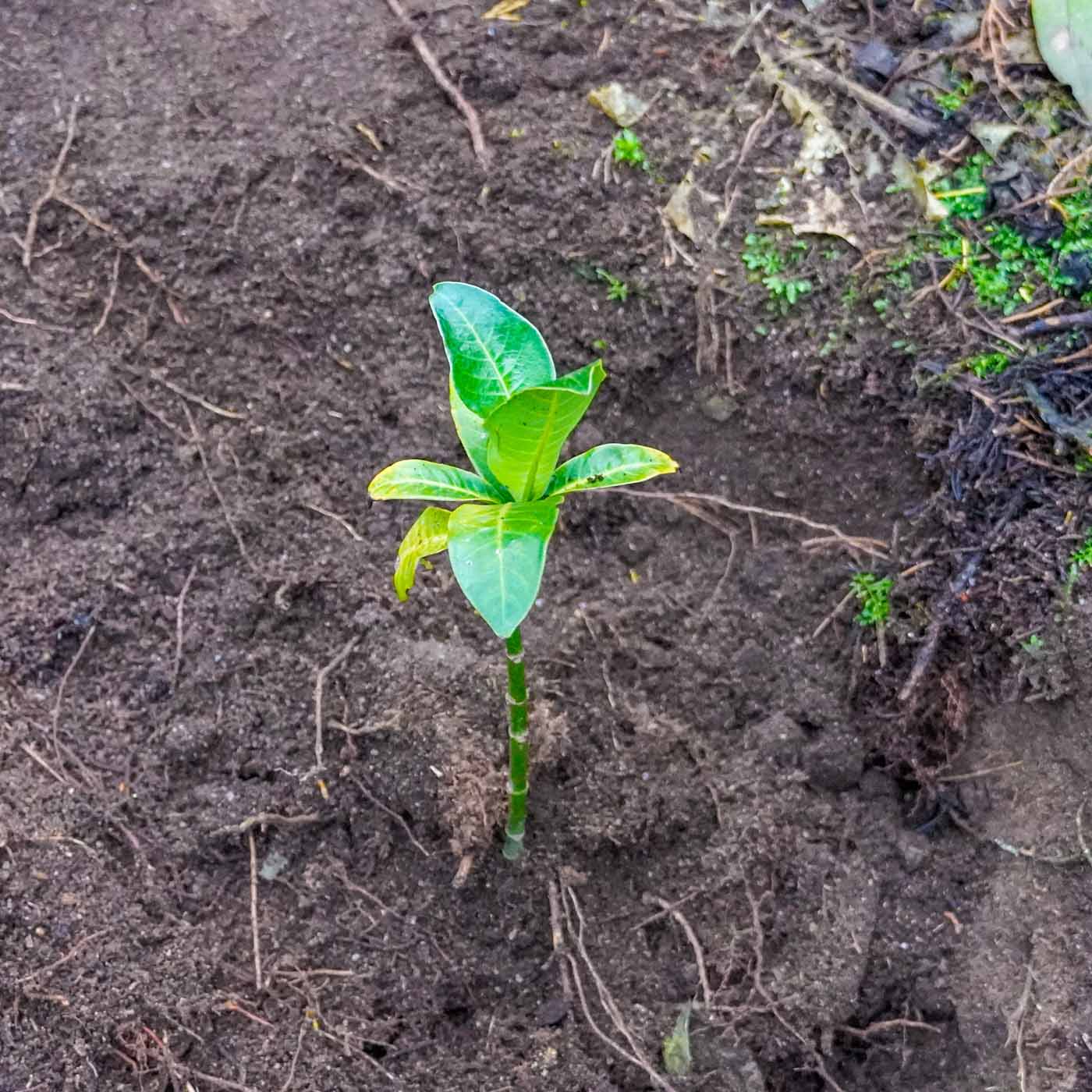
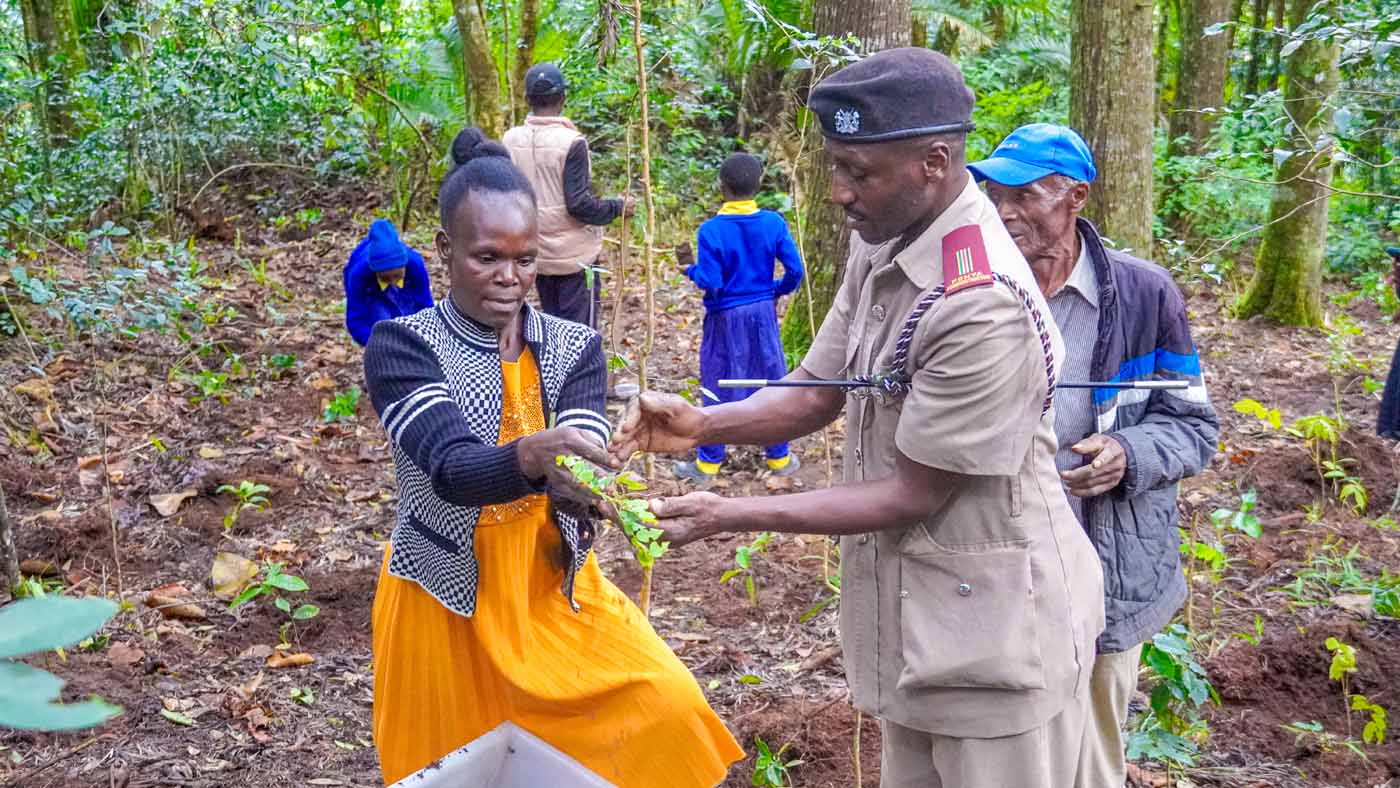
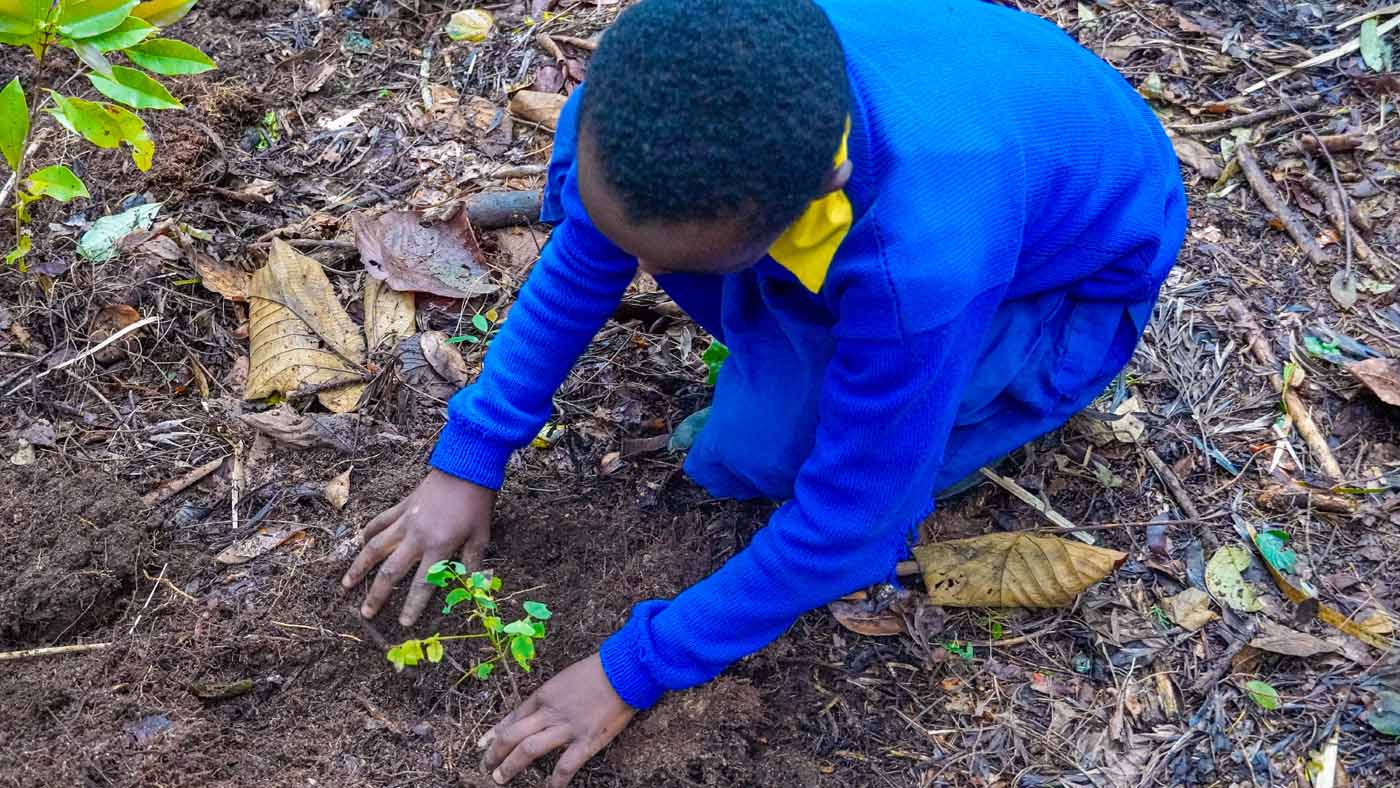
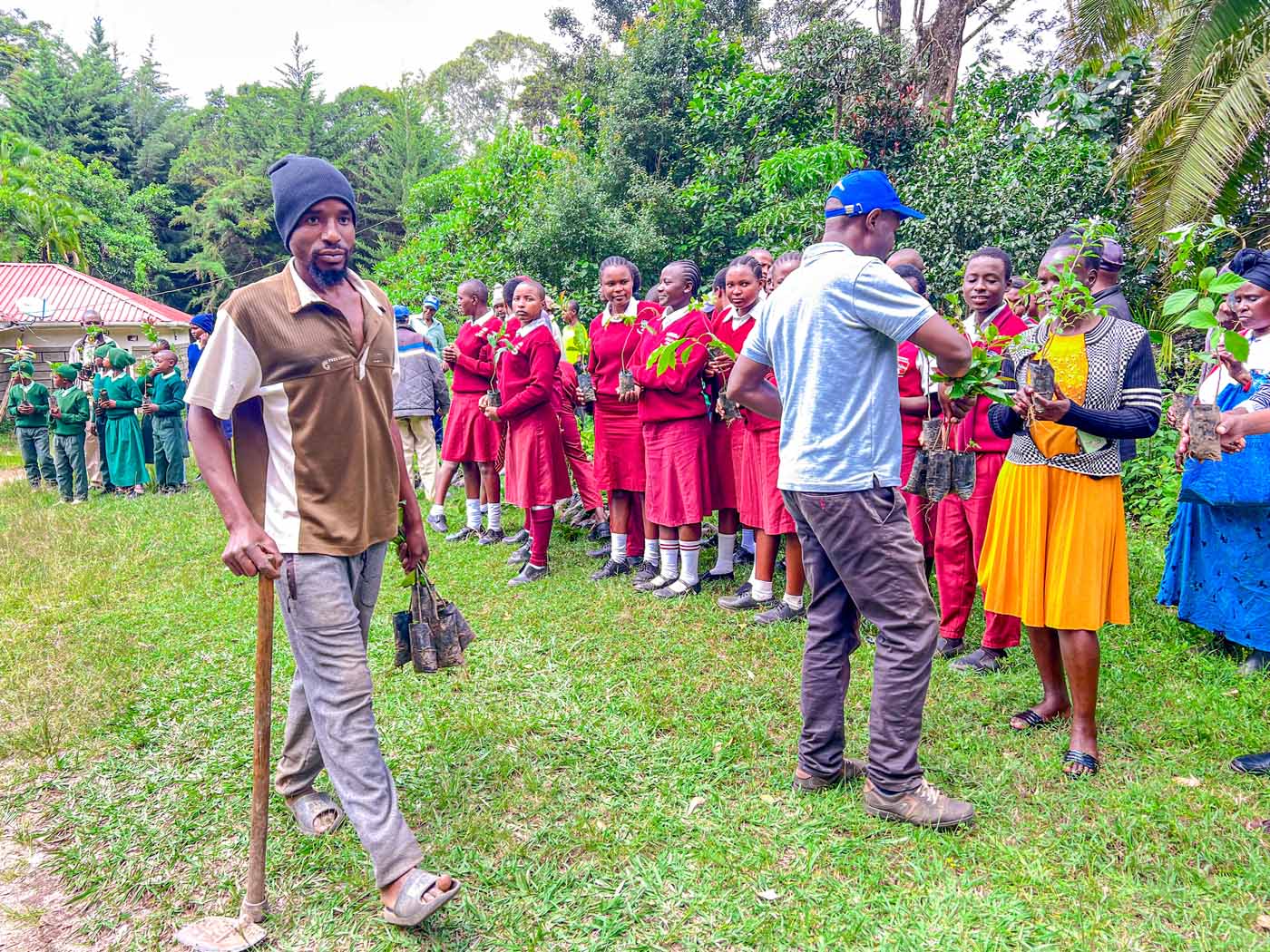
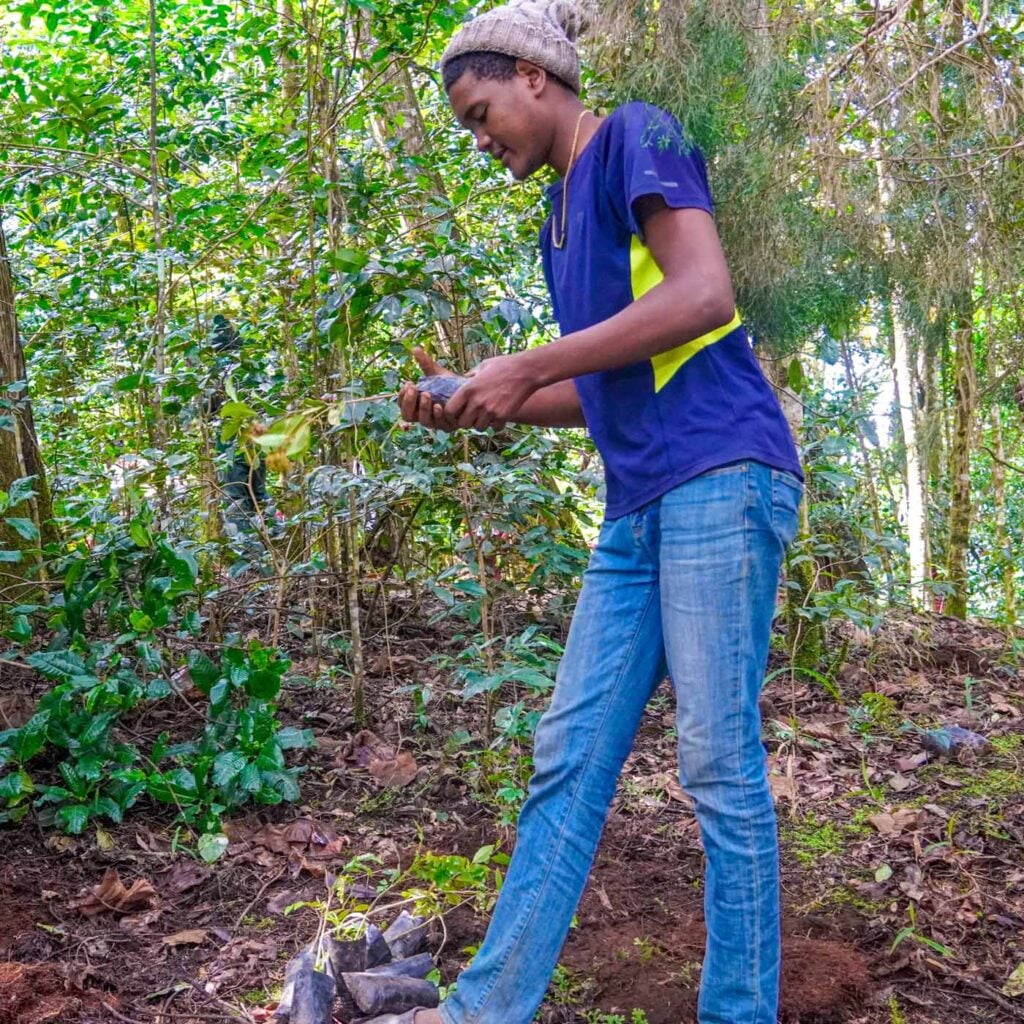
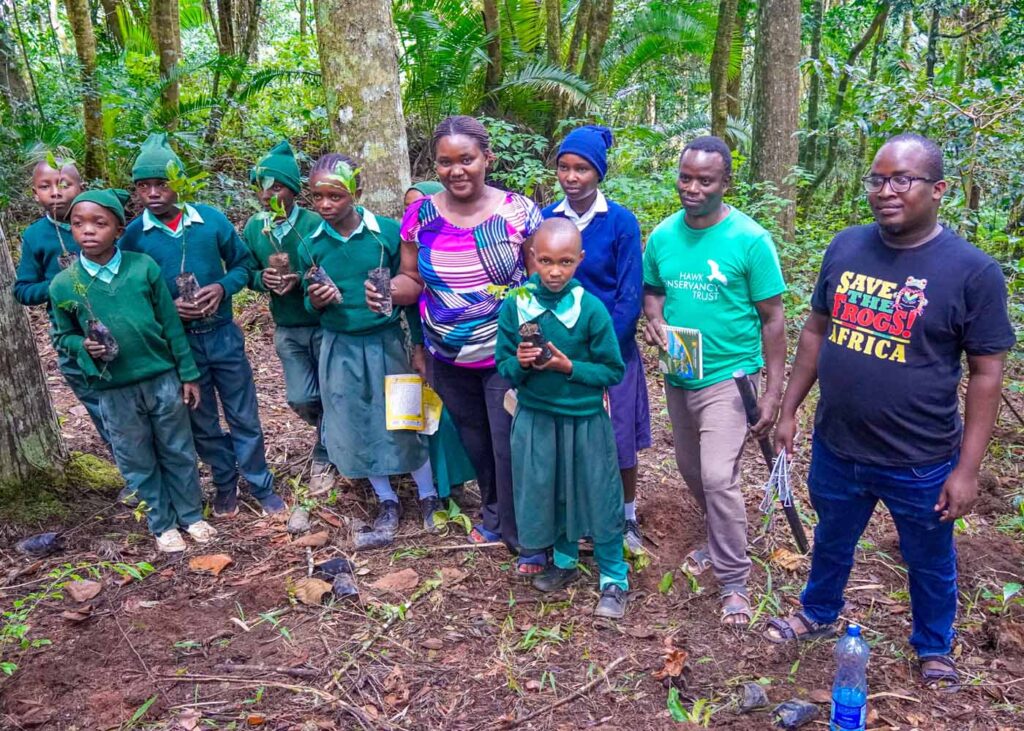
In the afternoon, participants planted 500 indigenous tree seedlings — Ocotea usambarensis, Podocarpus latifolius, and Syzygium guineense — across 0.3 hectares of degraded forest edge at critical breeding sites. Each seedling was fitted with a protective bamboo guard and a mulch ring for moisture retention. The species were chosen specifically for their ability to build deep leaf litter, hold canopy moisture, and recreate the microhabitat the warty frog needs to breed.
Building Lasting Capacity
The event was designed to outlast April 28th. Thirty community members were trained as citizen scientists in standardized protocols — Visual Encounter Surveys, habitat assessment, microhabitat characterization, and threat documentation — and will conduct bi-weekly surveys across eight known breeding locations to build baseline population data. Two community monitoring groups of 15 members each took on ongoing forest protection, and traditional ecological knowledge shared by community elders was documented and woven into the modern protocols. The group closed the day by drafting a six-month action plan.
Engaging the Next Generation
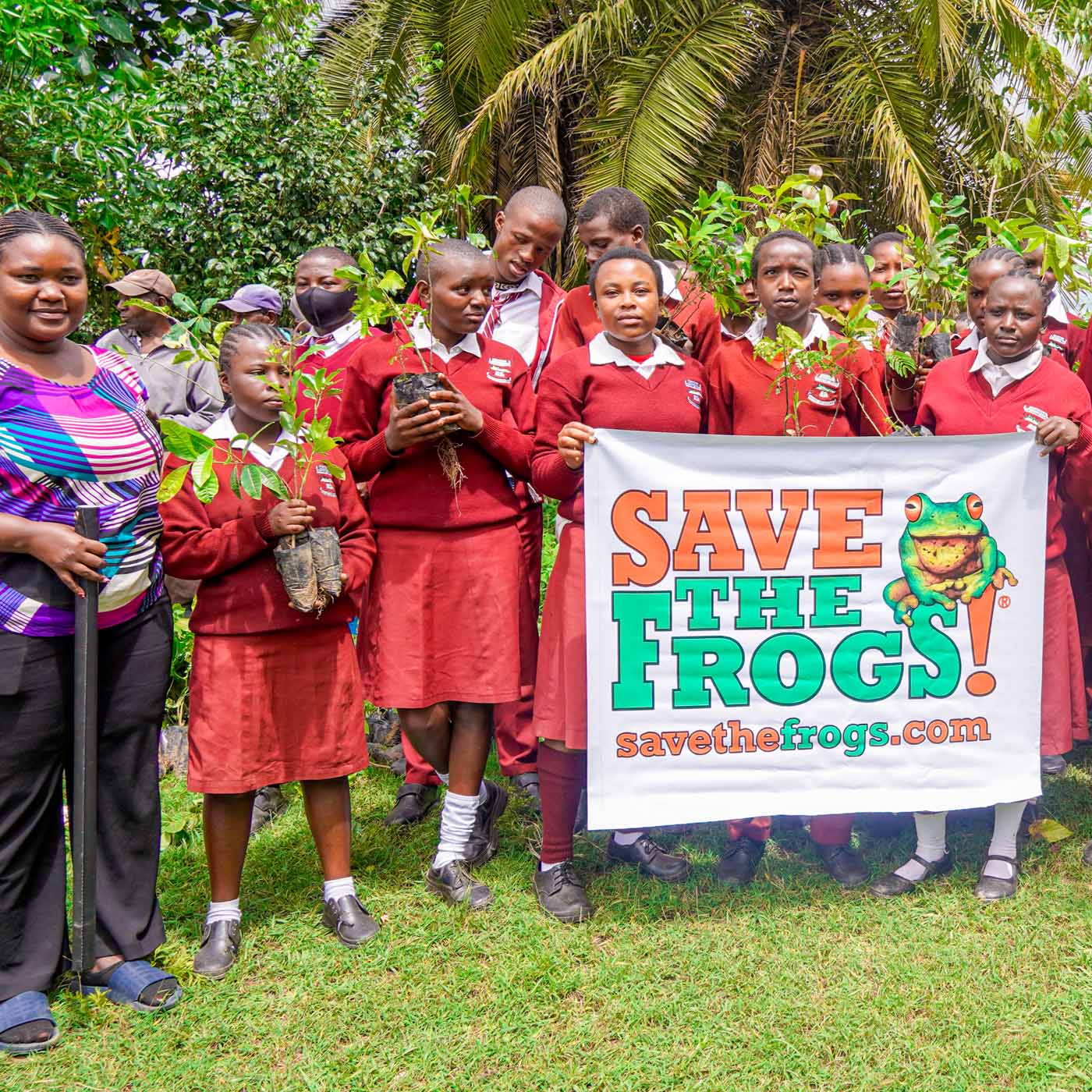
Fifty students aged 12–18 from Wundanyi Primary School, Mbololo Secondary School, and Werugha Girls High School took part in habitat modeling, species-identification card games, and made personal field notebooks to take home to their families. School principals committed to folding amphibian conservation into their environmental education curricula. Educational materials reached the wider community too: 50 bilingual (English/Kiswahili) posters, 100 waterproof laminated field guides, and 150 community conservation handbooks — all carrying the SAVE THE FROGS! logo and grant acknowledgment.
A Model for Africa
The approach piloted here — scientific monitoring, habitat restoration, traditional-knowledge integration, and genuine community ownership — is replicable across endangered amphibian sites throughout Kenya and the rest of Africa. Naturehub Collective’s plans build on the momentum: expanding the citizen-science network to additional forest fragments, establishing community tree nurseries, launching school-based amphibian clubs, and tracking population trends over multiple years. Most telling was the shift in attitude, with participants committing to reduce fuelwood extraction, protect breeding sites, and serve as conservation ambassadors in their villages.
The global community approach that connects local conservationists like us in Kenya with worldwide expertise and resources makes it possible to tackle species conservation challenges that seemed insurmountable when working alone.
Fredrick Kioko Kilonzo, Species and Sites Program Manager, Naturehub Collective
Event Details
- Title: Saving the Taita Hills Warty Frog: A Community Conservation Initiative
- Host: Naturehub Collective Community Organisation
- Date: Tuesday, April 28, 2026
- Location: Naturehub Collective Community Conservation Center, Wundanyi, Taita Hills, Kenya
- Cost: Free and open to the public
- Website: naturehubcollective.org
Schedule
- 9:00 AM – Presentation on the Taita Hills Warty Frog’s critical status
- 10:45 AM – Guided walk to frog habitat sites
- 12:00 PM – Community lunch and networking
- 1:00 PM – Habitat restoration activities
- 3:00 PM – Action planning for ongoing conservation
Collaborative Partners
- Kenya Wildlife Service
- National Museums of Kenya
- Local schools and community organizations
- University researchers specializing in Taita Hills biodiversity
The work contributes to urgent conservation actions identified by the IUCN for Callulina dawida, including population monitoring and habitat-restoration planning.
A Note From Naturehub Collective
I’m absolutely thrilled to see our Taita Hills Warty Frog conservation event highlighted on the SAVE THE FROGS! website. This kind of international spotlight on our local conservation work is exactly what we need to make a real impact for the species. Thank you for your support and for making our event part of the global Save The Frogs Day movement. This means so much to our conservation efforts in Kenya!
Fredrick Kioko Kilonzo
Organize a Save The Frogs Day Event
Events like this one happen when local conservationists take the lead. Learn how to organize a Save The Frogs Day event in your own community.
Photo Gallery
Enjoy these images from the Save The Frogs Day 2026 event in the Taita Hills of Kenya. Click on any image to see it larger or to get the slideshow view.