

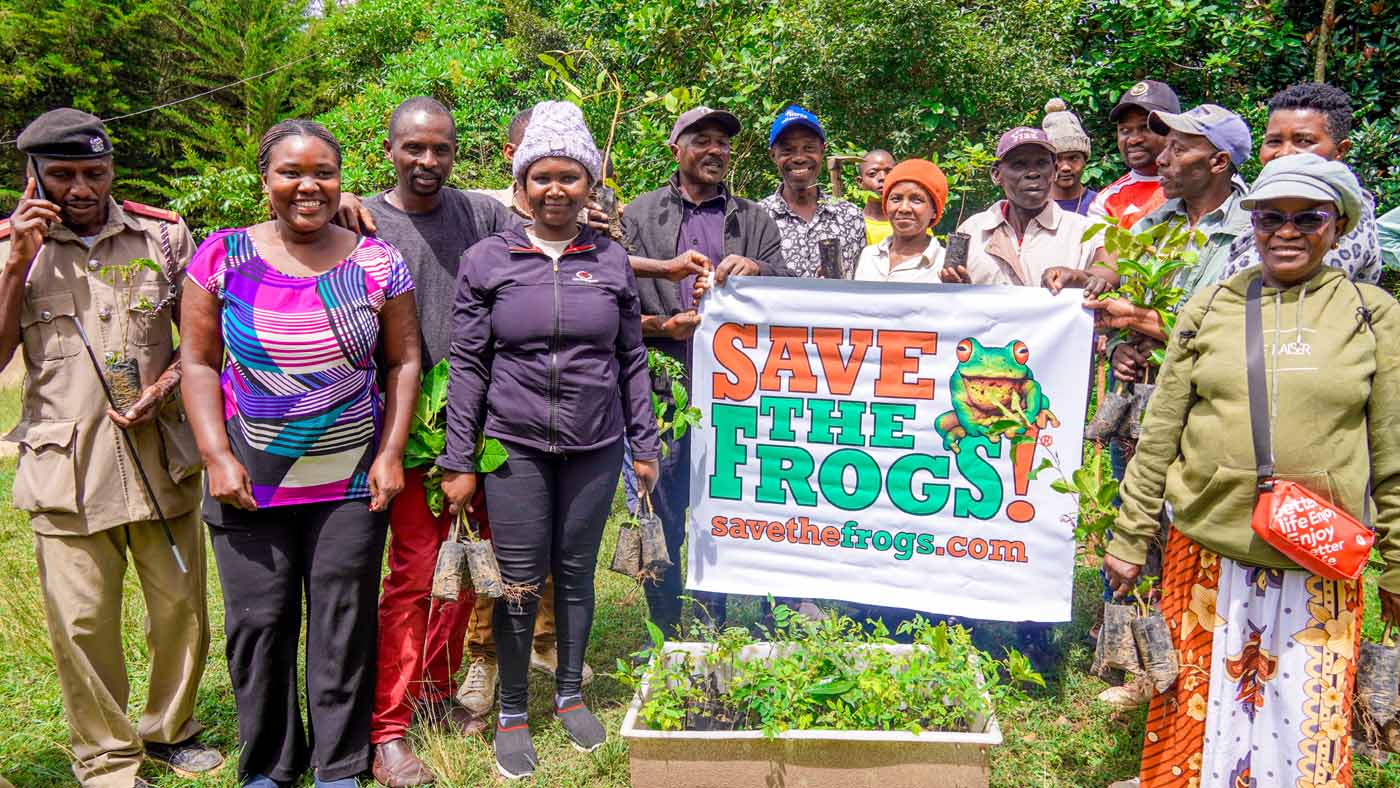
Saving The Taita Hills Warty Frog
Naturehub Collective will host an amphibian conservation event April 28th, 2027 in celebration of the 19th Annual Save The Frogs Day. The event will take place in Wundanyi and across both Dawida and Mbololo forest blocks in Kenya’s Taita Hills. The goal is to protect the critically endangered Taita Hills Warty Frog (Callulina dawida) – a species surviving in only 4.3 km² of severely fragmented cloud forest.
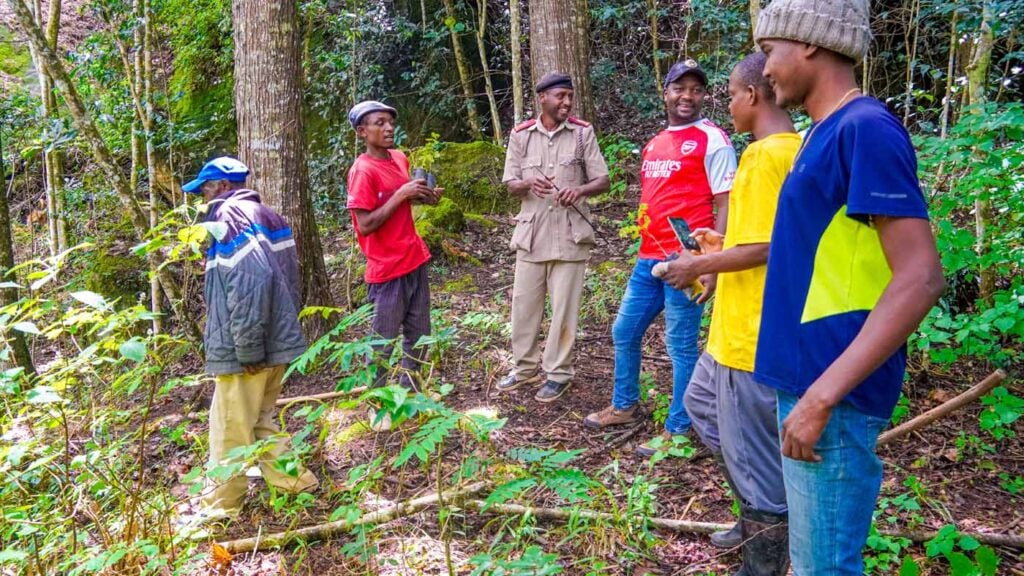
Reforesting the Taita Hills, Save The Frogs Day 2026.
Event Details
Building on the success of Kenya’s largest Save The Frogs Day 2026 event (150 participants, 500 trees planted, 30 citizen scientists trained), we will scale our proven community-led model to engage 250+ participants across both remaining forest fragments for the first time.
The seven-hour event (9:00 AM – 4:00 PM) will include: educational presentations in Swahili and Taita language on the warty frog’s Critically Endangered status and unique direct-development reproduction; guided forest walks to active breeding sites; planting of 1,000 indigenous trees (Ocotea usambarensis, Podocarpus latifolius, Syzygium guineense); intensive citizen science training in Visual Encounter Surveys and habitat assessment protocols; and establishment of new community monitoring groups in Mbololo forest block.
The 45 citizen scientists trained during our 2026 programs will serve as mentors for new participants, creating an intergenerational knowledge transfer model. Students from Wundanyi Primary School, Mbololo Secondary School, and Werugha Girls High School will return as junior conservation ambassadors alongside new youth participants.
The event is free and open to community members, students, traditional elders, and conservation practitioners. Collaborating organizations include Kenya Wildlife Service and National Museums of Kenya. For more information, contact Fredrick Kioko Kilonzo at kioko@naturehubcollective.org.
This event is being organized with support from SAVE THE FROGS! and builds on ongoing Taita Hills amphibian conservation supported by the SAVE THE FROGS! Amphibian Conservation Award and the Sophie Danforth Conservation Biology Fund.